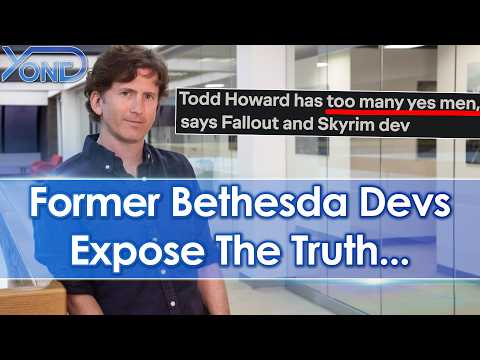
- Former senior staff describe a “yes-men” culture around Todd Howard, limiting frank critique on projects like Starfield.
- Bethesda’s shift from a single-site studio to four remote teams under Microsoft added layers of management and conflicting directives.
- Longtime Elder Scrolls designer Kurt Kuhlmann cites broken promises on Elder Scrolls 6 leadership and rising bureaucracy as key reasons for his exit.
- These dynamics heighten risk around Elder Scrolls 6’s design cohesion and raise broader questions about Xbox’s RPG portfolio stewardship.
A Studio in Transition as Elder Scrolls 6 Looms
Newly resurfaced commentary from former Bethesda Game Studios developers is sharpening industry focus on the leadership model behind flagship franchises like The Elder Scrolls, Fallout, and Starfield. As interviews circulate in April 2026, ex-staff argue that Bethesda’s rapid expansion and Todd Howard’s elevated profile have created a culture where challenging top-level decisions is increasingly rare, even as multi-studio complexity demands stronger, not weaker, feedback loops.
The timing is sensitive. Starfield’s mixed reception and long-tail update plan, Fallout 76’s troubled launch, and the long wait for Elder Scrolls 6 have already prompted questions about how the studio is managing ambition, technology, and player expectations across PC, Xbox Series X/S, and PlayStation 5 ecosystems.
“Afraid to Say No to Todd”: Celebrity Director and the Yes-Men Effect
Former senior artist Dennis Mejillones, who worked on Skyrim, Fallout 4, Fallout 76, and Starfield, described Todd Howard in a Kiwi Talkz interview as “a phenomenal person” and a strong design mentor. At the same time, Mejillones highlighted a structural problem: “A lot of people were afraid to say no to Todd and that hurt him.” The comparison drawn was to George Lucas: a talented creator whose later work suffered when dissenting voices receded.
The core critique is not that Howard lacks design skill, but that Bethesda’s growth and his celebrity status have concentrated authority while dampening internal challenge. Staff concerned about ideas reportedly either stayed quiet or relied on a small handful of trusted relationships to push back, rather than an institutionalized culture of open critique.
For a studio building sprawling systemic RPGs, limited internal friction at the top of the decision pyramid can allow weak assumptions to persist deep into production. The commentary lands against the backdrop of Starfield’s criticisms around shallow planetary content and uneven pacing, design issues that typically require early, candid confrontation across disciplines to resolve.
From Basement Team to Four Remote Studios Under Microsoft
Longtime Elder Scrolls designer and lore specialist Kurt Kuhlmann, who co-led design on Skyrim and left Bethesda in 2023, offered a complementary perspective in a PC Gamer interview earlier in 2026. Kuhlmann framed early Bethesda as a tightly knit group working out of a basement office, where Howard and leads sat together, ate together, and made decisions rapidly in constant conversation.
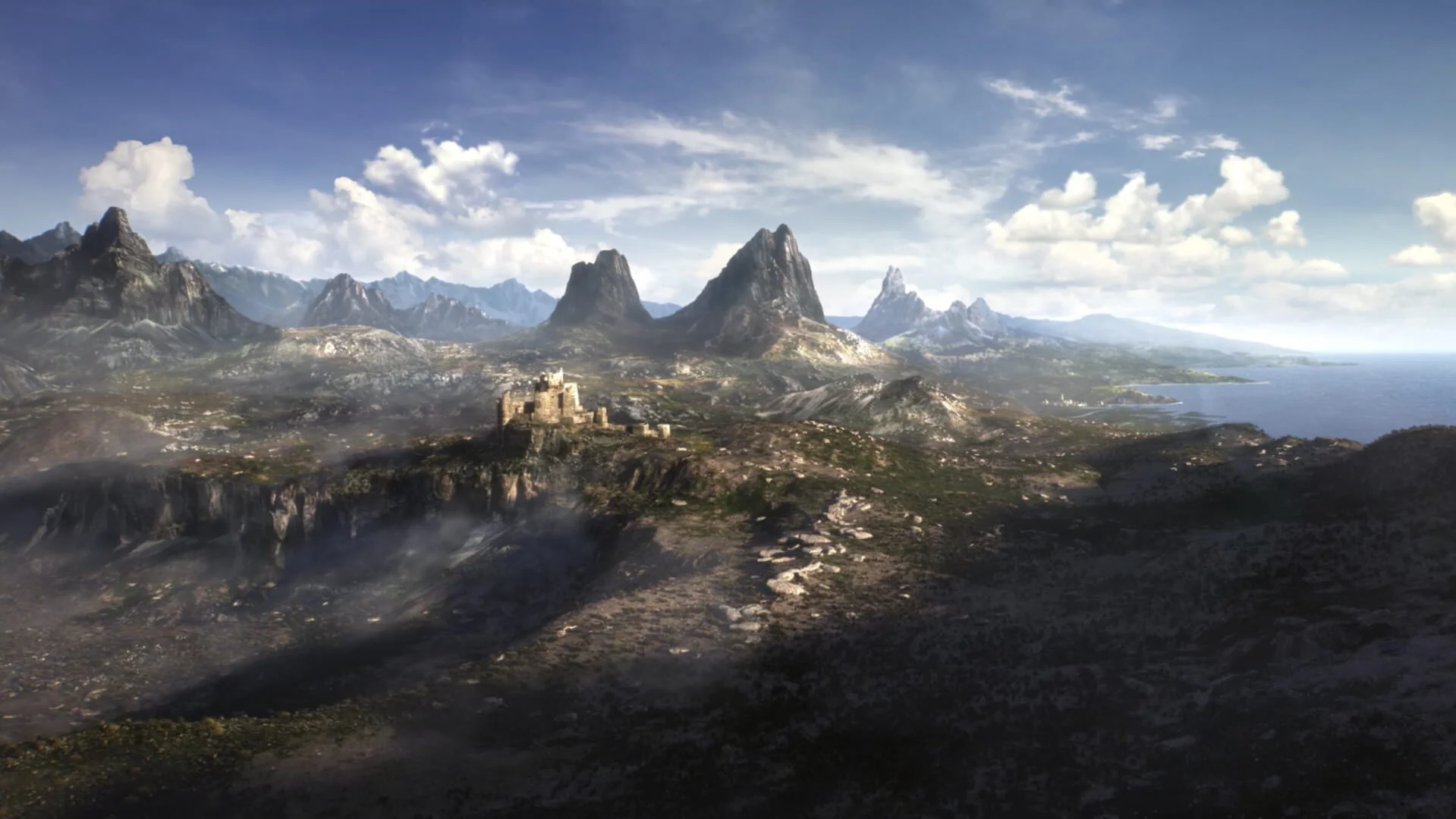
By the time Starfield shipped in 2023, Bethesda had evolved into what Kuhlmann described as effectively “four remote studios” working collectively on a single game, under the larger Microsoft structure. In that configuration, simple informal access to Howard largely disappeared. Instead of quick desk-side decisions, teams navigated layers of management and studio leads.
Kuhlmann recounted cases where staff in one location would ask their leads a design question and receive one answer, while another studio received a conflicting directive on the same issue. The result, in his telling, was confusion: people unsure which vision to follow, and a sense that there was no longer a single, consistently present creative driver aligning content across teams.
Paradoxically, Kuhlmann’s account credits Howard as “a very good project lead” and emphasizes that, at core, he is a designer rather than a pure executive. The problem, from this vantage point, is not his absence of vision but his physical and managerial distance from day-to-day design as the studio scaled and demands on his time multiplied across projects, marketing, and corporate responsibilities.
Broken Elder Scrolls 6 Leadership Promise and Talent Loss
One of Kuhlmann’s most pointed revelations concerns Elder Scrolls 6 itself. He describes an understanding after Fallout 4 that he would serve as design lead on the next Elder Scrolls. Instead, Bethesda prioritized Fallout 76 and then Starfield before moving to Elder Scrolls 6, and by the time that project entered focus, he was informed he would not lead it.
Leadership still wanted him in an “important role,” but the gap between that offer and his expectations, combined with what he characterizes as a more bureaucratic, corporate atmosphere, led to his departure. For a franchise that leans heavily on deep-world continuity, losing a veteran lore specialist and co-lead designer raises non-trivial questions about institutional memory and narrative consistency.
Kuhlmann also notes a broader structural shift: managers were increasingly expected to manage only, not also create content. That separation can improve accountability, but in highly creative domains it also risks disconnecting leadership from the practical realities of tools, pipelines, and player-facing detail work.
Operational Implications for Elder Scrolls 6 and Xbox’s RPG Pipeline
Combined, Mejillones’ and Kuhlmann’s accounts draw a picture of a flagship studio wrestling with two intersecting forces: the centripetal pull of a celebrity director whose decisions are rarely challenged, and the centrifugal pull of a sprawling, multi-location, Microsoft-era organization where that same director is less embedded in daily design than ever.
For Elder Scrolls 6, that tension poses clear execution risks. A heavily centralized vision with limited internal pushback can struggle to correct course on outdated assumptions about open-world pacing, simulation depth, or quest design. At the same time, if Howard’s bandwidth is split across multiple priorities, inconsistent messaging through layers of leads can erode the coherence that once came from a handful of decision-makers in a single room.
There are also ecosystem-level implications. Elder Scrolls 6 is widely treated as a cornerstone of the future RPG slate across PC and current-generation consoles, with Xbox in particular positioning Bethesda as a prestige single-player pillar within its first-party portfolio. Perception that internal communication is fragmented, or that senior talent feels sidelined, introduces reputational risk just as Microsoft leans on tentpole RPGs to drive engagement, Game Pass value, and long-term platform attachment.
Comparable dynamics have played out at other AAA RPG and live-service studios as they scaled and distributed production across multiple locations. BioWare, Blizzard, and CD Projekt all provide recent examples where the mix of star creative leadership, strong corporate oversight, and geographically dispersed teams produced misaligned expectations and, in some cases, high-profile course corrections post-launch.
InsightsFinalBoss Signal
The resurfaced testimonies do not depict Todd Howard as an out-of-touch auteur so much as a finite resource stretched thin across a much larger, more corporate machine. The sharper risk signal lies in the apparent gap between Bethesda’s historical identity as a small, cross-functional RPG group and its current reality as a multi-studio network where personality, process, and structure have not fully realigned. As Elder Scrolls 6 moves deeper into production, the key indicators will be consistency in public messaging, staff churn among senior designers and writers, and how future postmortems describe cross-studio decision-making. Those will reveal whether Bethesda has turned its scale into a strength-or whether the design challenges seen in Fallout 76 and Starfield were early warnings of deeper structural strain.
Leave a Reply