Key Signals
- The Super Mario Galaxy Movie opened to $34M in the U.S. on Wednesday, the best April Wednesday ever and strongest opening day of 2026 so far, underscoring the draw of Nintendo IP in cinemas.
- Critic scores in the low-40s% on Rotten Tomatoes contrast sharply with audience approval around 91-92%, reinforcing that fan demand can outweigh mixed reviews for franchise-aligned adaptations.
- Star Fox and Princess Daisy teases, plus deeper Peach-Rosalina lore, signal an accelerating Nintendo Cinematic Universe strategy with cross-franchise potential beyond core Mario.
- The film’s fifth-strongest single-day Illumination opening indicates sustained box office power for the Mario brand alongside Minions and Despicable Me, strengthening Illumination’s position as Nintendo’s default animation partner.
- Key risks include potential franchise fatigue, overreliance on Easter eggs over narrative cohesion, and whether mixed critical reception will affect long-run legs versus the 2023 Mario benchmark.
Record-Breaking Opening Confirms Mario’s Theatrical Pull
The Super Mario Galaxy Movie has launched as one of 2026’s first major box office events. U.S. ticket sales reached $34 million on its first Wednesday in theaters, setting a new April Wednesday opening-day record and surpassing The Super Mario Bros. Movie’s $31.7 million midweek debut in 2023. Industry box office tracking also places Galaxy as the strongest single opening day of any 2026 release so far.
Crucially for exhibitors and partners, Galaxy achieved this performance without advance previews, unlike many tentpole releases that lean on Thursday or fan-event screenings to front-load results. The figure also ranks as the fifth-largest single-day opening for an Illumination title, behind Minions: The Rise of Gru, the original Minions, The Secret Life of Pets, and Despicable Me 2. That keeps Mario firmly in Illumination’s top tier of brands, alongside its long-running Minions and Despicable Me franchises.
Forecasts cited in trade coverage project a robust global run, potentially tracking only slightly behind the 2023 Mario film’s week-one trajectory. The original Super Mario Bros. Movie ultimately passed $1.3 billion worldwide, becoming one of the highest-grossing game adaptations in history and setting expectations for Nintendo and Illumination’s follow-ups.
Audience-Critic Divide: Franchise Gravity Over Reviews
The Galaxy opening reaffirms that for some game-based franchises, box office is being driven more by brand affinity than by critical consensus. Rotten Tomatoes data shows a pronounced split: critics sit in the low-40s% approval band (recent tallies have oscillated between 41% and 43%), while audiences register around 91–92% positive.
That gap is even wider than for the 2023 Mario film, which held roughly 59% critic approval and a 95% audience score. Reviews from major outlets highlight a consistent pattern: praise for visual creativity, fan service, and pace, coupled with criticism of an underdeveloped core story and contentious characterization of Rosalina. GamesRadar’s three-star review, for example, notes that the sequel “surpasses the original thanks to relentless energy and creativity,” but argues that its ambitions “fizzle out” due to an undercooked narrative and “bizarre treatment” of Rosalina.
IGN’s evaluation landed in similar territory with a 6/10 score, citing a lack of emotional depth relative to the first film but acknowledging the dense layering of references and Easter eggs as a compensating draw for engaged fans. The immediate commercial performance suggests that, at least in the opening frame, audience enthusiasm for Nintendo iconography and family-oriented animation is overpowering critical hesitation.
Lore Expansion and Cross-IP Cameos Signal a Nintendo Cinematic Universe Push
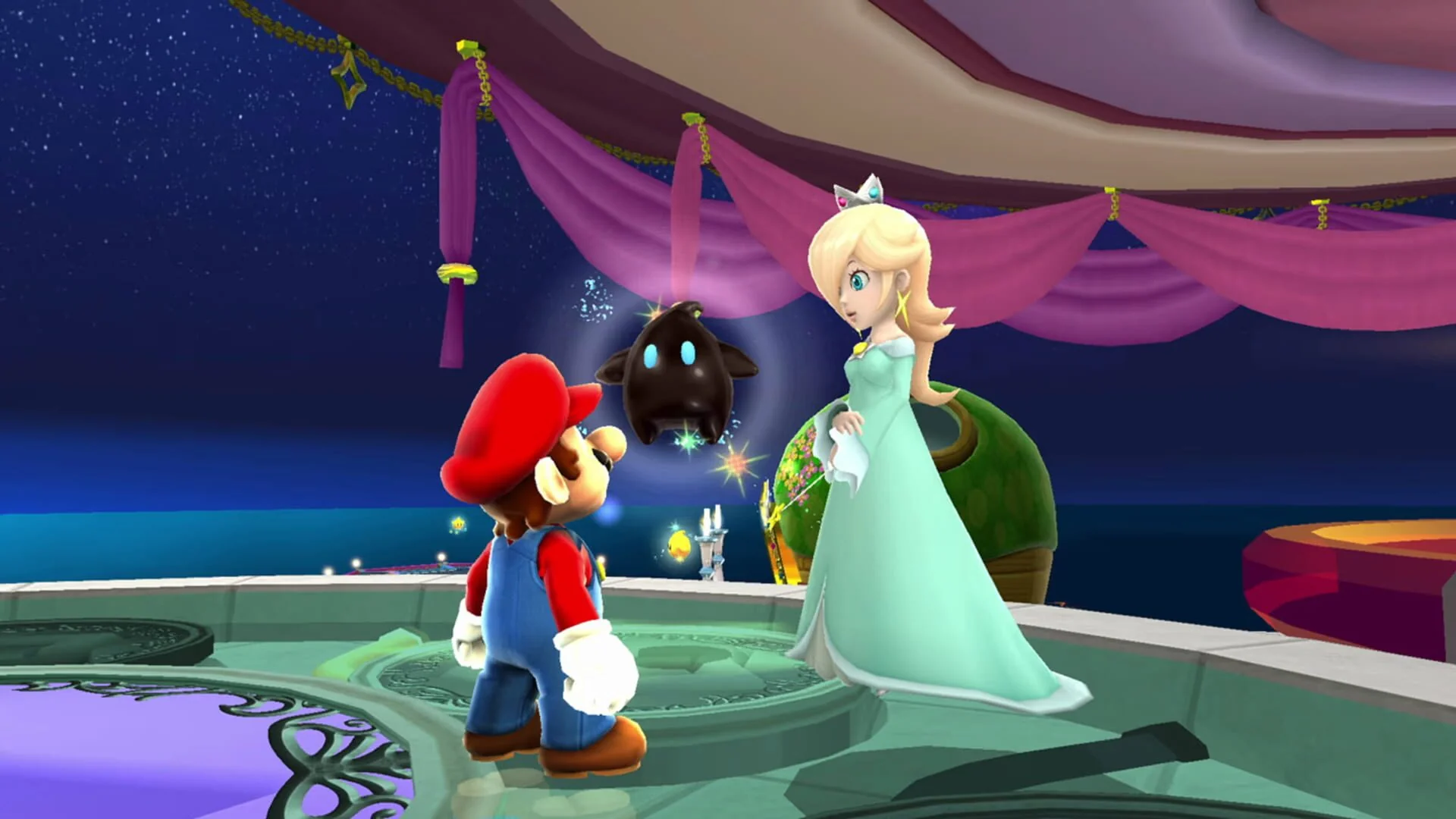
Beyond box office, Galaxy functions as a testbed for how aggressively Nintendo can extend its characters and lore through film. In a recent Forbes interview, Shigeru Miyamoto explained that during development of the original Super Mario Galaxy game, he and director Yoshiaki Koizumi had only a “vague idea” of the relationship between Princess Peach and Rosalina. The game left Rosalina’s origins and possible family ties deliberately ambiguous.
Miyamoto said the film finally develops that concept “in detail,” describing the process as an opportunity to explore ideas that never reached consensus during the game’s production. That reflects Nintendo’s willingness to let cinema retroactively codify previously ambiguous lore, potentially feeding back into future game narratives and merchandising.
The movie also leans into cross-franchise experimentation. Reporting from GamesRadar and regional outlets highlights a prominent Star Fox cameo: Fox McCloud appears among the film’s Easter eggs, with Miyamoto acknowledging that the idea originated from Illumination. He anticipated internal resistance to bringing a non-Mario hero into the film but found “strong support” across Nintendo once the concept was formally discussed.
Additional post-credits scenes described by 3DJuegos deepen this direction. One shows Lumalee acting as a guard while Fox McCloud departs in his Arwing, teasing a more concrete integration of Star Fox into the emerging film continuity. Another introduces Princess Daisy in a hub world without dialogue, signaling that core Mario spin-off characters are being queued up for future appearances.
Taken together, these choices position the so-called Nintendo Cinematic Universe (NCU) as more than marketing rhetoric. The films are starting to function like a cross-IP platform where Mario can intersect with other Nintendo heroes, laying structural groundwork for ensemble concepts long speculated among fans, including the possibility of a Super Smash Bros.-style crossover in the longer term.
Franchise Roadmap, Risks, and Competitive Context
Nintendo has already confirmed a live-action The Legend of Zelda film targeting 2027, suggesting an annual or near-annual cadence of major theatrical releases through the back half of the decade. Industry chatter and leaks point to a Donkey Kong spin-off and a third Mario film under discussion, with some talent publicly speculating about a 2029 window for another mainline Mario entry. While unconfirmed, the Galaxy opening makes ongoing expansion of the slate directionally more plausible.
In the broader game-to-film landscape, Mario’s performance sits alongside franchises like Sonic the Hedgehog and Five Nights at Freddy’s as evidence that recognizable interactive brands can anchor multi-film strategies. Where Nintendo diverges is the depth of its first-party IP bench and its historically conservative approach to licensing, which appears to be loosening as internal teams grow comfortable with Illumination’s handling of tone and characterization-despite critical pushback on specific portrayals like Rosalina.
The key execution risks are becoming clearer. One is franchise fatigue if future installments continue to prioritize Easter-egg density over emotionally coherent stories, potentially eroding broader audience appeal over time. Another is creative tension around how far crossovers can stretch character consistency and brand identity, particularly as non-Mario franchises such as Star Fox and Zelda enter the same cinematic orbit.
Near-term signals to track include weekend-to-weekday hold for Galaxy versus the 2023 Mario comp, the scale of international rollout relative to domestic performance, and how strongly Nintendo and Illumination emphasize cross-IP cameos in marketing for subsequent projects.
InsightsFinalBoss Signal: The Super Mario Galaxy Movie’s opening confirms that Nintendo and Illumination have built a film platform where critic scores are secondary to brand gravity and audience nostalgia. With Star Fox, Daisy, and clarified Peach–Rosalina lore now on screen, the NCU is shifting from hypothetical to operational-placing Nintendo among the few game IP holders actively constructing a long-horizon theatrical universe rather than isolated one-offs.
Leave a Reply