Category: Uncategorized

  • Cult horror game Doki Doki Literature Club pulled from Google Play Store for its “depiction of

    Cult horror game Doki Doki Literature Club pulled from Google Play Store for its “depiction of

    Key Signals

    • Google removed Doki Doki Literature Club (DDLC) from Google Play in early April 2026, citing Terms of Service violations over its “depiction of sensitive themes.”
    • The Android delisting comes roughly four months after DDLC’s December 2025 mobile launch, while the game remains available on iOS, PC and consoles.
    • Developer Team Salvato and publisher Serenity Forge are pursuing reinstatement and evaluating alternate Android distribution, highlighting reliance risk on single-store access.
    • The takedown targets a title long praised for nuanced mental health and self-harm depiction, raising fresh questions over how platforms interpret “sensitive themes.”
    • Signals to watch: Google’s policy clarifications, whether edits are demanded, and whether similar narrative titles face stricter review or post-launch re-assessment.

    What Changed: A Cult Visual Novel Pulled After a Quiet Android Launch

    Google has delisted psychological horror visual novel Doki Doki Literature Club from the Google Play Store, stating that the game’s content violates Play Store Terms of Service through its “depiction of sensitive themes.” The move affects the Android version launched in December 2025 and comes roughly four to five months after release, despite no public indication that the game’s content changed during that period.

    https://www.youtube-nocookie.com/embed/9a01ayVKjsA?autoplay=1

    Developer Team Salvato and publisher Serenity Forge confirmed the takedown in a joint public statement, describing it as a unilateral decision by Google tied to sensitive content. As of mid-April 2026, DDLC remains available on Steam, iOS (via Apple’s App Store), Nintendo Switch, PlayStation, and Xbox. The title, first released on PC in 2017 as a free visual novel that pivots into psychological horror, has since become a widely cited cult hit with a large global player base.

    On Android, Serenity Forge states that the team is working “to find a path forward for getting DDLC reinstated” while exploring other distribution methods for Android devices, such as sideloading or alternative app stores. Google has not publicly detailed which specific policy clause DDLC is deemed to have breached.

    Content Moderation Meets Mental Health and Self-Harm Depictions

    DDLC’s removal lands at the intersection of platform safety policies and growing sensitivity around portrayals of mental health, suicide, and self-harm. The game’s narrative explicitly foregrounds these themes as part of a deliberately dissonant shift from light-hearted dating-sim aesthetics to psychological horror. That tonal turn, and the way it engages with depression and suicidal ideation, has been a core part of critical and community acclaim for nearly nine years.

    Team Salvato and Serenity Forge emphasise that the game has long been “widely celebrated for portraying mental health in a way that meaningfully connects” with players, helping some feel less isolated. The Android version, like the PC and console releases, prominently warns that the game is “not suitable for children or those who are easily disturbed,” both in store descriptions and in-game.
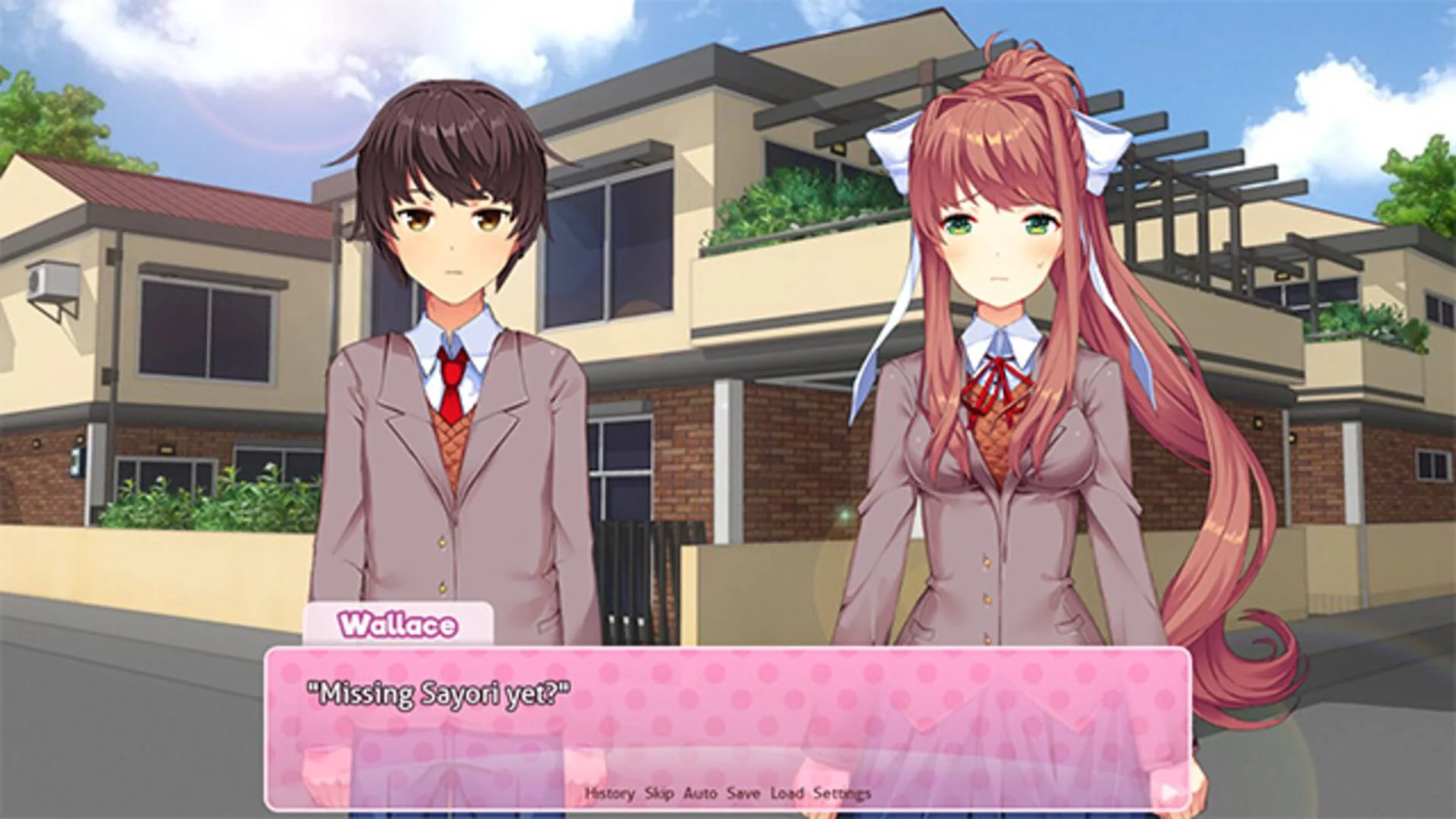
    Screenshot from Doki Doki Literature Club: The Festival
    Screenshot from Doki Doki Literature Club: The Festival

    Google Play’s public policies on inappropriate content reference “sensitive events” such as death, conflict, and other socially impactful topics, stating that apps which address them without adequate “consideration” may be rejected or removed. Industry reporting indicates that DDLC’s suicide and self-harm depictions are likely at the core of Google’s concern, but the absence of detailed reasoning creates ambiguity for developers dealing with comparable subject matter.

    The key tension is not simply whether such topics appear, but how platforms evaluate context, tone, and intent. DDLC’s case suggests that even heavily signposted, narratively integrated depictions of mental health crises can fall afoul of policy if interpretation shifts at the store level or if internal enforcement tightens.

    Platform Divergence: Why Google Acts While Apple and Consoles Do Not

    A major point of friction exposed here is the divergence between platform gatekeepers. DDLC remains live on Apple’s App Store, major console storefronts, and PC platforms, implying those ecosystems either interpret similar content as compliant or weigh context and age-gating differently.

    For studios, this underlines that “multi-platform approval” is not a one-time safety net. A title can clear console certification and Apple’s review, then still be pulled from Google Play months after launch. Particularly for niche genres like visual novels and psychological horror, policy risk is no longer confined to launch hurdles but extends into ongoing compliance and retroactive enforcement.
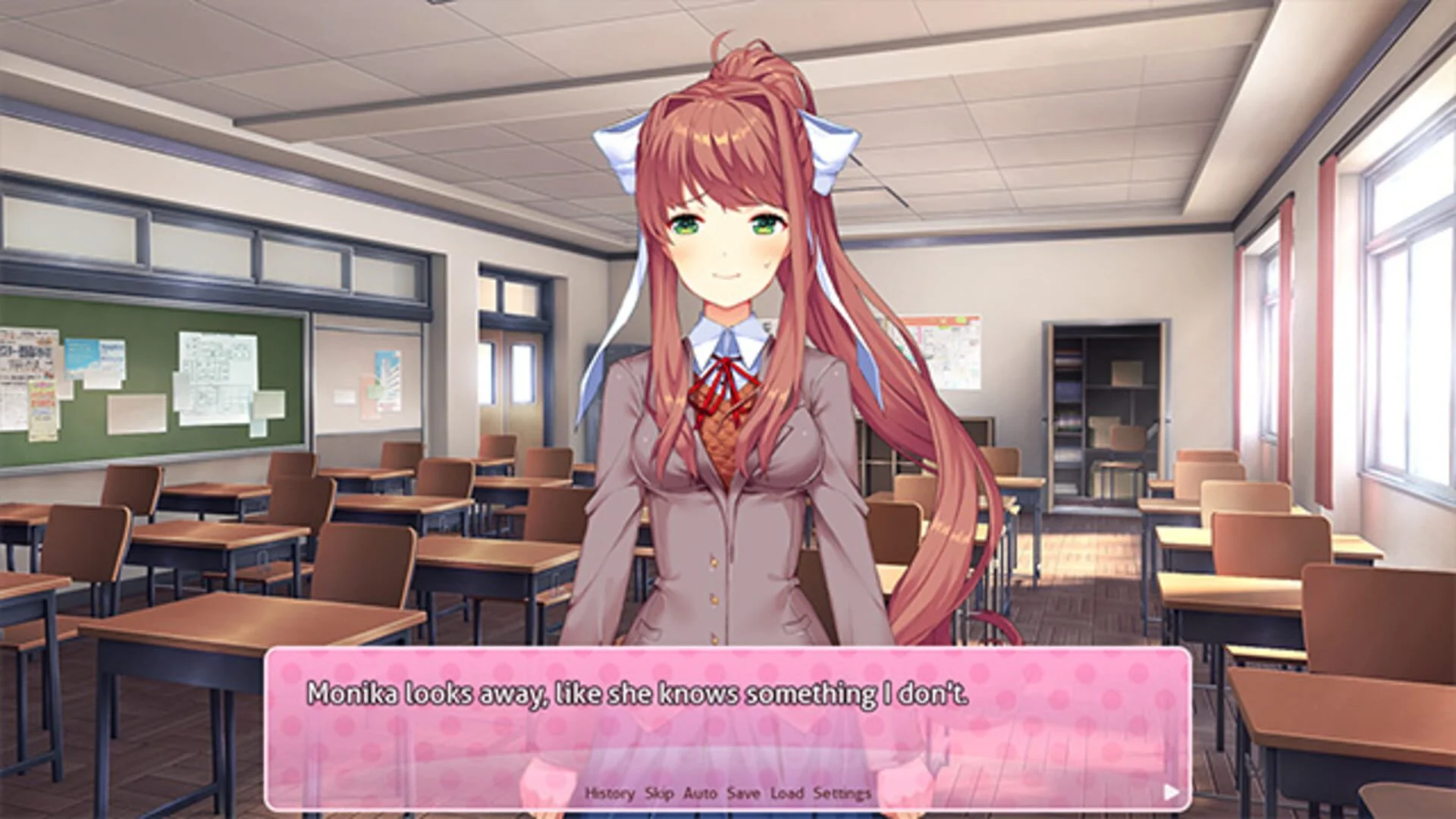
    Screenshot from Doki Doki Literature Club: The Festival
    Screenshot from Doki Doki Literature Club: The Festival

    It also points to an asymmetry in how mobile ecosystems handle controversial narrative content compared with PC storefronts like Steam, where DDLC has sustained an “overwhelmingly positive” reception for years with content warnings but without similar delisting pressure.

    Android Distribution Exposure for Indies and Narrative-Heavy Titles

    From an operational standpoint, the removal spotlights how concentrated Android distribution remains around Google Play, even in a technically open ecosystem. An indie studio can in theory pivot to direct downloads, regional app stores, or stores from OEMs and publishers, but each alternative introduces friction: weaker discovery, fragmented update pipelines, and reduced trust relative to the default Play Store channel.

    DDLC is unusual in that brand awareness and a long tail of cultural impact can help migrate some portion of Android demand off-Play if required. For newer or less visible narrative games dealing with trauma, self-harm, or other sensitive topics, a similar enforcement action could effectively remove them from mainstream Android reach, even if console and PC access remain unaffected.

    The timing is also notable. The Android version was approved and live for several months before Google’s removal. That pattern hints at either a late-stage internal review escalation, external complaints triggering reconsideration, or broader tightening of policy application around sensitive mental health themes.
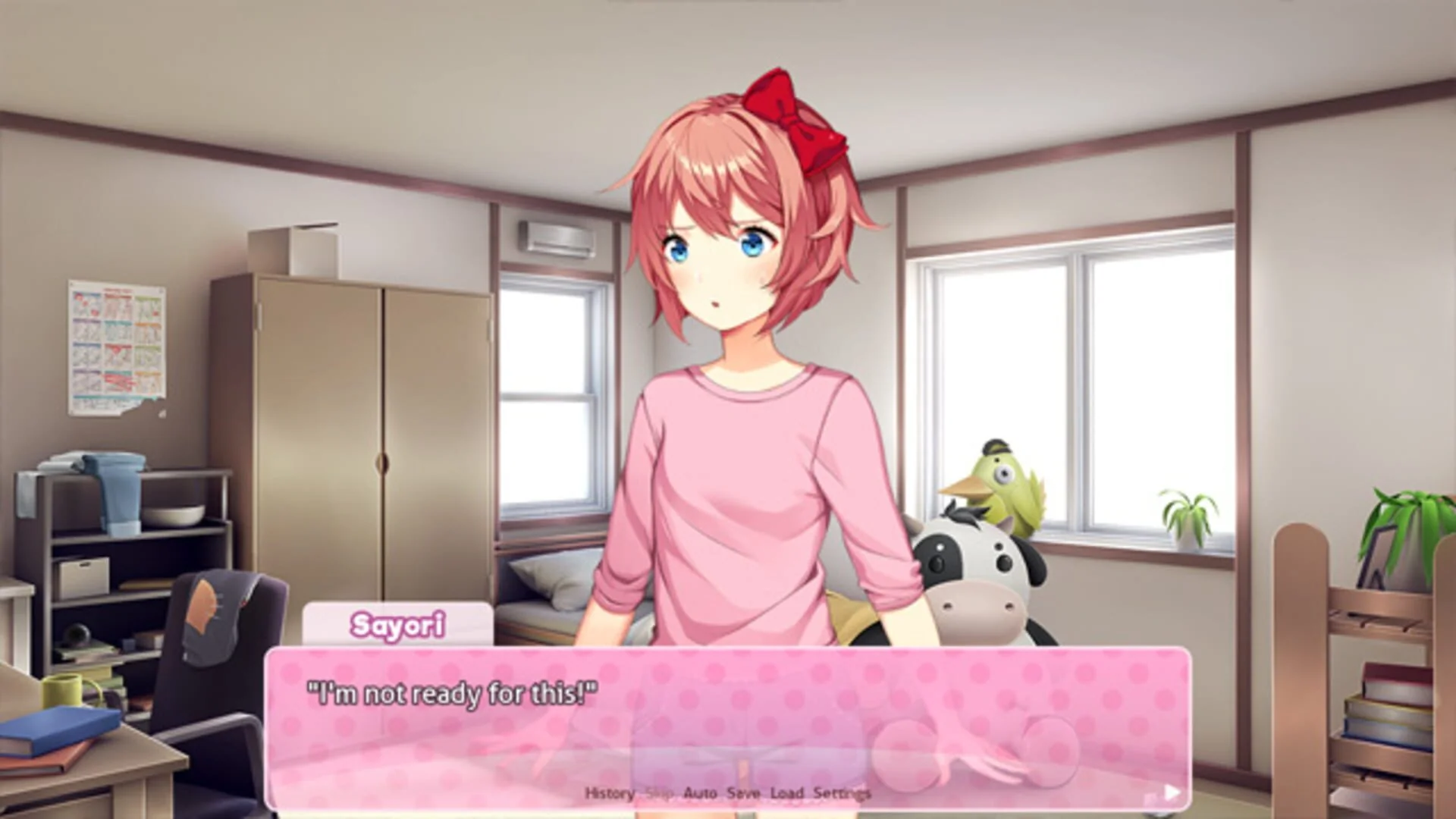
    Screenshot from Doki Doki Literature Club: The Festival
    Screenshot from Doki Doki Literature Club: The Festival

    Regulatory and Public-Safety Backdrop

    Beyond platform policy, DDLC has periodically surfaced in public-safety and regulatory discussions. Recent reporting highlights that authorities in Jordan explicitly named the game in a parental advisory post, citing concerns that its psychological horror elements and self-harm themes could have serious psychological impacts on children. While that advisory is not directly tied to Google’s action, it reflects a wider climate of scrutiny around such content in interactive media.

    This environment increases the likelihood that platform holders interpret “sensitive themes” through a risk-averse lens, especially when titles can be downloaded by minors despite age ratings and warnings. For global releases, localized regulatory sensitivities can indirectly influence global platform decisions, even if enforcement formally rests on universal Terms of Service.

    InsightsFinalBoss Signal

    The DDLC delisting is less about a single cult visual novel and more about shifting boundaries for how platforms permit games to depict mental health, suicide, and self-harm. It underscores that explicit content warnings and years of critical validation do not guarantee long-term policy acceptance on mobile stores. For narrative-driven and horror-focused studios, Android now looks more volatile than consoles or PC: approval can be reversed months post-launch, with sparse explanation, and alternative distribution remains structurally weaker than Google Play. The next signals will be whether Google clarifies its standards, whether DDLC returns unchanged or edited, and whether other titles with comparable themes quietly disappear from the store.
  • Disney+ Is About To Start Streaming More Esports With The Korea Esports Association

    Disney+ Is About To Start Streaming More Esports With The Korea Esports Association

    • Disney+ expands its Korea Esports Association (KeSPA) deal to carry global, non-geolocked streams of Esports Championships Asia Jinju 2026 and additional Korean/Asian esports events.

    • Coverage spans Street Fighter 6, The King of Fighters XV, TEKKEN 8, eFootball, PUBG Mobile, Eternal Return, and the 2026 LoL KeSPA Cup, with ESPN enhancing production branding.

    • The move builds on 2025 Disney+ rights for the LoL KeSPA Cup and Korean Asian Games prep, positioning Disney+ as a premium alternative to Twitch/YouTube for national-team and regional events.

    • Non-geolocked access raises the stakes in global rights negotiations, potentially reshaping how Asian federations and publishers package regional tournament media rights.

    • Key signals: concurrent viewership for Jinju 2026, publisher appetite for similar distribution, and whether Disney routes more esports content through ESPN and linear channels.

    Disney+ Enters the Global Esports Broadcast Pack

    Disney+ is taking a more assertive position in live esports with an expanded partnership with the Korea Esports Association (KeSPA). Starting with Esports Championships Asia Jinju 2026 from April 24-26, the platform will stream the event globally without geoblocking, supported by ESPN-branded presentation. This extends a 2025 arrangement that already put the League of Legends (LoL) KeSPA Cup and Korean national team preparations for the Asian Games on Disney+.

    The Esports Championships Asia in Jinju brings together national teams from South Korea, China, Japan, Vietnam, Thailand, the Philippines, and Mongolia. The event focuses on a mix of fighting and sports titles: Street Fighter 6, The King of Fighters XV, TEKKEN 8, and eFootball on PC and mobile. Jinju functions as a regional form guide for selectors and federations ahead of the 20th Asian Games Aichi-Nagoya 2026, where esports is slated to feature in the wider sports program.

    Beyond Jinju, Disney+ coverage will extend to tournaments for PUBG Mobile and Eternal Return, plus the 2026 LoL KeSPA Cup, which is slated to feature all 10 LCK organizations alongside invited international teams such as Cloud9 and Team Liquid. Disney+ will also stream Korea’s national esports team send-off ceremony and LoL evaluation and friendly matches in the run-up to the Asian Games.

    Deal Structure: Non-Geolocked, Multi-Title, ESPN-Branded

    The original 2025 agreement between Disney+ and KeSPA centered on exclusive global streaming rights for the LoL KeSPA Cup and Korean national team preparation content. The 2026 expansion broadens the inventory in three ways: multi-title coverage beyond League of Legends, national-team themed events across several countries, and an explicit shift to fully non-geolocked distribution on Disney+ for flagship tournaments.

    ESPN’s role is primarily in production value and branding. While Disney has experimented with esports on ESPN linear channels in the past, this arrangement currently leans on ESPN graphics, standards, and on-air framing layered over a Disney+ delivery stack. It effectively treats esports as part of the broader ESPN sports portfolio from a branding standpoint, while keeping distribution inside the Disney+ subscription environment.

    Kim So-yeon, head of The Walt Disney Company Korea, has framed the expansion as a response to stronger-than-expected 2025 viewership and a desire to “promote Korean esports globally.” That messaging aligns with KeSPA’s long-standing objective to position Korean esports as a national export, now routed through a global entertainment platform rather than purely game-native channels such as Twitch, AfreecaTV, or YouTube.

    Screenshot from Multiple Views Objects
    Screenshot from Multiple Views Objects

    Strategic Logic for Disney+: Gen Z Reach and Rights Experimentation

    For Disney+, the KeSPA partnership functions as a relatively low-risk test bed for several strategic questions: how well long-form live esports can drive engagement inside a generalist streaming app; the extent to which national-team narratives unlock broader crossover audiences; and how far ESPN’s sports-production playbook can be mapped onto game-native formats.

    The timing also intersects with The Walt Disney Company’s broader gaming posture. Disney’s $1.5 billion equity stake in Epic Games and plans for a Disney-Fortnite universe highlight an intent to anchor younger, more interactive audiences across both games and streaming. Locking in recognizable Asian esports properties — from LoL and PUBG Mobile to fighting game staples like Street Fighter 6 and TEKKEN 8 — gives Disney+ another on-ramp to demographics that spend heavily in game ecosystems but are increasingly selective with general entertainment subscriptions.

    Unlike Twitch and YouTube, Disney+ is not yet a default discovery surface for esports. That creates both a differentiation angle and a friction challenge. Esports Championships Asia and the KeSPA Cup are not open-participation events with long qualifying funnels; they are curated, federation-backed tournaments with national branding. That structure aligns more naturally with ESPN’s traditional sports storytelling and with Disney+’s emphasis on premium, curated live events.

    Screenshot from Multiple Views Objects
    Screenshot from Multiple Views Objects

    Value for KeSPA, Publishers, and Teams

    For KeSPA, Disney+ offers global distribution that reaches beyond core esports viewers into a broader entertainment subscriber base. That matters for sponsors, federations, and policymakers invested in the Asian Games narrative, where esports is now situated alongside conventional medal sports. Visibility of national-team ceremonies, friendlies, and evaluation matches can help normalize esports within Olympic-style multi-sport events.

    Publishers and rights-holders receive incremental broadcast-grade exposure. Capcom, SNK, and Bandai Namco benefit from having Street Fighter 6, The King of Fighters XV, and TEKKEN 8 staged within a national-team framework, at a time when fighting games are working to stabilize their global competitive calendars post-pandemic. Konami’s eFootball, Krafton and its partners with PUBG Mobile, and Nimble Neuron with Eternal Return gain visibility in an environment that blends mobile, PC, and console — useful in an era when many regional tournaments skew heavily toward a single platform.

    For teams and players, the partnership potentially raises the production value and reach of what might otherwise be regionally constrained events. The inclusion of invited Western organizations like Cloud9 and Team Liquid in the LoL KeSPA Cup extends the tournament’s appeal across LCK, LCS, and LEC audiences, while letting Disney test interest in cross-regional national and club narratives within one broadcast window.

    Risks, Constraints, and Signals to Track

    Non-geolocked global coverage introduces complications. Regional broadcasters and platforms may push back on wide-open access if it affects local licensing economics. Rights fragmentation is already visible in traditional sports streaming; esports federations and publishers are now testing similar models, and a global Disney+ window could change expectations for both pricing and exclusivity in future cycles.

    Screenshot from Multiple Views Objects
    Screenshot from Multiple Views Objects

    Audience behavior is another open question. Esports viewers are conditioned to consume via free, open platforms with embedded chat, co-streaming, and creator overlays. While Disney+ delivers reliability and production polish, it does not yet match the social and creator tooling of Twitch or YouTube. A key data point will be whether Disney+ can drive meaningful concurrency and watch time for Jinju 2026 and the LoL KeSPA Cup without those community features, or whether Disney eventually needs companion distribution or co-streaming arrangements.

    Monetization parameters remain largely undisclosed. With no specific figures on rights fees or sponsorship guarantees, the primary near-term value appears to be strategic alignment and brand positioning rather than direct short-term profit. Over time, advertising load, sponsorship integration, and possible upsell mechanics will clarify whether esports becomes a core content pillar for Disney+ or remains a premium but niche category linked to specific regions and events.

    Key signals include: viewership metrics for Esports Championships Asia Jinju 2026; publisher willingness to renew or expand participation under a Disney+ distribution umbrella; the degree of ESPN involvement beyond branding into editorial and rights acquisition; and any moves by rival global streamers to court similar partnerships with national esports federations in other regions.

    InsightsFinalBoss Signal: The Disney+-KeSPA expansion suggests that national-team esports and multi-sport frameworks like the Asian Games are becoming the most attractive entry point for generalist entertainment platforms. Rather than chasing every league and major, global streamers may prioritize curated, federation-backed tentpoles that look and feel like traditional sports broadcasts while quietly testing how far esports can stretch the definition of a streaming service’s core offering.

  • Everything new added with the Starfield Free Lanes update

    Everything new added with the Starfield Free Lanes update

    Starfield Free Lanes Turns Loading Screens into Playable Space

    • Free Lanes introduces Cruise Mode, turning intra-system travel from fast travel into continuous, explorable space with dynamic encounters.
    • X‑Tech becomes a cross-cutting resource for rerolling and upgrading legendary gear and ships, deepening late-game optimization.
    • Starborn progression is decoupled from repeated New Game Plus runs via Quantum Essence and a new Quantum Entanglement Device.
    • Anchorpoint Station, expanded outpost tools, and new POIs, vehicles, and housing broaden non-linear and sandbox play.
    • Launched alongside the Terran Armada DLC and a wider platform rollout, the patch signals a long-term systems roadmap for Starfield.

    The Free Lanes update, released as part of Starfield’s v1.16.236 patch, is framed across Bethesda’s communications and specialist coverage as the game’s most transformative systems overhaul to date. Delivered as a free update on PC and Xbox Series X|S, and aligned with the Terran Armada DLC and a wider platform launch, it restructures core loops around movement, loot, and progression rather than simply layering in more content.

    Cruise Mode: Space as a Continuous Playspace, Not a Menu

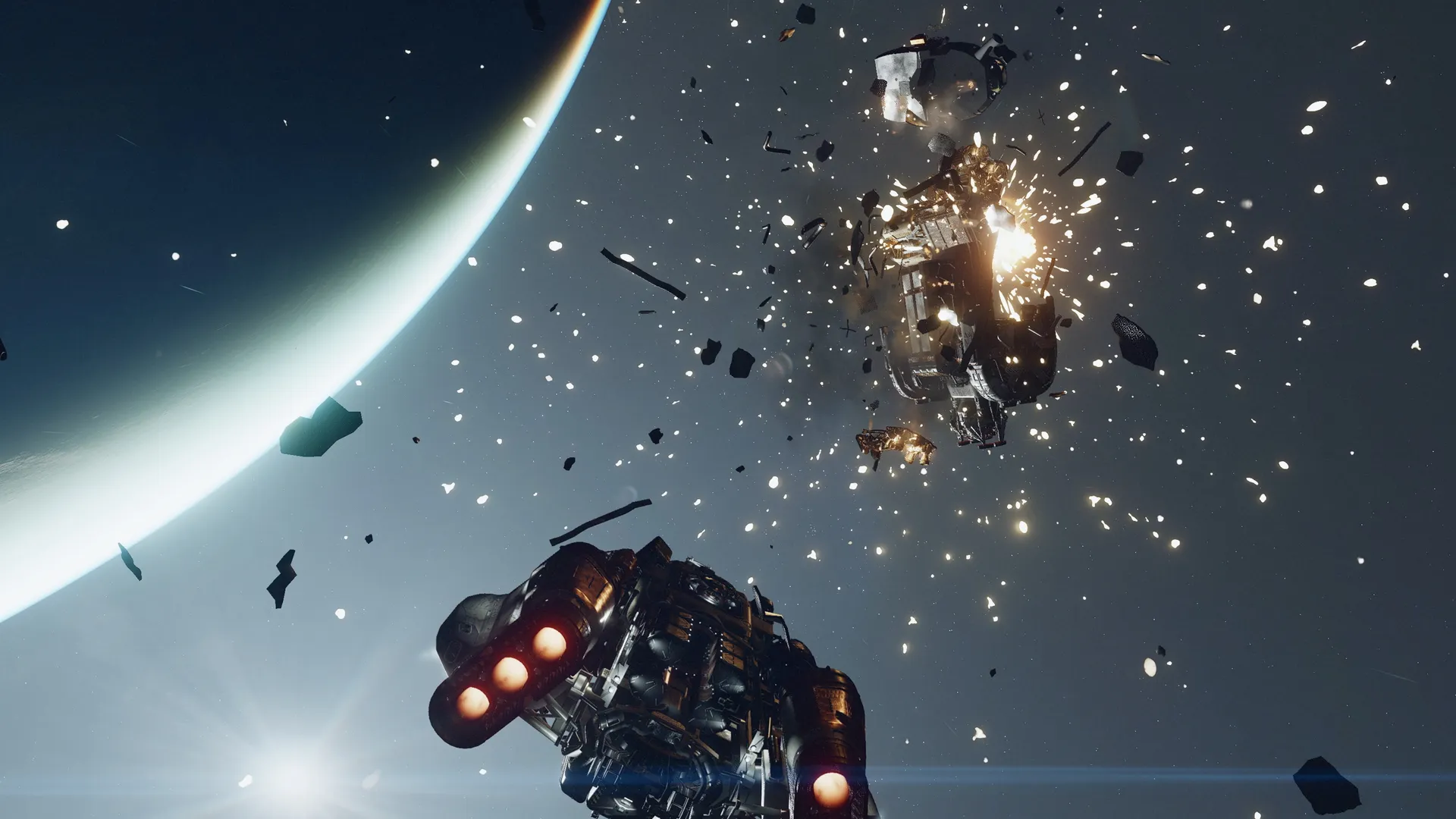
    Prior to Free Lanes, Starfield’s spaceflight was structurally closer to a node-based fast travel system: limited manual flying, frequent loading screens, and a focus on destinations rather than transit. Cruise Mode fundamentally changes that within star systems. Once engaged, ships travel seamlessly between planets and in-system locations, with space populated by new points of interest, encounters, and combat opportunities.

    Crucially, Cruise Mode does not lock players into the cockpit. While the ship is underway, crew spaces and workbenches remain accessible, allowing crafting, dialogue, and light management activities during transit. This shifts “dead time” between locations into active playtime, which has implications for session length and perceived friction. Transit becomes a discovery surface where new ship battles, derelicts, or DLC hook points can appear, rather than a non-interactive gap.

    Industry reporting on the Terran Armada DLC highlights that its dynamic Incursions and new space locations are designed to surface within this denser in-system layer. That linking of free systemic update (Free Lanes) and paid narrative layer (Terran Armada) underlines a broader live-ops strategy: use systems patches to reconfigure the canvas, then drop premium content that exploits the new structure.

    X‑Tech: Centralizing Gear and Ship Optimization

    X‑Tech is the second pillar of Free Lanes, introduced as a shared optimization resource for weapons, armor, and ships. Dropping from bosses, high-value chests, ship wreckage, and Starborn encounters, X‑Tech can reroll legendary effects on equipment and unlock higher-tier modifiers.

    The reroll mechanic follows a two-phase structure. Initial uses randomize legendary traits; after multiple rerolls on a given item, the full modifier list unlocks for direct selection. In systemic terms, this moves Starfield away from pure RNG loot chasing toward a hybrid model where randomness gates speed, but not ultimate build completion. For engaged players, it substantially reduces the frustration of never rolling a specific defensive or elemental modifier, while still preserving grind for X‑Tech itself.

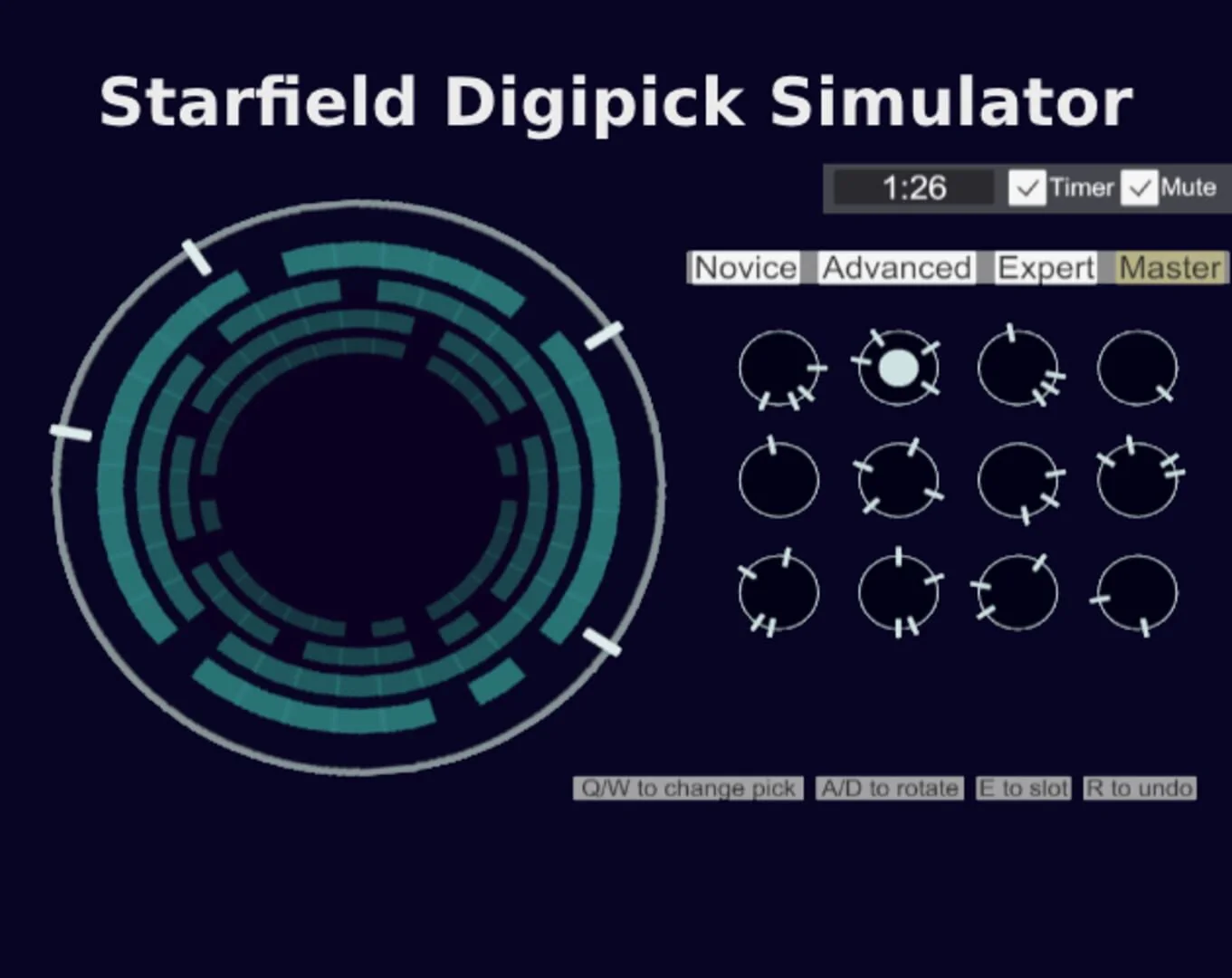
    Screenshot from Starfield Digipick-Locking Minigame Simulator
    Screenshot from Starfield Digipick-Locking Minigame Simulator

    X‑Tech also underpins a new ship optimization terminal that can be added to player vessels. From there, shield strength, engines, and grav drives can be tuned using the same currency. This consolidates what had been a scattered ship progression path-spread across vendors, parts drops, and credits-into a more legible upgrade funnel. The likely effect is a clearer late-game chase: farm X‑Tech through higher-end encounters, then reinvest into both combat builds and flagship ships.

    On the difficulty side, coverage notes that enemies, including Terran Armada units, can spawn with new X‑Tech-powered modifiers such as reinforced shields or elemental effects. That escalation is important: it keeps the challenge curve responsive to the new power ceiling unlocked by Tier 4 legendaries and the added Superior and Exceptional equipment tiers.

    Starborn and New Game Plus: Endgame Without Full Resets

    Free Lanes adjusts one of Starfield’s most debated structures: the reliance on repeated New Game Plus cycles for Starborn progression. Quantum Essence now serves as a dedicated resource for ranking up unlocked Starborn abilities, with drops tied to high-end activities rather than mandatory fresh universes.

    Cover art for Starfield Digipick-Locking Minigame Simulator
    Cover art for Starfield Digipick-Locking Minigame Simulator

    This decouples endgame growth from full campaign replays, broadening accessibility for players who completed a single run but were unwilling to restart. Powers can be favorited for faster swapping and combo play, framing Starborn abilities more like an evolving action kit than a static reward from linear temple discovery.

    Alongside this, the Quantum Entanglement Device, buildable at The Lodge, enables a limited set of items to persist across Unity transitions. That partial continuity softens the psychological cost of entering New Game Plus and aligns Starfield more closely with roguelite-informed progression, where some persistent meta-growth coexists with universe resets.

    Anchorpoint Station, Outposts, and Sandbox Longevity

    Free Lanes also invests heavily in sandbox infrastructure. Anchorpoint Station, a new starstation located in the remote Algorab system, acts as a late-game hub combining merchants, quests, and narrative hooks into Terran Armada content. Its remoteness, and the ship capability required to reach it, effectively mark it as endgame-tier space, giving high-level players a distinct destination outside traditional faction hubs.

    Outposts receive systemic quality-of-life upgrades that alter resource and logistics play. Shared outpost containers now link storage across multiple bases, reducing friction in multi-planet industrial setups. A new Outpost Database, viewable from the character menu, centralizes key data on locations and resources, which had previously lived in scattered UI elements. Cosmetic and lifestyle additions, such as the Milliewhale outpost pet, layer identity and collectability on top of the functional base framework.

    Beyond these, the Moon Jumper land vehicle, an asteroid-base home, additional planetary points of interest, and a set of stat-buffing Colony War Action Hero collectibles expand the game’s catalogue of traversal, housing, and exploration content. None of these individually reframe the experience, but together they broaden the canvas for post‑campaign play and align with Bethesda’s historical emphasis on open-ended sandboxing.

    Strategic Context: Live Support Amid Corporate Friction

    The timing of Free Lanes and Terran Armada, coinciding with a broader platform rollout, positions Starfield as an ongoing live product rather than a one-and-done single-player RPG. This comes against a backdrop of public criticism from former Bethesda executive Pete Hines, who recently described feeling powerless under Microsoft’s ownership and characterized the studio as being “damaged” and “abused” during his final months. That dissonance-between internal cultural tension and visible external investment in systems-heavy updates—will remain a key dynamic to track for Bethesda’s future roadmap.

    In competitive terms, the Free Lanes patch pushes Starfield closer to systemic space sims where traversal, ship management, and dynamic encounters form the core loop, while retaining Bethesda’s RPG framing. By turning previously static layers—spaceflight, legendary rolls, New Game Plus—into more malleable systems, the update attempts to address criticisms around repetition and dead time without abandoning the existing content slate.

    InsightsFinalBoss Signal: Free Lanes is less a content drop and more a structural rewrite that increases the game’s surface area for live balancing and future DLC integration. The key signals to watch are engagement around Cruise Mode encounters, uptake of X‑Tech-driven optimization as a long-tail grind, and whether the new Starborn and outpost tools meaningfully shift endgame retention curves for Starfield’s expanding multi-platform audience.

  • Dune: Awakening is finally making Deep Desert and shipwreck PvP fully optional

    Dune: Awakening is finally making Deep Desert and shipwreck PvP fully optional

    Key Signals

    • Funcom is making all Hagga Basin PvP zones optional and splitting Deep Desert into separate PvE and PvP instances in patch 1.3.20.0, marking a decisive shift to PvE-first design.
    • Internal telemetry shows 80%+ of lifetime Dune: Awakening players engage only with PvE, driving a rework to keep PvP incentivized (2.5x gathering yields) but no longer mandatory for progression.
    • Self-hosted servers on Windows Pro with Hyper-V will enable custom rulesets but carry high RAM/CPU requirements, likely limiting adoption to more dedicated communities.
    • Key risks include fragmentation between PvE and PvP populations and potential resource inflation from boosted PvP yields; watch retention metrics around Chapter 3 and endgame participation rates.
    • This move aligns Dune: Awakening more closely with survival sandboxes like Conan Exiles and Ark, while narrowing its appeal as a full-loot open PvP MMO.

    Funcom Codifies a PvE-First Identity for Dune: Awakening

    Funcom is structurally redefining Dune: Awakening as a PvE-first survival MMO, ending the long-running experiment of effectively mandatory open-world PvP at endgame. In an April developer update, the studio confirmed that all PvP zones in Hagga Basin will be disabled on official worlds and that Deep Desert will be split into distinct PvE and PvP instances in patch 1.3.20.0.

    This is more than another tuning pass. It resolves a tension that has defined Dune: Awakening since launch: endgame progression has been concentrated in high-value Deep Desert and shipwreck content where PvP was structurally embedded, forcing PvE-focused players into conflict spaces to chase competitive gear and resources.

    From Hybrid Endgame to Hard Split: What Changes in Patch 1.3.20.0

    Funcom had already trialed a partial decoupling in June 2025, when patch 1.1.0.17 split Deep Desert into a PvE southern half and PvP northern half. The southern rows offered guaranteed, lower-tier rewards per player and shared loot, while the northern PvP bands preserved higher schematic counts, exclusive drops, and denser spice fields. That compromise did not halt player dissatisfaction.

    The new patch goes significantly further. On official servers:

    • Hagga Basin: All PvP zones, including shipwrecks and control point-style areas, are being disabled. The basin effectively becomes a PvE region on official worlds.
    • Deep Desert – PvE Instance: A fully PvE shard with no player combat at all, including within shipwrecks and across all rows. This instance focuses on survival, exploration, and scripted encounters.
    • Deep Desert – PvP Instance: A dedicated, high-stakes shard retaining open-world PvP across rows B through I. To preserve a risk/reward differential, harvesting and spice mining yields in PvP areas are multiplied by 2.5.

    Funcom’s published rationale cites internal data showing that over 80% of lifetime players exclusively engage with PvE content. The studio explicitly frames the change as aligning the game with that reality: PvP remains “important” but must be “optional and incentivized rather than required for progression.”

    Player Telemetry and Endgame Accessibility

    From a live-ops perspective, the 80% PvE figure is striking. It implies that earlier design decisions effectively placed the majority of the audience at a structural disadvantage at endgame. Complaints around “forced PvP” were not only about griefing; they reflected a misalignment between progression-critical zones and the activity preferences of most players.

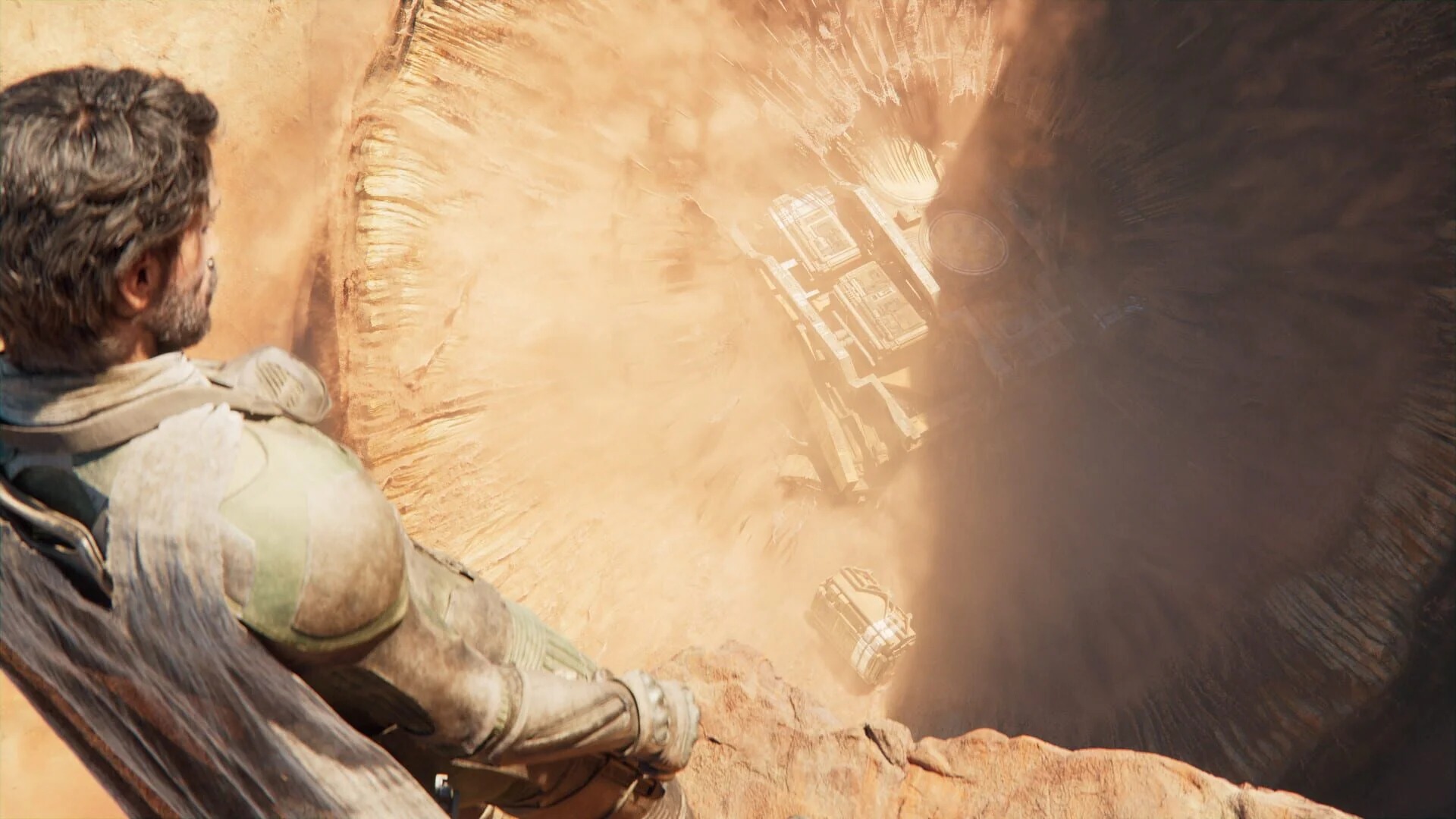
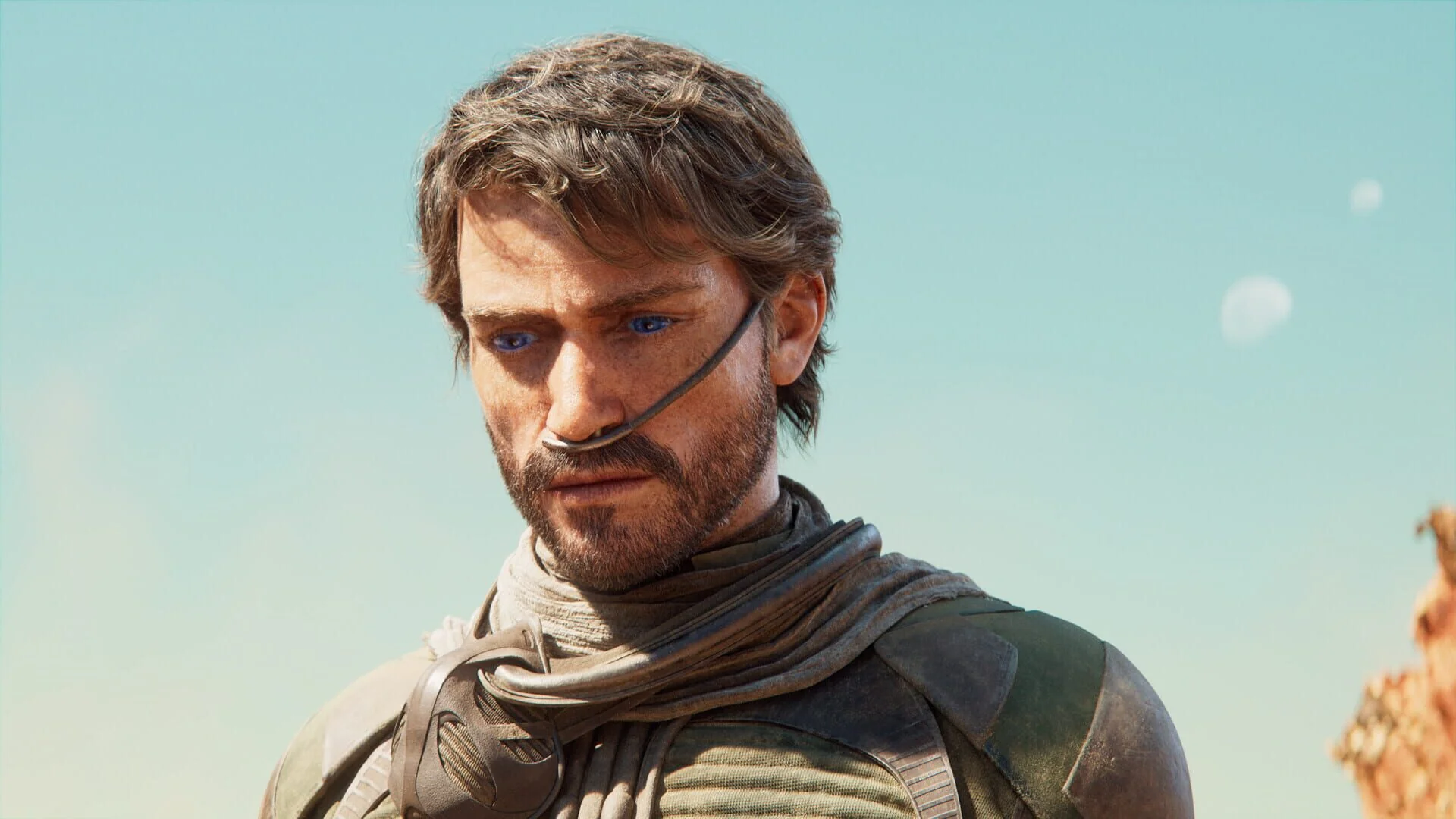
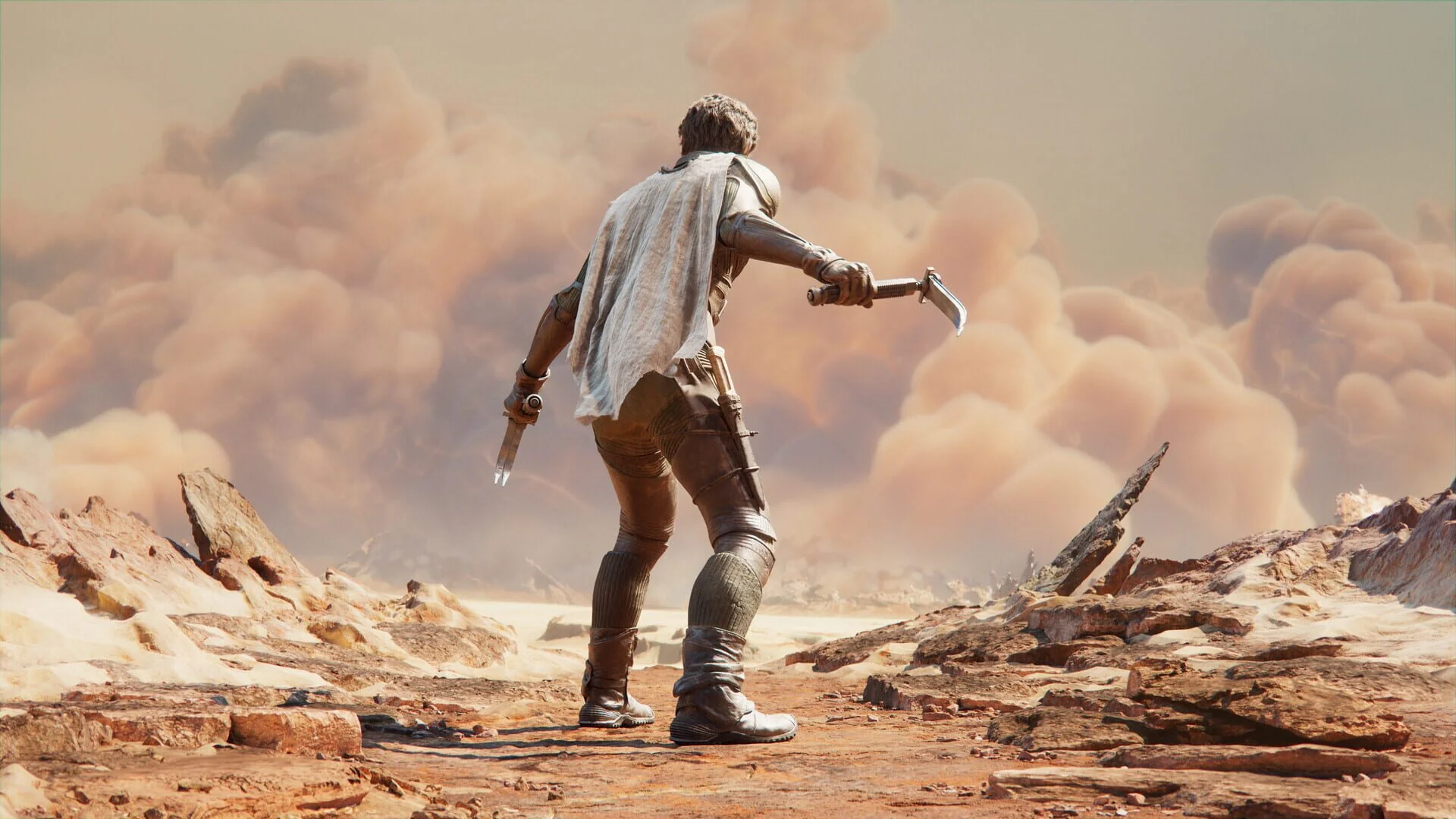
    Screenshot from Dune: Awakening
    Screenshot from Dune: Awakening

    The timing alongside Chapter 3’s “new repeatable gameplay loops” suggests a coordinated attempt to broaden endgame accessibility. By separating PvP and PvE structurally rather than relying on soft incentives, Funcom reduces friction for players who treat Dune: Awakening as a co-op survival title set in the Dune universe, while ensuring that high-skill conflict remains available in a dedicated context for those who seek it.

    The cost is a narrower identity on the PvP side. The game moves closer to Conan Exiles’ dual-mode model than to full-loot PvP MMOs where territorial control and conflict are the spine of progression. For competitive clans and PvP creators, the reduction of organic overlap between PvE and PvP populations may reduce the density of emergent encounters that originally differentiated the Deep Desert.

    Self-Hosted Servers: Power Users over Mass Adoption

    In parallel, Funcom is rolling out experimental self-hosted servers, initially focused on Windows 10 64-bit Pro machines running Hyper-V, with servers deployed inside a Linux virtual machine. Early configuration options include resource harvesting rates, base-building piece limits, item durability, and base decay settings, laying the groundwork for bespoke rulesets and community governance.

    The hardware profile signals a feature aimed at power users rather than broad casual adoption. For 1-4 concurrent players engaged in “normal activity,” the minimum specification calls for:

    Screenshot from Dune: Awakening
    Screenshot from Dune: Awakening
    • OS: Windows 10 64-bit Pro with Hyper-V
    • Memory: 20 GB RAM
    • CPU: Intel Core i5-8400 / AMD Ryzen 5 1600
    • Storage: 100 GB SSD
    • Broadband internet connection

    Funcom notes that CPU and RAM requirements “increase rapidly” with higher player counts and multiple maps, which will keep large community-run worlds in the domain of dedicated server operators and streamers with more capable hardware. This is closer to Ark: Survival Evolved’s private server ecosystem than to lightweight peer-hosting in smaller co-op titles.

    Operationally, self-hosted servers provide an outlet for more aggressive PvP or hardcore rulesets even as official worlds pivot toward PvE. They also create a parallel experimentation space where community preferences for rates, wipe schedules, and PvP severity can surface ahead of or alongside official balance changes.

    Risks: Population Fragmentation and Economic Distortion

    The PvE/PvP split brings clear trade-offs. Multiple Deep Desert instances on official worlds may fragment the active population, especially if server concurrency weakens. A sparsely populated PvP instance undermines the “classic high-stakes environment” that the studio is trying to preserve, while PvE shards that feel crowded could see resource competition and social friction of a different kind.

    The 2.5x resource yield in PvP zones is another pressure point. If a concentrated minority of efficient PvP groups dominates these high-yield areas, in-game economies could see accelerated resource inflation and price divergence between players who engage in PvP and those who do not. That may resolve complaints about forced participation but still entrench a meaningful economic gap between playstyles.

    Screenshot from Dune: Awakening
    Screenshot from Dune: Awakening

    There is also a perception risk. For players attracted by the initial promise of a dangerous, socially fraught Arrakis where other humans are as lethal as sandworms, these changes can read as a retreat from the original thesis toward a more conventional survival co-op experience with optional PvP bolted on.

    InsightsFinalBoss Signal: Survival MMO Design Is Following the Data

    Funcom’s pivot in Dune: Awakening distills a broader pattern across survival and MMO titles: persistent worlds marketed on high-risk PvP frequently discover that the majority of their audience behaves like co-op PvE players once the novelty of conflict wears off. By hard-splitting PvE and PvP in Deep Desert and de-escalating Hagga Basin, Funcom is choosing to optimize for that majority while positioning PvP as an opt-in, high-yield specialization.

    Key signals to track over the coming months include endgame engagement rates in Chapter 3, relative population levels between PvE and PvP Deep Desert instances, and adoption of self-hosted servers as a pressure valve for more extreme rulesets. Together, those metrics will indicate whether a PvE-first Arrakis can sustain both a broad survival audience and a viable, if more contained, PvP ecosystem.

  • No Man’s Sky Xeno Arena Update Channels Pokémon, Lets You Raise, Train and Battle the Alien

    No Man’s Sky Xeno Arena Update Channels Pokémon, Lets You Raise, Train and Battle the Alien

    Key Signals

    • Xeno Arena (v6.3) adds full-featured, turn-based creature battles, breeding, and morphogenetic upgrades as a free system-wide update to No Man’s Sky.
    • The update reframes planetary exploration as a hunt for viable battle teams, backed by a ranked Arena League, medals, and daily challenges that extend long-term engagement.
    • Platform-specific optimizations, including up to ~15% rendering gains on Nintendo Switch 2 and new PC lighting optimizations, underline an ongoing multi-platform lifecycle strategy.
    • The shift into Pokémon-like territory follows a rejected Nintendo monster-battle patent, signaling lower legal overhang for monster-collection mechanics.
    • Risk centers on balance, UX complexity, and community split between exploration-first and competitive-focused cohorts.

    What Xeno Arena Changes in No Man’s Sky’s Design

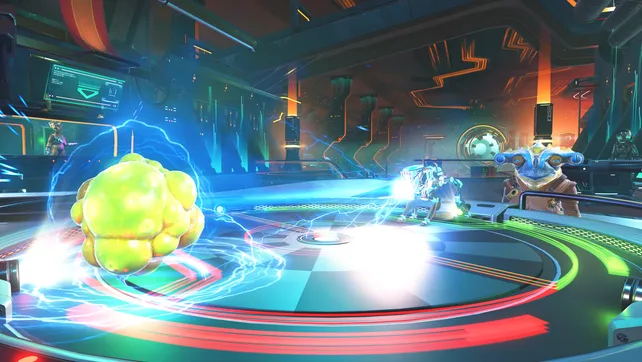
    Hello Games’ Xeno Arena update effectively grafts a full tactical battler onto No Man’s Sky’s exploration sandbox. Players now tame wild fauna, expand their companion roster, breed via egg incubators, and genetically tune traits like agility, health, and combat prowess using new “retroviral” upgrade items earned in battle. Turn-based “Creature Battles” run on holo-arena tables, with teams of holographic pets performing attacks, heals, stuns, shields, and status moves, alongside dodges, crits, bonus turns, and experience-based progression.

    Elemental affinities and native climates are now core combat variables. Species discovered on toxic, frozen or other extreme biomes gain climate-linked abilities, while a new mutation system lets those baseline kits evolve over time. The cap on tamed creatures rises from 18 to 30, aligning the companion index with the more complex role creatures now play as both aesthetic pets and competitive assets.

    From Sandbox Tourism to Competitive Meta

    The deeper shift is structural: planetary exploration, previously framed as discovery and resource acquisition, now doubles as roster scouting. Rare biomes can yield rarer, higher-potential battle creatures; legendary variants with exceptional stats introduce a chase layer that intersects with No Man’s Sky’s existing discovery and trading loops. Knowledge-sharing around spawn locations and traits creates the foundations for a soft community-driven “creature economy”, even without formal trading systems being expanded.

    Multiplayer holo-arenas on the Space Anomaly, space stations, archives and settlements allow battles against both NPC alien “trainers” and other players. A new NPC, Iteration: Oceanus, onboards newcomers into Creature Battles and the Arena League through tutorial content and fixed-seed daily challenges. The Arena League itself adds ranked medals, guidance missions, special titles and unique companion rewards, effectively giving the creature-battle layer its own progression spine inside the broader game.

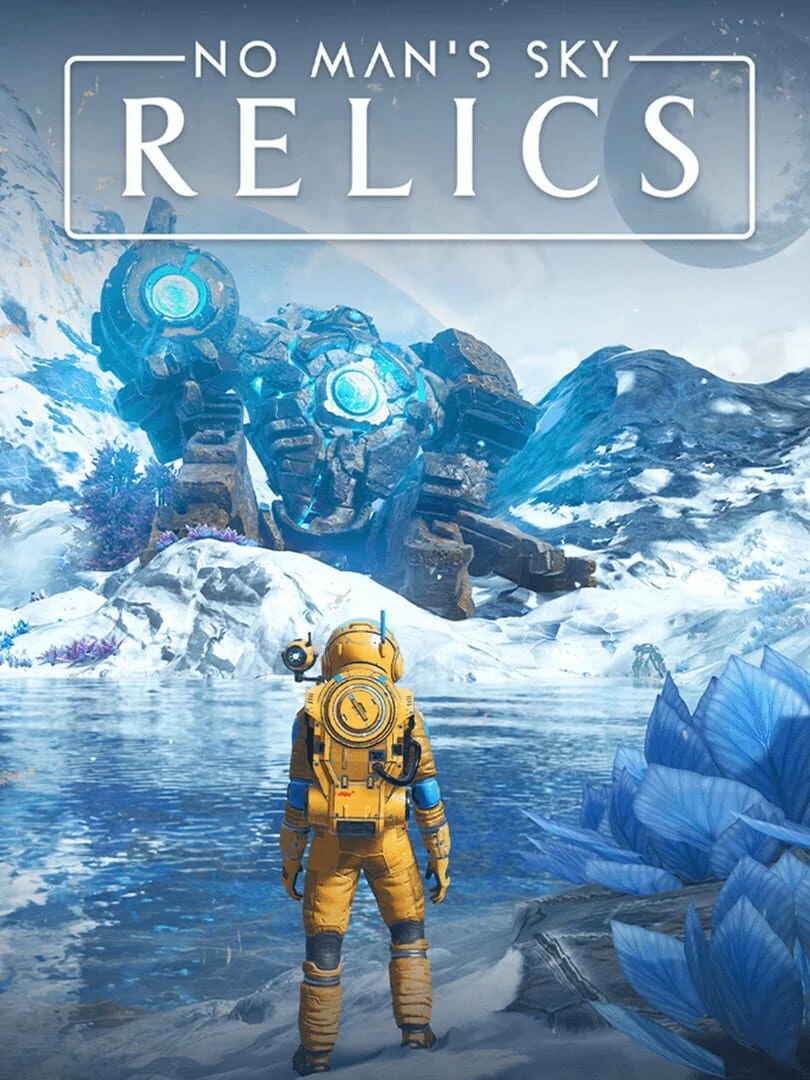
    Cover art for No Man's Sky: Relics
    Cover art for No Man’s Sky: Relics

    Implications for Live-Service Retention and Engagement

    After a decade of free expansions that broadened breadth (base building, vehicles, expeditions, VR), Xeno Arena is notable for deepening a single systemic pillar. This is not just more content, but a new long-term meta with near-infinite variability, given the procedural fauna base. For live-service design, it shows how a mature sandbox can be recontextualized into a competitive platform without resetting progression or charging for a standalone mode.

    The design mirrors patterns from other long-lived titles: World of Warcraft’s pet battles, or Destiny 2’s seasonal competitive circuits, where fully fledged side systems create parallel engagement rails. Here, exploration-focused players retain the traditional loop, but are now subtly nudged toward creature evaluation and survey work via a new Creature Survey mode on the Analysis Visor, which exposes species, elemental traits and combat potential. That tool blurs the line between “catalogue completion” and “team optimization”.

    Competitive and Legal Context: Monster Battling Without the Patent Overhang

    Industry reporting has highlighted the timing: the Xeno Arena drop follows renewed scrutiny and eventual rejection of a controversial Nintendo patent on monster-summoning combat mechanics in Pokémon. That decision reduces legal uncertainty around implementing broadly similar collection-and-battle designs. Hello Games leans openly into the lineage, citing Pokémon, Palworld and World of Warcraft pet battles as inspirations, while visually positioning fights closer to Star Wars-style holochess via the holographic arena tables.

    The move arrives in a landscape where creature-collection is spreading far beyond traditional Japanese RPGs: Palworld blends open-world survival with firearm-equipped “pals”, Temtem pursued a more MMO-centric model, and mobile remains crowded with auto-battling monster collectors. By routing its own implementation through an existing premium sandbox, Hello Games sidesteps user acquisition battles typical for standalone monster-battlers and instead reactivates an installed base spread across PC, consoles, VR, and subscription services.

    Platform Performance and Lifecycle Strategy

    Alongside the new mode, update 6.3 pushes targeted technical optimizations. On Nintendo Switch 2, the team reports rendering performance improvements of up to roughly 15%, a notable gain for a title that has historically stretched portable hardware. PC receives tiled lighting and multiple CPU optimizations tied to lighting, bases, inventory handling, companion registers and planetary object rendering, aimed at stabilizing performance at higher resolutions and in asset-dense player-built spaces.

    Multiple crash fixes for Switch and other platforms, UX refinements (clearer medal selection UI, improved inventory context-opening for missions), and quality-of-life changes to systems like egg sequencing and analysis all reinforce the impression of an actively maintained cross-generation product. With the game still present on Xbox Game Pass and spanning PS4/Xbox One up through PS5, Xbox Series X/S and Switch 2, keeping frame-rate and loading competitive remains critical for preventing older SKUs from feeling like second-class versions of a now meta-heavy experience.

    Risks: Complexity, Balance and Community Fragmentation

    Xeno Arena introduces substantial systemic complexity: hundreds of abilities, genetic tuning, elemental matchups, ranked medals and daily challenges. For long-term enthusiasts, that depth can sustain high engagement; for lapsed or new players, it risks onboarding friction. Hello Games mitigates this with a guided Oceanus tutorial and opt-in battle tables, but the underlying tension between “chill exploration” and “ranked competition” will be worth watching across community channels.

    Balance is another open question. Climate-linked affinities and biome rarity risk creating de facto power tiers based on spawn luck and out-of-band knowledge. Legendary variants with exceptional stats can generate both aspirational goals and perceived unfairness in PvP-adjacent arenas, especially if matchmaking or reward structures overly reward high-end rosters.

    InsightsFinalBoss Signal

    Xeno Arena underlines a strategic pattern: mature sandboxes are evolving into “game platforms” capable of hosting entire subgames without spin-offs or paid expansions. By layering a monster-battler atop ten years of exploration content and pairing it with real technical gains on PC and Nintendo hardware, Hello Games is extending No Man’s Sky’s lifecycle while testing whether a discovery-first audience will embrace a competitive, collection-driven meta embedded directly into its core universe.

  • UFC-Que Choisir attaque Ubisoft : le géant français priverait les joueurs de ce jeu qu’ils ont

    UFC-Que Choisir attaque Ubisoft : le géant français priverait les joueurs de ce jeu qu’ils ont

    Key signals

    • UFC-Que Choisir has sued Ubisoft in Créteil over The Crew’s March 2024 server shutdown, arguing paying customers lost all access to a purchased game.
    • The case targets revocable-license clauses and late notice of shutdowns, challenging industry-standard EULAs across PC, PlayStation, and Xbox stores.
    • A ruling against Ubisoft could force new guarantees for offline modes, longer support horizons, or clearer “expiry” disclosures for server-dependent titles.
    • Backed by the Stop Killing Games campaign and over one million signatures, the action lands as EU policymakers scrutinize digital ownership and game preservation.
    • A Ubisoft win would reinforce the status quo license model, aligning with the 2024 French ruling favoring Valve on digital resale restrictions.

    What changed: From server shutdown to test case

    French consumer association UFC-Que Choisir has filed a lawsuit against Ubisoft at the Tribunal Judiciaire de Créteil (Val-de-Marne) over the permanent shutdown of servers for The Crew, the 2014 open-world racing game released on PC, PlayStation, and Xbox platforms. Ubisoft switched off the game’s servers in March 2024, which, due to its server-dependent design, rendered the title completely unusable, including for previously available solo modes.

    UFC-Que Choisir argues that consumers who paid for The Crew were never clearly informed that access was time-limited or that use was strictly conditional on Ubisoft’s continued operation of online services. The suit challenges Ubisoft’s contractual framing of purchases as revocable licenses rather than ownership of a durable product, and seeks removal of what the association characterizes as abusive clauses in Ubisoft’s terms of use.

    The case is explicitly framed as a collective-interest action rather than a narrow refund dispute. The Crew functions as the test example for a wider question: does the purchase of a digital game, via disc or download, entail a right of use that cannot be unilaterally extinguished by the publisher once servers are turned off?

    The legal theory: Revocable licenses vs. consumer rights

    At the core of the complaint is the clash between standard industry EULAs and European consumer protection concepts. Publishers and platforms such as Ubisoft Connect, Steam, PlayStation Store, and Xbox storefronts typically present access as a non-transferable, revocable license, reserving broad rights to suspend services and remove content. UFC-Que Choisir considers this structure a “denial of ownership” for consumers who believed they were buying enduring access to a product.

    The association highlights several contract elements it views as abusive:

    • Clauses allowing Ubisoft to terminate access without guaranteeing any offline fallback mode.
    • Design choices that tie even solo play to online services that can be cut at publisher discretion.
    • Exclusions of reimbursement for unused balances in digital wallets if related services are withdrawn.
    • Lack of explicit, upfront disclosure that access to the game would cease entirely at a given date.

    UFC-Que Choisir also alleges misleading commercial practices: marketing and store pages, it argues, led buyers to believe they enjoyed a right of use not conditioned on the continued operation of online servers, whereas in reality the product was fully dependent on backend infrastructure with no guaranteed lifespan.

    Screenshot from The Crew Motorfest: Audi Double Car Pack
    Screenshot from The Crew Motorfest: Audi Double Car Pack

    European context: Stop Killing Games and the Valve precedent

    The lawsuit does not occur in isolation. It is backed by the Stop Killing Games (SKG) initiative, which emerged around the controversy over The Crew and has gathered over one million signatures across Europe calling for stronger protections against the disappearance of digital games. SKG has worked to bring the issue to EU institutions, including an EU Parliament hearing scheduled in April 2026 focusing on game preservation and consumer rights in digital ecosystems.

    French courts have recently sided with platforms on related, but distinct, issues. In October 2024, the Cour de cassation ruled in favor of Valve in a long-running dispute with UFC-Que Choisir, holding that Valve could prohibit resale of dematerialized games purchased on Steam. That decision effectively endorsed the view that many digital games are licensed, not owned in a traditional property sense.

    The new The Crew case targets a different dimension: not resale, but continued access and the absence of a “best-before” date in consumer-facing information. Where Valve’s case turned on market secondary sales, this dispute focuses on whether a game can be made entirely unusable after purchase without substantial prior warning, refund, or offline alternative.

    Screenshot from The Crew Motorfest: Audi Double Car Pack
    Screenshot from The Crew Motorfest: Audi Double Car Pack

    The broader backdrop is a fragmented approach to digital ownership. While most storefronts distribute games under DRM-restricted, revocable licenses, GOG has built a positioning around DRM-free downloads and more durable local access. Any shift in legal expectations in France or the EU may test how sustainable the dominant license-based model remains for heavily server-reliant titles in comparison with DRM-light approaches.

    Operational and economic implications for publishers and platforms

    For Ubisoft, the immediate risk lies in potential court-ordered changes to its standard consumer contracts in France, along with possible damages or restitution mechanisms for The Crew purchasers. More strategically, an adverse ruling could force a re-evaluation of how future online-centric games across PC, PlayStation, and Xbox ecosystems handle end-of-life, especially where even single-player modes require constant server connectivity.

    If courts determine that total loss of use after purchase is incompatible with consumer rights, several operational consequences become plausible:

    • Pressure to maintain minimal “legacy” server infrastructure for older titles, or to ship offline-capable builds before shutdown.
    • Greater legal and reputational exposure for clearly communicating sunset dates, including at the point of sale and on packaging.
    • Heightened scrutiny of wallet and virtual-currency terms when online components are withdrawn.
    • Potential ripple effects on platform-wide policies for content delisting and service discontinuation.

    These shifts could raise long-tail operational costs for always-online and live-service games, particularly for titles with modest but persistent player bases. Publishers relying on aggressive content rotation and catalogue pruning would face a more complex risk calculus around shutting off servers for aging or underperforming products.

    Cover art for The Crew Motorfest: Audi Double Car Pack
    Cover art for The Crew Motorfest: Audi Double Car Pack

    Conversely, a clear victory for Ubisoft would further entrench the license-based status quo, reinforcing earlier jurisprudence and signaling that, within current EU and French law, publishers retain wide discretion to withdraw server-dependent titles from circulation. That outcome would likely accelerate efforts by advocacy groups to pursue regulatory rather than judicial remedies at the EU level.

    InsightsFinalBoss Signal: Digital access is becoming a regulatory variable

    The UFC-Que Choisir vs. Ubisoft dispute is less about a single racing game and more about where courts draw the line between contractual freedom and the functional disappearance of paid digital goods. As server-dependent design becomes pervasive across PC, PlayStation, and Xbox ecosystems, the economic model for live services is colliding with emerging expectations around durability, transparency, and preservation.

    Whatever the outcome in Créteil, the case elevates “right of use” and shutdown practices from customer-relations questions to hard legal and regulatory variables in Europe. For platforms and publishers, digital ownership is no longer only a messaging or UX topic; it is becoming a structural constraint on how online games are built, sunsetted, and monetized over their full lifecycle.

  • EA just cut Apex Legends map without warning, but there is a good reason

    EA just cut Apex Legends map without warning, but there is a good reason

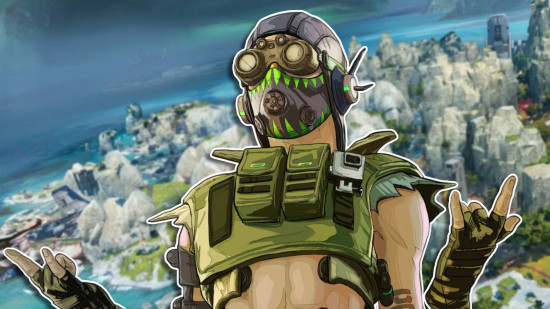
    Respawn Entertainment and Electronic Arts have pulled the Storm Point map from Apex Legends’ live rotation mid-season after reports that the map was triggering crashes on certain devices. The removal, which comes roughly two weeks after Storm Point’s reintroduction in the Season 28 Aftershock event, breaks the battle royale’s usual map cadence in favor of platform stability across PC and consoles.

    • Storm Point has been temporarily removed from all Apex Legends modes on all platforms after crash issues tied to the map’s activation.
    • E-District (daytime) replaces Storm Point in rotation and is expected to remain in place for the rest of Season 28, altering the standard mid-season map rhythm.
    • Respawn has not provided a timeline for Storm Point’s return, only stating that a “permanent fix” is in development.
    • The move underscores a stability-first approach to live operations, even when it disrupts scheduled content cadence and competitive map expectations.
    • Signals to watch include communication on root cause, telemetry around crash reductions, and whether future major map updates ship with more conservative rollout strategies.

    What Changed: Storm Point Pulled Across All Modes

    Storm Point, one of Apex Legends’ six core battle royale maps, was reintroduced into rotation as part of Season 28’s Aftershock event, which also added new “Wildcard” mechanics and balance updates. Roughly two weeks later, Respawn issued a small update announcing that Storm Point would be “temporarily removing [it] from map rotation on all modes” while the team chases a fix for a crash “occurring on specific devices when Storm Point is active.”

    The change applies globally across platforms-PC, PlayStation 5, PlayStation 4, Xbox Series X/S, Xbox One, and Nintendo Switch-and affects all modes in which Storm Point would normally appear. Instead, the daytime variant of E-District now fills Storm Point’s slot in the rotation.

    Breaking the Map Cadence: Live-Service Rhythm vs Stability

    For years, Apex Legends has conditioned its audience around a relatively predictable map cadence. Traditionally, three maps are in rotation per split, with a switch at season start and another at the mid-season ranked reset. That rhythm supports player engagement, ranked planning, and content scheduling for creators and competitive teams.

    By pulling Storm Point mid-split-outside of the standard rotation change—EA and Respawn are effectively stating that platform stability now trumps the established seasonal pattern. From an operations standpoint, this choice reduces the risk of recurrent crashes that can damage session reliability metrics, increase support load, and erode player trust, even at the cost of perceived content variety.

    The disruption is especially notable given Storm Point’s role as a large, rotation-heavy map that often serves as a contrast to tighter maps like World’s Edge and the more recent E-District. Its removal narrows the experiential spread of the current rotation and concentrates play on denser layouts.

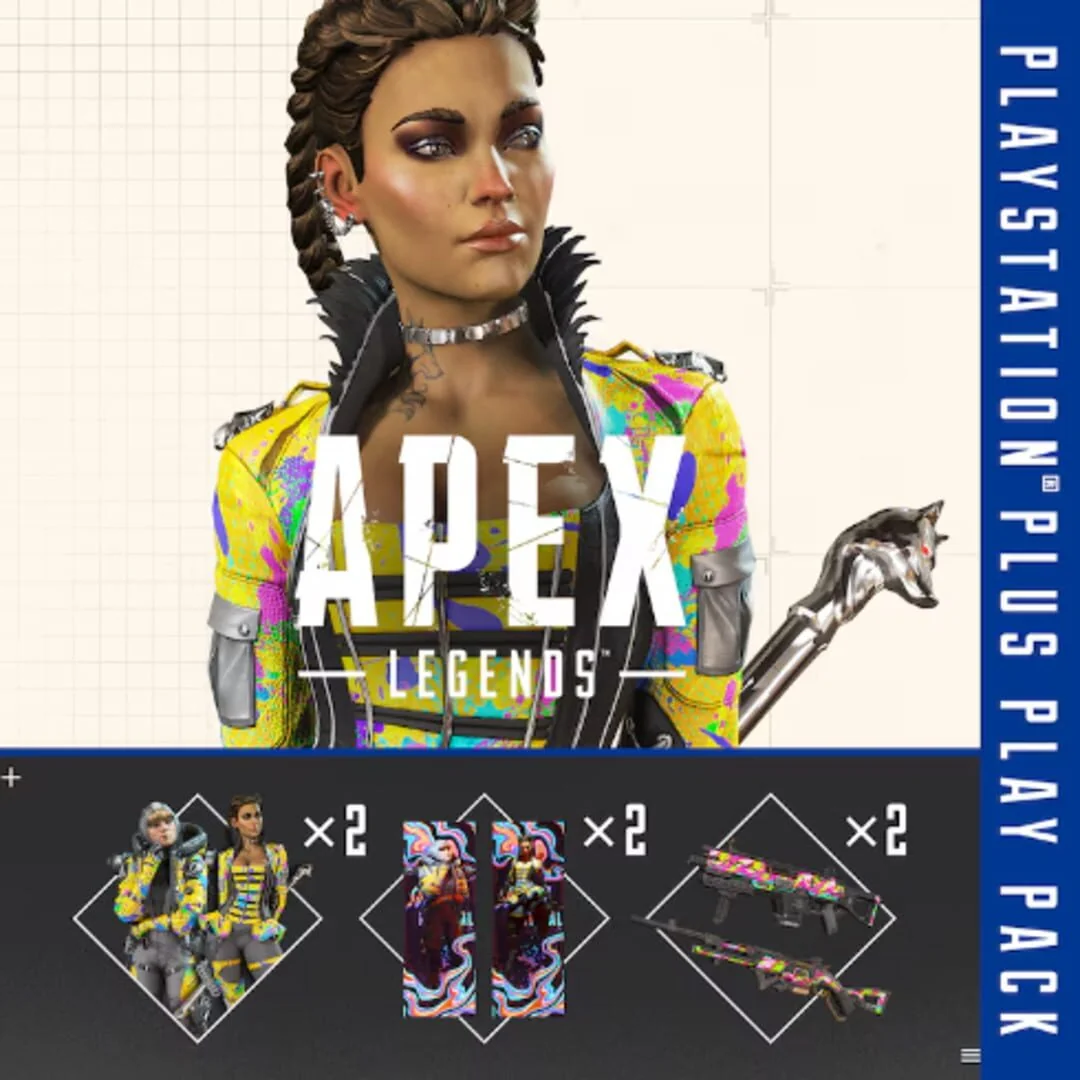
    Cover art for Apex Legends: PlayStation Plus Play Pack
    Cover art for Apex Legends: PlayStation Plus Play Pack

    Impact on Player Segments and Competitive Ecosystem

    Different player segments are exposed to this change in distinct ways. High-engagement battle royale players, particularly those focused on ranked progression, had been adjusting to Season 28’s map mix and Aftershock changes when Storm Point’s removal reset expectations. Scrim groups and competitive-focused communities often structure practice blocks around known map schedules; a mid-split removal forces rapid recalibration of drop strategies, rotations, and legend meta assumptions.

    For more casual segments, the impact skews toward perception of variety and crash frequency. If the Storm Point issue was meaningfully raising crash rates on specific hardware, its removal can lead to a visible improvement in perceived stability. However, absence of detailed communication about which “specific devices” are affected leaves ambiguity for the broader base, which now experiences an extended E-District presence instead of the planned back-and-forth with Storm Point.

    On the esports side, concerns about Apex Legends’ competitive environment have already been elevated, with pro players publicly questioning design decisions in ranked and tournament formats. Abrupt map changes driven by technical constraints add another variable to an ecosystem that values predictability for practice and broadcast planning, even if official esports map pools are managed separately from public rotation.

    Technical and Platform Considerations

    Respawn has not specified the root cause of the Storm Point issue, only that crashes occur “when Storm Point is active.” That phrasing suggests the bug may be tied to map-level assets, logic, or memory usage rather than a general engine regression, making removal of that specific environment the fastest way to stabilize affected sessions while debugging continues.

    The reference to “specific devices” signals that the crash pattern may be hardware- or configuration-dependent, raising typical cross-platform QA challenges: reproducing issues across multiple console generations, PC configurations, and the Nintendo Switch’s more constrained hardware. Pulling the map simplifies both live support and telemetry analysis, as crashes tied to that content type should sharply decline, creating a clearer baseline for further investigation.

    No ETA has been provided for Storm Point’s return, only a commitment to a “permanent fix.” In live-service practice, that often indicates that a meaningful code or asset change—rather than a quick configuration tweak—is being evaluated, which increases the likelihood that the substitute map (in this case, E-District) remains in place for the remainder of the season.

    E-District’s Elevated Role and Design Implications

    E-District, which quickly became a favored map for its dense urban design, strong verticality, and clear rotation routes, now occupies an even more central role in Apex Legends’ current seasonal experience. The daytime variant lacks some of the atmosphere of its original nighttime aesthetic but offers greater visual clarity, which can matter for both readability and competitive play.

    Extending E-District’s presence accelerates data collection on performance, heatmaps, legend pick rates, and engagement on that map relative to legacy staples like World’s Edge. The longer it stays in rotation as a Storm Point stand-in, the more its design strengths and pain points will be stress-tested at scale, informing future map tuning and possibly shifting long-term map hierarchies in both casual and competitive contexts.

    Competitive and Market Context for Live-Ops Decisions

    Within the broader shooter market, live-service titles increasingly face scrutiny when technical issues undermine otherwise strong content pipelines. High-profile examples in adjacent franchises have shown how persistent bugs or performance problems can offset the value of new maps or modes, leading to audience attrition even when launch metrics look strong.

    Against that backdrop, EA’s decision to sacrifice a marquee map’s presence in Season 28 reinforces a platform-health-first approach. Rather than protecting seasonal marketing beats at all costs, the move elevates the operational priority of stability and crash rate reduction across the multi-platform footprint.

    InsightsFinalBoss Signal

    Storm Point’s removal is a clear signal that Apex Legends’ live-ops philosophy is shifting further toward aggressive intervention when specific content threatens baseline stability metrics. The decision shows a willingness to disrupt entrenched seasonal rhythms and map expectations in order to protect session reliability on PC and console. Signals to track now include the depth of Respawn’s post-mortem communication on the Storm Point issue, whether future major map reintroductions roll out with more staged testing or limited-time modes first, and how prolonged E-District exposure reshapes player preferences and competitive meta across the rest of Season 28.

  • タイムトラベル・コマンドバトルRPG『アナザーエデン ビギンズ』9月17日発売へ。古代・現代・未来と時を駆け仲間と出会う、『アナザーエデン』シリーズ最新作

    タイムトラベル・コマンドバトルRPG『アナザーエデン ビギンズ』9月17日発売へ。古代・現代・未来と時を駆け仲間と出会う、『アナザーエデン』シリーズ最新作

    Executive Summary

    • New fact: Another Eden Begins launches September 17, 2026 on Nintendo Switch 2, Nintendo Switch, and PC via Steam as a premium standalone JRPG.
    • Why it matters: The title shifts a successful mobile gacha IP into a console-first, one-time purchase model, with Masato Kato and Yasunori Mitsuda signaling classic JRPG positioning on new hardware.
    • Systems focus: Command-based combat, the Another Force gauge, chain skills, and New Game+ with 10+ endings emphasize party-building depth and replayable narrative structure.
    • Monetization structure: DLC character packs and multi-tier collector’s editions extend the revenue tail without importing mobile-era gacha systems.
    • Signals to watch: Companion count clarity (18 vs. 19), DLC pricing and cadence, and whether Switch 2 receives feature or performance differentiation.

    Lightflyer Studio (Wright Flyer Studios under Studio Prisma) has set September 17, 2026 as the global release date for Another Eden Begins on Nintendo Switch 2, Nintendo Switch, and PC via Steam, following the April 4 “Anaden Matsuri 2026 Spring” broadcast. Some earlier reporting referenced a March date, but the latest livestream and aligned coverage now converge on mid-September, placing the game in the early content window for Nintendo’s next-generation handheld-hybrid.

    Release Timing, Platforms, and Pricing

    The launch confirms that Another Eden’s first fully premium installment will ship day-and-date across Nintendo’s outgoing Switch, its successor Switch 2, and Steam. Steam wishlisting is already live, aligning the PC rollout with the console date rather than staggering the platforms.

    Japanese pricing reportedly starts at 4,980 yen (tax included), with tax-exclusive platform listings clustering in the mid-4,000 yen range. Exact regional pricing outside Japan has not been detailed, but the structure places Another Eden Begins squarely in mid-priced “AA” JRPG territory rather than full blockbuster pricing, a common band for narrative-driven titles targeting dedicated RPG audiences.

    A physical release is confirmed in Japan, with three package configurations: a standard edition, a Collection Box, and a Special Collection Box sold exclusively via Wright Flyer’s online store. Standard and Collection Box preorders open April 9, 2026, while the Special Collection Box is already available in limited quantities. All packages include serial codes linked to the mobile title Another Eden: The Cat Beyond Time and Space, reinforcing cross-ecosystem engagement.

    From Mobile Gacha Origin to Premium Console JRPG

    Another Eden Begins is framed as a reworking and consolidation of Another Eden: The Cat Beyond Time and Space, the free-to-play mobile JRPG that has run since 2017 and later reached PC. Rather than a direct port, the console and PC title restructures that content into a self-contained, buy-to-play package.

    Masato Kato, whose credits include Chrono Trigger, Chrono Cross, and Xenogears, returns as director and writer. The project explicitly leans into traditional JRPG sensibilities: a time-travel narrative spanning past, present, and future; town-to-town progression; and a fixed party-driven structure instead of character acquisition via gacha pulls. Music again comes from Yasunori Mitsuda with additional composition by Procyon Studios, positioning the game within a lineage of 1990s-style prestige JRPGs updated for modern hardware.

    Screenshot from Another Eden Begins
    Screenshot from Another Eden Begins

    For the existing mobile audience, the move to console and PC as a premium product represents an IP maturation step similar to how some Korean and Chinese franchises have shifted successful online titles into self-contained console adaptations. For platforms, it adds a recognizable, already-proven brand to the early Switch 2 software slate without the baggage of live-service monetization.

    Systems Focus: Party Synergies, Time Travel, and Replay

    The story follows Aldo, a young swordsman from the village of Baruoki, whose sister Feinne is abducted by the Beast King. A confrontation triggers a rift in spacetime, sending Aldo hundreds of years into the future and setting up a multi-era journey through ancient, contemporary, and future settings. This structure mirrors classic time-travel JRPGs while recycling and refining arcs from the mobile game.

    Combat remains turn-based and command-driven. Parties are built around clearly defined roles-attackers, supporters, and healers-with synergy central to output. The Another Force gauge fills as characters attack; once activated, it halts enemy actions and enables concentrated, often chain-based offense during its window. Recent trailers also spotlight chain skills and a Variable Change-style system that dynamically alters abilities and turn order, reinforcing an emphasis on tactical sequencing rather than action reflexes.

    Screenshot from Another Eden Begins
    Screenshot from Another Eden Begins

    Companion count varies slightly across early coverage: most communications cite 18 recruitable allies, while at least one trailer breakdown lists 19. In all cases, each companion features individual backstories, fully voiced character quests, and affinity-style “kinship” arcs to deepen relationships. Voice work for the main narrative is fully recorded in English, using much of the cast from the mobile game’s localization.

    Once the main story is cleared, a New Game+ mode unlocks. Character strength carries over into a second run, where altered decisions and additional narrative branches lead to more than 10 different endings. A new character introduced specifically for New Game+ acts as a pivot for this second-layer story, suggesting a design that builds longevity through structured replays rather than daily-grind or seasonal live service loops.

    Editions, DLC Roadmap, and Cross-Game Integration

    Beyond the base game, Lightflyer announced a “Character Pack” DLC program comprising five waves that will introduce a total of 10 additional playable characters (two per wave). Pricing and exact release timing for these DLC drops have not been disclosed. This roadmap extends the party-building meta without resorting to randomized acquisition, aligning with console DLC norms rather than mobile gacha practices.

    The Collection Box and Special Collection Box assemble additional physical goods and digital bonuses, including serial codes that connect back into the ongoing mobile title. That linkage reinforces Another Eden as a multi-platform IP: mobile continues as a live service layer, while Another Eden Begins functions as a self-contained, console-optimized gateway with optional upsell into the existing ecosystem.

    Screenshot from Another Eden Begins
    Screenshot from Another Eden Begins

    Competitive and Platform Context

    On Switch 2, Another Eden Begins enters a crowded but high-value segment of turn-based, narrative JRPGs that includes Dragon Quest, Octopath Traveler, and various remasters. Its primary differentiation lies in the combination of classic talent (Kato and Mitsuda), a time-travel premise already validated by a large mobile audience, and a premium, self-contained structure that distances the franchise from gacha fatigue.

    For Nintendo, the title broadens the Switch 2 JRPG offering without relying on first-party resources, while continuing to support the original Switch’s massive install base. On PC, the game joins an audience already accustomed to Another Eden via the existing Steam release, but this time with a clearer finish line, New Game+ architecture, and console-parity content.

    The main open questions are tactical rather than strategic: whether the final companion count lands at 18 or 19; how aggressively DLC characters are priced and paced; and whether the Switch 2 version receives performance, visual, or packaging advantages significant enough to nudge adoption among players still on the original Switch hardware.

    InsightsFinalBoss Signal

    Another Eden Begins illustrates how mobile-born JRPG IPs are being re-authored into premium formats to secure a place in the console and PC libraries of the next hardware cycle. The project leverages nostalgia-laden creative leadership, emphasizes party-driven storytelling and deliberate command battles, and adopts a DLC roadmap that extends life without reintroducing gacha mechanics. Its reception on Switch 2 and Steam will signal how far traditional JRPG structures-time travel, turn-based combat, New Game+—can still anchor mid-budget launches in a market dominated by action-RPG hybrids and live services.

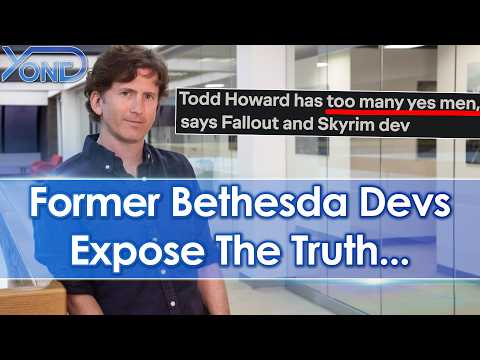
  • Ex Bethesda Devs Speak Out, Discuss Todd Howard, Too Many Yes Men, Bureaucratic Environment, & More

    Ex Bethesda Devs Speak Out, Discuss Todd Howard, Too Many Yes Men, Bureaucratic Environment, & More

    • Former senior staff describe a “yes-men” culture around Todd Howard, limiting frank critique on projects like Starfield.
    • Bethesda’s shift from a single-site studio to four remote teams under Microsoft added layers of management and conflicting directives.
    • Longtime Elder Scrolls designer Kurt Kuhlmann cites broken promises on Elder Scrolls 6 leadership and rising bureaucracy as key reasons for his exit.
    • These dynamics heighten risk around Elder Scrolls 6’s design cohesion and raise broader questions about Xbox’s RPG portfolio stewardship.

    A Studio in Transition as Elder Scrolls 6 Looms

    Newly resurfaced commentary from former Bethesda Game Studios developers is sharpening industry focus on the leadership model behind flagship franchises like The Elder Scrolls, Fallout, and Starfield. As interviews circulate in April 2026, ex-staff argue that Bethesda’s rapid expansion and Todd Howard’s elevated profile have created a culture where challenging top-level decisions is increasingly rare, even as multi-studio complexity demands stronger, not weaker, feedback loops.

    The timing is sensitive. Starfield’s mixed reception and long-tail update plan, Fallout 76’s troubled launch, and the long wait for Elder Scrolls 6 have already prompted questions about how the studio is managing ambition, technology, and player expectations across PC, Xbox Series X/S, and PlayStation 5 ecosystems.

    “Afraid to Say No to Todd”: Celebrity Director and the Yes-Men Effect

    Former senior artist Dennis Mejillones, who worked on Skyrim, Fallout 4, Fallout 76, and Starfield, described Todd Howard in a Kiwi Talkz interview as “a phenomenal person” and a strong design mentor. At the same time, Mejillones highlighted a structural problem: “A lot of people were afraid to say no to Todd and that hurt him.” The comparison drawn was to George Lucas: a talented creator whose later work suffered when dissenting voices receded.

    The core critique is not that Howard lacks design skill, but that Bethesda’s growth and his celebrity status have concentrated authority while dampening internal challenge. Staff concerned about ideas reportedly either stayed quiet or relied on a small handful of trusted relationships to push back, rather than an institutionalized culture of open critique.

    For a studio building sprawling systemic RPGs, limited internal friction at the top of the decision pyramid can allow weak assumptions to persist deep into production. The commentary lands against the backdrop of Starfield’s criticisms around shallow planetary content and uneven pacing, design issues that typically require early, candid confrontation across disciplines to resolve.

    From Basement Team to Four Remote Studios Under Microsoft

    Longtime Elder Scrolls designer and lore specialist Kurt Kuhlmann, who co-led design on Skyrim and left Bethesda in 2023, offered a complementary perspective in a PC Gamer interview earlier in 2026. Kuhlmann framed early Bethesda as a tightly knit group working out of a basement office, where Howard and leads sat together, ate together, and made decisions rapidly in constant conversation.

    Screenshot from The Elder Scrolls VI
    Screenshot from The Elder Scrolls VI

    By the time Starfield shipped in 2023, Bethesda had evolved into what Kuhlmann described as effectively “four remote studios” working collectively on a single game, under the larger Microsoft structure. In that configuration, simple informal access to Howard largely disappeared. Instead of quick desk-side decisions, teams navigated layers of management and studio leads.

    Kuhlmann recounted cases where staff in one location would ask their leads a design question and receive one answer, while another studio received a conflicting directive on the same issue. The result, in his telling, was confusion: people unsure which vision to follow, and a sense that there was no longer a single, consistently present creative driver aligning content across teams.

    Paradoxically, Kuhlmann’s account credits Howard as “a very good project lead” and emphasizes that, at core, he is a designer rather than a pure executive. The problem, from this vantage point, is not his absence of vision but his physical and managerial distance from day-to-day design as the studio scaled and demands on his time multiplied across projects, marketing, and corporate responsibilities.

    Cover art for The Elder Scrolls VI
    Cover art for The Elder Scrolls VI

    Broken Elder Scrolls 6 Leadership Promise and Talent Loss

    One of Kuhlmann’s most pointed revelations concerns Elder Scrolls 6 itself. He describes an understanding after Fallout 4 that he would serve as design lead on the next Elder Scrolls. Instead, Bethesda prioritized Fallout 76 and then Starfield before moving to Elder Scrolls 6, and by the time that project entered focus, he was informed he would not lead it.

    Leadership still wanted him in an “important role,” but the gap between that offer and his expectations, combined with what he characterizes as a more bureaucratic, corporate atmosphere, led to his departure. For a franchise that leans heavily on deep-world continuity, losing a veteran lore specialist and co-lead designer raises non-trivial questions about institutional memory and narrative consistency.

    Kuhlmann also notes a broader structural shift: managers were increasingly expected to manage only, not also create content. That separation can improve accountability, but in highly creative domains it also risks disconnecting leadership from the practical realities of tools, pipelines, and player-facing detail work.

    Operational Implications for Elder Scrolls 6 and Xbox’s RPG Pipeline

    Combined, Mejillones’ and Kuhlmann’s accounts draw a picture of a flagship studio wrestling with two intersecting forces: the centripetal pull of a celebrity director whose decisions are rarely challenged, and the centrifugal pull of a sprawling, multi-location, Microsoft-era organization where that same director is less embedded in daily design than ever.

    For Elder Scrolls 6, that tension poses clear execution risks. A heavily centralized vision with limited internal pushback can struggle to correct course on outdated assumptions about open-world pacing, simulation depth, or quest design. At the same time, if Howard’s bandwidth is split across multiple priorities, inconsistent messaging through layers of leads can erode the coherence that once came from a handful of decision-makers in a single room.

    There are also ecosystem-level implications. Elder Scrolls 6 is widely treated as a cornerstone of the future RPG slate across PC and current-generation consoles, with Xbox in particular positioning Bethesda as a prestige single-player pillar within its first-party portfolio. Perception that internal communication is fragmented, or that senior talent feels sidelined, introduces reputational risk just as Microsoft leans on tentpole RPGs to drive engagement, Game Pass value, and long-term platform attachment.

    Comparable dynamics have played out at other AAA RPG and live-service studios as they scaled and distributed production across multiple locations. BioWare, Blizzard, and CD Projekt all provide recent examples where the mix of star creative leadership, strong corporate oversight, and geographically dispersed teams produced misaligned expectations and, in some cases, high-profile course corrections post-launch.

    InsightsFinalBoss Signal

    The resurfaced testimonies do not depict Todd Howard as an out-of-touch auteur so much as a finite resource stretched thin across a much larger, more corporate machine. The sharper risk signal lies in the apparent gap between Bethesda’s historical identity as a small, cross-functional RPG group and its current reality as a multi-studio network where personality, process, and structure have not fully realigned. As Elder Scrolls 6 moves deeper into production, the key indicators will be consistency in public messaging, staff churn among senior designers and writers, and how future postmortems describe cross-studio decision-making. Those will reveal whether Bethesda has turned its scale into a strength-or whether the design challenges seen in Fallout 76 and Starfield were early warnings of deeper structural strain.

  • It only took 6 years, but Xbox’s open-world zombie game State of Decay 3 is back from the dead with

    It only took 6 years, but Xbox’s open-world zombie game State of Decay 3 is back from the dead with

    Undead Labs is moving State of Decay 3 out of cinematic limbo and into the hands of players. After nearly two years of minimal public updates, the Xbox Game Studios team has announced limited technical alpha playtests starting as early as April and extending into May 2026, with sign-ups now open. This marks the first playable public milestone for the open-world zombie survival sequel since its 2020 reveal.

    • State of Decay 3 is entering limited technical alpha playtests in spring 2026, six years after its original announcement.
    • Alphas will spotlight four-player co-op, expanded base-building and resource strategies, and a stronger combat focus.
    • Undead Labs plans multiple testing waves through 2026, shifting the project toward community-informed development.
    • The move reactivates a key Xbox survival IP amid intensifying competition in co-op and zombie-focused sandboxes.
    • Key signals: playtest cadence, communication transparency, and how solo vs shared-world multiplayer ultimately balance out.

    From Cinematics to Code: A Long-Delayed Sequel Becomes Playable

    State of Decay 3 debuted in July 2020 with a short cinematic trailer, positioning the franchise as a more ambitious, next-gen evolution of Undead Labs’ community-focused survival formula under Xbox Game Studios. A second cinematic surfaced in 2024, but there was still no gameplay, no testing roadmap, and no release window. In parallel, State of Decay 2 continued receiving updates through October 2024, ultimately tallying dozens of major patches over six years of post-launch support.

    The newly announced alpha tests represent a structural shift. Rather than relying on periodic trailers to prove progress, Undead Labs is committing to hands-on evaluation with the broader community. Media reporting indicates that the studio has already been running smaller-scale tests with some players for a year or more; the new alphas extend that process to a wider pool and begin treating State of Decay 3 as a live project with ongoing external feedback, not just a distant promise.

    For Xbox, this is a notable activation of a first-party survival IP on platforms where long-tail, systemic games are strategically important: Xbox Series X|S, PC, and Xbox Cloud Gaming. State of Decay has historically been a high-engagement title on console and PC storefronts and a reliable fit for subscription ecosystems, making the franchise’s re-emergence as a playable build strategically relevant even at alpha stage.

    Alpha Scope: Co-op, Bases, and a Hardened Post-Outbreak World

    The first public alpha waves focus on the pillars that define the series. The technical tests will feature four-player co-op, expanded base-building, deeper resource management strategies, and a heavier emphasis on combat. This is not a narrow systems slice: Undead Labs is clearly positioning the alpha as a broad look at State of Decay 3’s core loop rather than a purely backend stress test.

    In a recent video interview, studio leadership outlined an evolved narrative and systemic framing. While the original State of Decay took place weeks after the outbreak and State of Decay 2 roughly a year later, State of Decay 3 moves the timeline forward by several years. Survivors are more hardened, communities are more established, and the zombie threat is evolving in new ways. This later-in-universe setting provides cover to redesign systems around a more organized survivor society, potentially justifying more complex base networks, logistics, and territory control.

    Screenshot from State of Decay 3
    Screenshot from State of Decay 3

    The studio also described a server-hosted shared-world multiplayer structure, in contrast to purely peer-to-peer sessions. That framing suggests ambitions closer to a persistent co-op survival world than a simple instanced campaign, while still emphasizing that State of Decay 3 will fully support solo play. How far this shared-world model ultimately pushes toward live-service patterns remains an open question, and the alpha feedback loop is likely to shape that trajectory.

    Playtest Structure, Access, and Data Gathering

    Registrations for the alpha have opened through a dedicated site (playtest.stateofdecay.com), with Undead Labs planning limited slots across multiple testing windows. Reporting indicates that prospective participants are required to register an email, connect a Discord account, and complete a brief questionnaire about platforms and play styles. This sets the stage for segmented cohorts, rather than a single, undifferentiated test population.

    The timing details vary slightly across public coverage: one outlet cites an April alpha playtest, while others highlight May as the starting month. All agree, however, that this is the first of several waves expected to run through 2026. The studio has publicly committed to sharing insights and aggregated feedback from these sessions with the broader community, even for those not directly included in the tests.

    Screenshot from State of Decay 3
    Screenshot from State of Decay 3

    Operationally, this approach aligns State of Decay 3 with contemporary survival sandboxes that depend on telemetry and user feedback from pre-release builds to tune economy friction, difficulty, AI behaviors, and co-op stability. Network architecture (especially for Xbox Cloud Gaming), cross-platform performance across Xbox Series X|S and PC, and base-building usability are all natural focal points for this kind of technical alpha.

    Competitive Context: Surging Co-op Survival and Xbox’s Portfolio Needs

    State of Decay 3 is resurfacing into a far more crowded field than its predecessors faced. Recent and upcoming zombie and survival titles on PC and console increasingly blend PvPvE extraction, live-service progression, and co-op-first design. Microsoft’s own ecosystems have seen a continued push of co-op survival experiences into subscription services, widening the baseline expectations for systemic depth and content cadence.

    The State of Decay franchise remains differentiated by its focus on community management, permadeath, and base-building instead of purely character-centered progression. State of Decay 2’s extensive post-launch support reinforced that identity, with iterative improvements to AI, community systems, and map variety over many years. The alpha feature set for State of Decay 3 indicates an intent to double down on these strengths, while layering in more sophisticated combat and movement systems, and potentially more persistent shared worlds.

    For Xbox Game Studios, success here would bolster the platform’s lineup of replayable co-op experiences that can sustain engagement across console, PC, and cloud. Given the six-year gap since announcement and the long tail of State of Decay 2 support, the franchise’s performance will be read as an indicator of how well Microsoft’s first-party pipeline can convert extended incubation into durable, systems-driven hits.

    Screenshot from State of Decay 3
    Screenshot from State of Decay 3

    Risks, Unknowns, and Key Signals to Watch

    The shift into public alpha does not erase core uncertainties around State of Decay 3. There is still no public release window, no confirmed monetization structure beyond its first-party status, and no detailed breakdown of how far the shared-world concept will extend into live-service territory. Conflicting references to April versus May test timing underscore that this phase is still relatively early and subject to adjustment.

    Expectation management is another constraint. A six-year gap between reveal and first public hands-on creates a high bar for perceived generational improvement over State of Decay 2, especially in animation quality, combat feel, and systemic scale. An alpha billed as a broad slice of co-op, base-building, and combat invites direct comparison with the previous entry even in an unfinished state.

    Several signals will clarify the project’s trajectory over the next 12-18 months: the frequency and scale of subsequent playtest waves; the granularity and candor of post-test communication; visible iteration on core systems in response to community feedback; and how prominently Xbox positions State of Decay 3 within broader platform showcases and subscription marketing.

    InsightsFinalBoss Signal

    State of Decay 3’s alpha announcement is less about a date on the calendar and more about a governance change for the project. After years defined by trailers and silence, Undead Labs is repositioning the sequel as a publicly iterated survival platform shaped through repeated testing cycles. The move signals a wider Xbox shift toward earlier, community-centered validation for long-gestating systemic titles-while also exposing how much work likely remains before the series’ next evolution is ready for full release.