The Super Mario Galaxy Movie opened to $34M in the U.S. on Wednesday, the best April Wednesday ever and strongest opening day of 2026 so far, underscoring the draw of Nintendo IP in cinemas.
Critic scores in the low-40s% on Rotten Tomatoes contrast sharply with audience approval around 91-92%, reinforcing that fan demand can outweigh mixed reviews for franchise-aligned adaptations.
Star Fox and Princess Daisy teases, plus deeper Peach-Rosalina lore, signal an accelerating Nintendo Cinematic Universe strategy with cross-franchise potential beyond core Mario.
The film’s fifth-strongest single-day Illumination opening indicates sustained box office power for the Mario brand alongside Minions and Despicable Me, strengthening Illumination’s position as Nintendo’s default animation partner.
Key risks include potential franchise fatigue, overreliance on Easter eggs over narrative cohesion, and whether mixed critical reception will affect long-run legs versus the 2023 Mario benchmark.
The Super Mario Galaxy Movie has launched as one of 2026’s first major box office events. U.S. ticket sales reached $34 million on its first Wednesday in theaters, setting a new April Wednesday opening-day record and surpassing The Super Mario Bros. Movie’s $31.7 million midweek debut in 2023. Industry box office tracking also places Galaxy as the strongest single opening day of any 2026 release so far.
Crucially for exhibitors and partners, Galaxy achieved this performance without advance previews, unlike many tentpole releases that lean on Thursday or fan-event screenings to front-load results. The figure also ranks as the fifth-largest single-day opening for an Illumination title, behind Minions: The Rise of Gru, the original Minions, The Secret Life of Pets, and Despicable Me 2. That keeps Mario firmly in Illumination’s top tier of brands, alongside its long-running Minions and Despicable Me franchises.
Forecasts cited in trade coverage project a robust global run, potentially tracking only slightly behind the 2023 Mario film’s week-one trajectory. The original Super Mario Bros. Movie ultimately passed $1.3 billion worldwide, becoming one of the highest-grossing game adaptations in history and setting expectations for Nintendo and Illumination’s follow-ups.
Audience-Critic Divide: Franchise Gravity Over Reviews
The Galaxy opening reaffirms that for some game-based franchises, box office is being driven more by brand affinity than by critical consensus. Rotten Tomatoes data shows a pronounced split: critics sit in the low-40s% approval band (recent tallies have oscillated between 41% and 43%), while audiences register around 91–92% positive.
That gap is even wider than for the 2023 Mario film, which held roughly 59% critic approval and a 95% audience score. Reviews from major outlets highlight a consistent pattern: praise for visual creativity, fan service, and pace, coupled with criticism of an underdeveloped core story and contentious characterization of Rosalina. GamesRadar’s three-star review, for example, notes that the sequel “surpasses the original thanks to relentless energy and creativity,” but argues that its ambitions “fizzle out” due to an undercooked narrative and “bizarre treatment” of Rosalina.
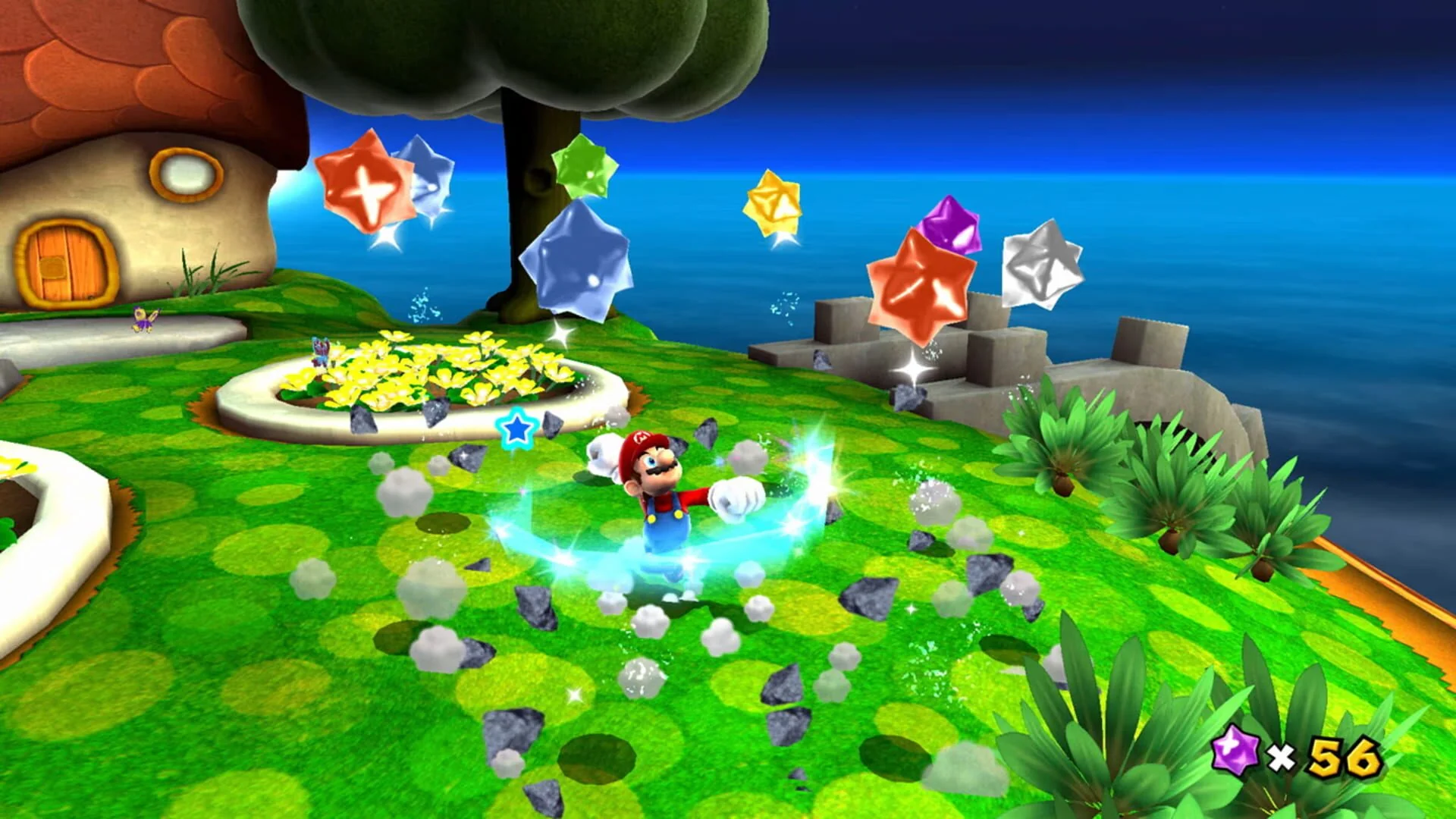
Screenshot from Super Mario Galaxy
IGN’s evaluation landed in similar territory with a 6/10 score, citing a lack of emotional depth relative to the first film but acknowledging the dense layering of references and Easter eggs as a compensating draw for engaged fans. The immediate commercial performance suggests that, at least in the opening frame, audience enthusiasm for Nintendo iconography and family-oriented animation is overpowering critical hesitation.
Lore Expansion and Cross-IP Cameos Signal a Nintendo Cinematic Universe Push
Beyond box office, Galaxy functions as a testbed for how aggressively Nintendo can extend its characters and lore through film. In a recent Forbes interview, Shigeru Miyamoto explained that during development of the original Super Mario Galaxy game, he and director Yoshiaki Koizumi had only a “vague idea” of the relationship between Princess Peach and Rosalina. The game left Rosalina’s origins and possible family ties deliberately ambiguous.
Miyamoto said the film finally develops that concept “in detail,” describing the process as an opportunity to explore ideas that never reached consensus during the game’s production. That reflects Nintendo’s willingness to let cinema retroactively codify previously ambiguous lore, potentially feeding back into future game narratives and merchandising.
The movie also leans into cross-franchise experimentation. Reporting from GamesRadar and regional outlets highlights a prominent Star Fox cameo: Fox McCloud appears among the film’s Easter eggs, with Miyamoto acknowledging that the idea originated from Illumination. He anticipated internal resistance to bringing a non-Mario hero into the film but found “strong support” across Nintendo once the concept was formally discussed.
Screenshot from Super Mario Galaxy
Additional post-credits scenes described by 3DJuegos deepen this direction. One shows Lumalee acting as a guard while Fox McCloud departs in his Arwing, teasing a more concrete integration of Star Fox into the emerging film continuity. Another introduces Princess Daisy in a hub world without dialogue, signaling that core Mario spin-off characters are being queued up for future appearances.
Taken together, these choices position the so-called Nintendo Cinematic Universe (NCU) as more than marketing rhetoric. The films are starting to function like a cross-IP platform where Mario can intersect with other Nintendo heroes, laying structural groundwork for ensemble concepts long speculated among fans, including the possibility of a Super Smash Bros.-style crossover in the longer term.
Franchise Roadmap, Risks, and Competitive Context
Nintendo has already confirmed a live-action The Legend of Zelda film targeting 2027, suggesting an annual or near-annual cadence of major theatrical releases through the back half of the decade. Industry chatter and leaks point to a Donkey Kong spin-off and a third Mario film under discussion, with some talent publicly speculating about a 2029 window for another mainline Mario entry. While unconfirmed, the Galaxy opening makes ongoing expansion of the slate directionally more plausible.
In the broader game-to-film landscape, Mario’s performance sits alongside franchises like Sonic the Hedgehog and Five Nights at Freddy’s as evidence that recognizable interactive brands can anchor multi-film strategies. Where Nintendo diverges is the depth of its first-party IP bench and its historically conservative approach to licensing, which appears to be loosening as internal teams grow comfortable with Illumination’s handling of tone and characterization-despite critical pushback on specific portrayals like Rosalina.
Screenshot from Super Mario Galaxy
The key execution risks are becoming clearer. One is franchise fatigue if future installments continue to prioritize Easter-egg density over emotionally coherent stories, potentially eroding broader audience appeal over time. Another is creative tension around how far crossovers can stretch character consistency and brand identity, particularly as non-Mario franchises such as Star Fox and Zelda enter the same cinematic orbit.
Near-term signals to track include weekend-to-weekday hold for Galaxy versus the 2023 Mario comp, the scale of international rollout relative to domestic performance, and how strongly Nintendo and Illumination emphasize cross-IP cameos in marketing for subsequent projects.
InsightsFinalBoss Signal: The Super Mario Galaxy Movie’s opening confirms that Nintendo and Illumination have built a film platform where critic scores are secondary to brand gravity and audience nostalgia. With Star Fox, Daisy, and clarified Peach–Rosalina lore now on screen, the NCU is shifting from hypothetical to operational-placing Nintendo among the few game IP holders actively constructing a long-horizon theatrical universe rather than isolated one-offs.
Wildlands Cut at “Almost Complete” Stage Triggers Layoffs and Studio Head Exit
Eidos-Montréal’s unannounced open-world project codenamed Wildlands has reportedly been cancelled by parent company Embracer Group after years of AAAA-scale development and a budget that climbed beyond $100 million. The decision coincides directly with 124 layoffs on 31 March 2026 and the departure of long-time studio head David Anfossi, effectively resetting the studio’s original-IP ambitions in favor of lower-risk, licensed work.
Wildlands, an unannounced open-world AAA/“AAAA” project in development since 2019, was reportedly “almost complete” and in bug-fixing when Embracer cancelled it due to runaway budget and weak recoup prospects.
Eidos-Montréal cut 124 roles on 31 March 2026, its third consecutive year of mass layoffs, and confirmed the exit of studio head David Anfossi after nearly 20 years at the company.
Insider reporting links the cuts directly to Wildlands’ cancellation, while Eidos publicly cites only “changing project needs,” underscoring a widening gap between corporate messaging and on-the-ground realities.
Years of engine changes (four engines tested), narrative reworks, and escalating costs reportedly pushed the project into the hundreds of millions and began to strain other Eidos initiatives.
The move reinforces Embracer’s shift toward licensed, lower-risk projects and signals rising cancellation risk even for late-stage, big-budget original IP in a market dominated by mega-franchises such as Grand Theft Auto.
A Seven-Year Bet on Wildlands Ends at the Finish Line
Multiple European outlets and industry reporting describe Wildlands as an ambitious third-person action-adventure set in a large open world, built for PC, PlayStation 5, and Xbox Series X|S. Players would control River, a teenager in a group of adolescents battling malevolent spirits with magical elements. Internally known as “P11,” it was reportedly one of Eidos-Montréal’s most expensive projects to date.
Pre-production and production together spanned roughly seven years, with full production beginning in 2019. Reporting from Eurogamer’s Portuguese edition and others indicates the project cycled through four different engines before settling, causing technical resets and schedule drag. Narrative conflicts further complicated development, while the budget climbed past $100 million and was ultimately described by some sources as in the “hundreds of millions” range.
Despite that turbulence, Wildlands had reportedly cleared several major internal milestones and reached a late polishing and bug-fixing phase, with an internal launch window targeted for 2026. Insider Gaming and regional press say Embracer concluded that the title would not recover its investment, particularly in a release window overshadowed by Grand Theft Auto 6, and opted to cut funding rather than ship.
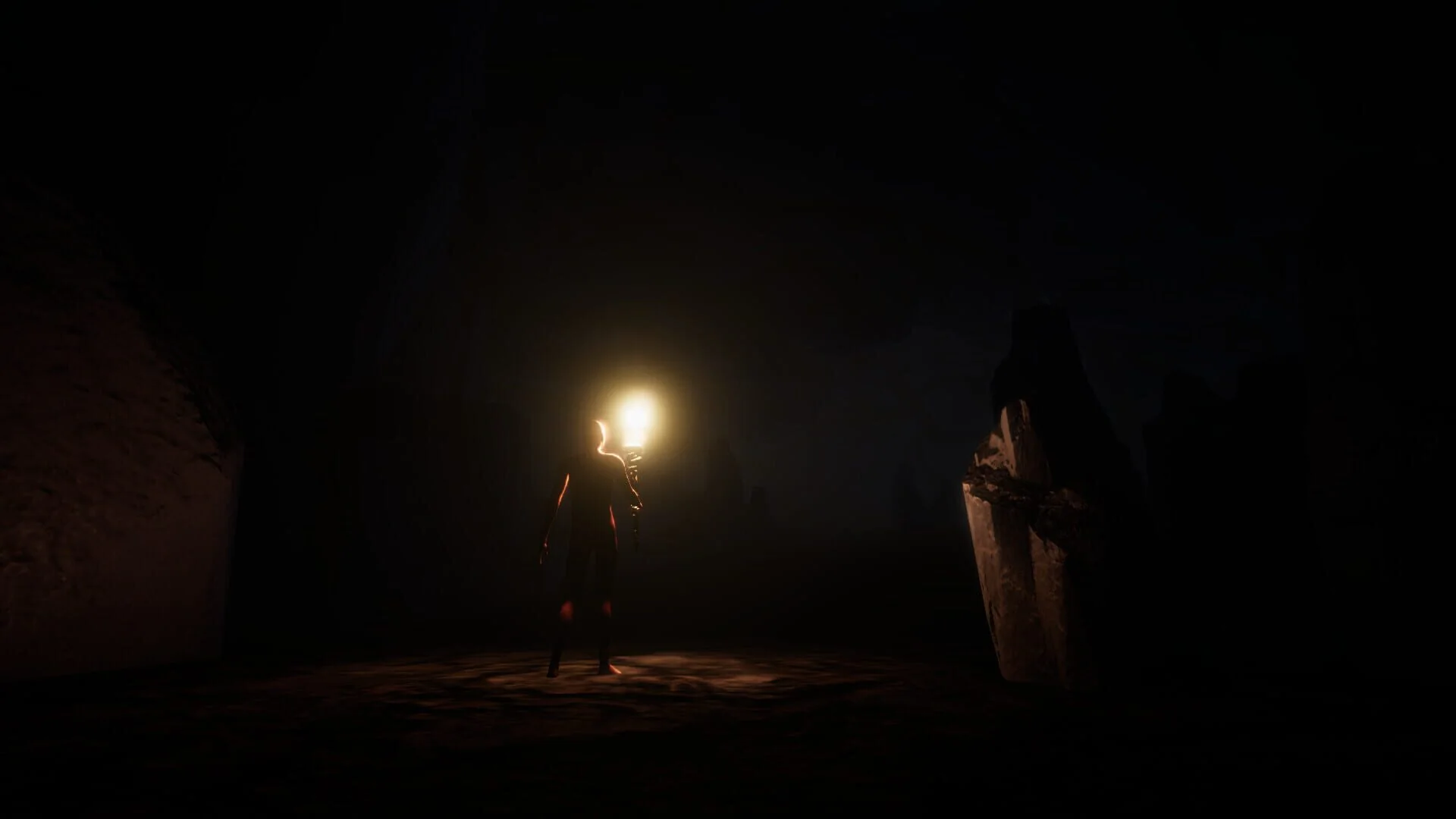
Screenshot from Wildlands
Editorial metadata ties Wildlands to the Legacy of Kain franchise as an unannounced entry, but no public-facing materials or official statements have confirmed that linkage. Neither Embracer nor Eidos-Montréal has formally acknowledged Wildlands by name, leaving a notable gap between corporate communication and detailed insider reporting.
Third Straight Year of Layoffs and the End of the Anfossi Era
The 124 layoffs announced on 31 March 2026 mark Eidos-Montréal’s third consecutive year of sizeable cuts: 97 roles were eliminated in January 2024, followed by 75 in April 2025, for a total of roughly 296 staff reductions since 2024. In an official statement on LinkedIn, the studio attributed the latest wave to “changing project needs,” stressing that the decision did not reflect negatively on the affected employees’ performance or value.
In parallel, studio head David Anfossi’s departure ends nearly two decades with Eidos-Montréal. Anfossi joined in 2007 and became a central figure in projects such as Deus Ex: Human Revolution, later taking over as studio head in 2013. The company has framed his exit as a mutual “parting of ways” with a transition plan underway, but has not disclosed reasons. Industry reporting and commentary consistently connect his departure to the fallout from Wildlands’ cancellation, although that linkage remains unofficial.
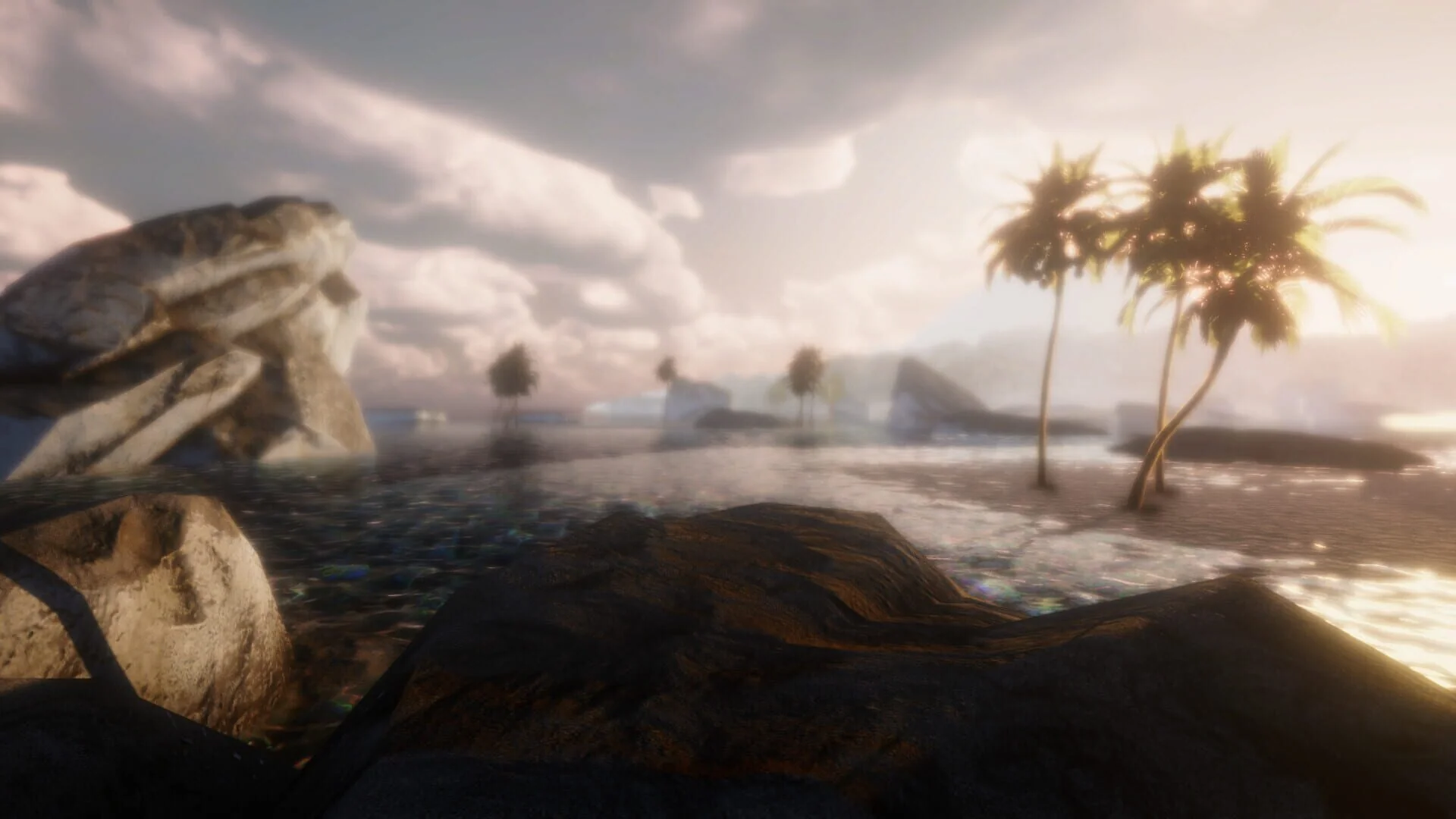
Screenshot from Wildlands
This pattern echoes 2024, when an unannounced new Deus Ex project was reportedly cancelled under Embracer’s cost-reduction program ahead of a previous layoff round. Taken together, Eidos-Montréal’s recent history shows a studio repeatedly whipsawed by top-down portfolio decisions, rather than the failure of shipped products such as Marvel’s Guardians of the Galaxy or Shadow of the Tomb Raider.
Embracer’s Risk Calculus: From Ambitious Originals to Licensed Stability
Since acquiring Eidos-Montréal from Square Enix in 2022, Embracer has pursued an aggressive restructuring program across its portfolio, closing studios, cancelling projects, and prioritizing near-term cash flow. Reporting around Wildlands notes that its runaway budget began to affect other projects inside Eidos, effectively crowding out capacity for additional titles.
Against that backdrop, Embracer’s cancellation of a late-stage, high-budget original project lines up with a strategic pivot toward licensed and lower-risk work. Insider accounts describe Eidos-Montréal increasingly being steered to externally owned IP, where marketing leverage and brand awareness are higher and forecasting is more predictable than for a new franchise or a radical reboot. This is consistent with a broader AA/AAA market shift, where licensed projects tied to film, TV, comics, or established game universes often secure funding more easily than novel concepts.
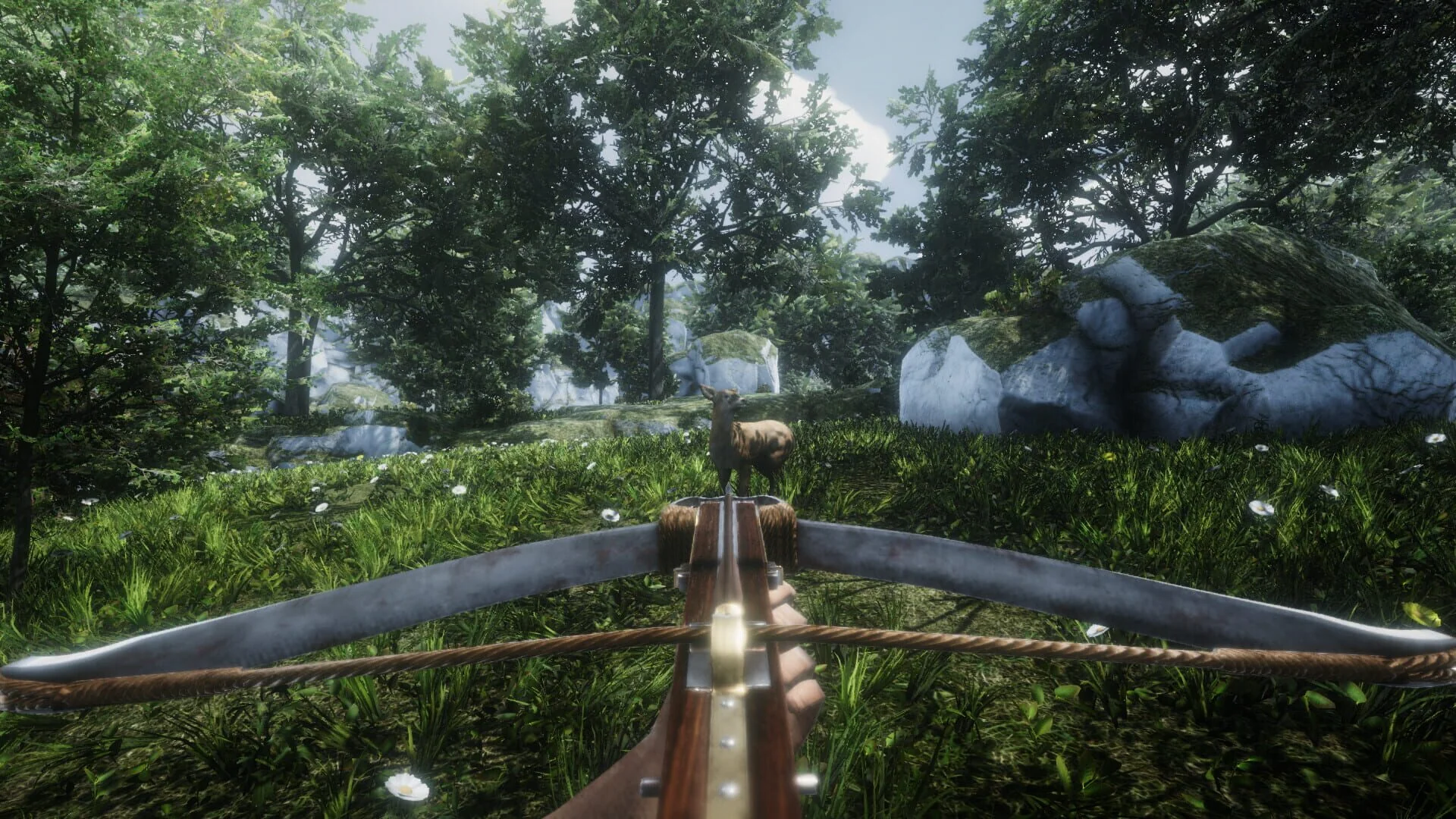
Screenshot from Wildlands
Wildlands thus becomes a case study in the shrinking risk tolerance for non-franchise open worlds. Even an “almost complete” project on modern hardware, built by an experienced studio with a track record in narrative action games, did not clear the bar once its budget profile and competitive window-dominated by GTA 6-were re-evaluated. The cancellation also signals sharper internal scrutiny on toolchain decisions: four engine swaps over development now look catastrophic in hindsight for cost and schedule control.
Operational and Market Signals to Track
The immediate operational impact inside Eidos-Montréal is severe: a smaller team, the loss of institutional leadership, and the abrupt removal of a flagship project from the roadmap. For platform holders and publishing partners, several signals stand out:
Leadership succession and governance: The identity and mandate of Anfossi’s successor will clarify whether Eidos-Montréal is expected to operate as a premium work-for-hire entity on licensed IP or retain any autonomy for original concepts.
Official disclosure on Wildlands: Formal acknowledgement-or continued silence—on Wildlands’ fate will indicate how transparent Embracer intends to be about sunk-cost cancellations and pipeline resets.
Future of Legacy of Kain and Deus Ex: With two reported cancellations touching long-dormant franchises, upcoming announcements (or the lack of them) will signal whether these brands are effectively parked or being re-imagined under tighter budget constraints.
Embracer’s broader restructuring arc: Additional studio sales, closures, or IP licensing deals would reinforce the view that Embracer is repositioning from expansive content ownership toward a leaner, partnership-driven model.
Talent migration from Eidos-Montréal: Where laid-off staff and senior leaders land—whether in indie, AAA competitors, or other media sectors—will shape Montreal’s development ecosystem and competitive dynamics for high-end narrative talent.
InsightsFinalBoss Signal
The reported termination of Wildlands at the polishing stage crystallizes a harsh new reality: in the current cost-of-capital and hit-driven environment, even late-stage AAAA projects are no longer protected by sunk cost. Embracer’s decision, and the resulting shock to Eidos-Montréal’s workforce and leadership, underscores a structural pivot away from expensive, original open worlds toward licensed or heavily proven IP. For the broader market, this raises the bar for greenlighting large-scale, non-franchise projects and increases the premium on disciplined tooling choices and early financial validation, as projects that drift too far from controllable budgets face growing cancellation risk—no matter how close they are to the finish line.
Unity will shut down the ironSource Ads Network direct demand business on April 30, 2026, while keeping the ironSource Exchange integrated into Vector.
Vector AI is now the core ad growth engine, delivering 15% sequential and 78% YoY growth, and accounting for ~56% of Grow Solutions revenue.
Unity plans to divest its Supersonic mobile publishing label, further exiting legacy ironSource assets acquired in the 2022 $4.4 billion merger.
Preliminary Q1 2026 revenue of $505-508 million and stronger Create Solutions engine revenue (~$155 million) signal a pivot back to core tech and AI ads.
Key risks include UA yield disruption for ironSource users, Supersonic valuation and deal timing, and competitive pressure from rival ad stacks.
Unity Retires ironSource Ads Network to Clear Space for Vector
Unity is effectively unwinding one of the highest-profile mobile ad deals of the past cycle. The company will shut down the ironSource Ads Network direct demand business on April 30, 2026, ending a key component of the $4.4 billion ironSource merger completed in 2022. The move comes after earlier divestitures of Sonic and Aura, leaving little of the original ironSource footprint inside Unity beyond mediation and exchange infrastructure.
Unity will retain the ironSource Exchange and continue to run programmatic campaigns, but those flows will be routed through its AI-driven Vector platform. Operationally, this strips out managed, network-style direct demand while preserving programmatic pipes that can be optimized algorithmically within Vector. Management has signaled that ironSource Ads will contribute minimally beyond Q1 2026, underlining how far performance has fallen behind Vector-driven formats.
This is both a simplification and an admission. The bet that an acquired legacy ad network could remain a primary growth driver has not held. Unity is instead consolidating on a single AI-optimized ad stack and reducing internal complexity created by overlapping ad products, mediation layers, and publisher-facing services.
Vector AI and Create Solutions Now Drive the Financial Narrative
The shutdown decision arrived alongside preliminary Q1 2026 results that show the new center of gravity for Unity’s business. Revenue is projected at $505-508 million, above prior guidance of $480-490 million, with adjusted EBITDA of $130–135 million, roughly 58% year-on-year growth. Management attributed the outperformance primarily to Vector and the core engine segment.
Vector, Unity’s AI-powered advertising and user-acquisition platform, grew approximately 15% sequentially and 78% year-on-year in Q1. It now represents about 56% of Grow Solutions revenue and is driving mid-teen quarterly growth in that segment. This level of concentration means the health of Unity’s entire ad and UA franchise is increasingly tied to the trajectory of Vector rather than to the legacy ironSource network.
Create Solutions, the engine and tools business, also strengthened. Q1 2026 Create revenue is expected to land around $155 million, up year-on-year and a material contributor to the beat. Combined with Vector, this suggests Unity’s near-term growth profile is anchored by its engine footprint and AI-optimized ad stack rather than by more traditional network demand businesses.
Unity expects Grow Solutions to generate about $352 million in Q1 2026, excluding ironSource Ads and Supersonic from that quarter onward. That accounting shift cleans the baseline for future quarters and makes Vector’s performance more visible, but it also removes a set of legacy revenue streams, even if underperforming, that previously diversified the top line.
Operational Impact for Mobile UA and Mediation
For studios that built monetization and UA workflows around ironSource’s traditional network demand, the sunset introduces a multi-quarter transition. Unity has already warned of potential yield adjustments, particularly for LevelPlay mediation users whose waterfall configurations rely heavily on ironSource Ads demand.
The company is steering traffic toward Vector-optimized programmatic campaigns, emphasizing that the ironSource Exchange remains in place and that programmatic demand will be available through Vector integration. That means the core supply-and-demand marketplace is not disappearing, but its control logic and optimization layer are changing. In practical terms, optimization is shifting from human-tuned waterfalls and direct campaigns toward automated, AI-driven bidding and placement decisions.
Competitive pressure is intense. AppLovin’s MAX, Google’s AdMob, and ByteDance’s Pangle already lean heavily on machine-learning optimization. Unity’s gambit is that a tightly coupled stack-engine, analytics, and Vector AI-can deliver higher lifetime value per user and better ROAS for advertisers than a looser combination of engine plus third-party ad tech. Whether that advantage materializes depends on execution quality, privacy constraints, and the rate at which developers adopt Vector-integrated SDKs.
Supersonic Sale Marks Exit from First-Party Publishing Experiment
In parallel with the ironSource Ads wind-down, Unity has engaged a financial advisor to explore the sale of Supersonic, its mobile publishing arm. Supersonic, launched in 2020 and folded into Unity via ironSource, has published more than 130 titles and claims roughly 6.6 billion downloads, including hits such as Bridge Race and Going Balls.
Divesting Supersonic would mark a clean exit from first-party, hypercasual-focused publishing. Strategically, this reduces conflicts of interest between Unity’s role as an engine and tool provider and its role as a publisher competing with customers for store featuring, UA inventory, and chart position. It also continues a pattern: Sonic, Aura, and now Supersonic are being carved away to leave a more streamlined software and ad-tech stack.
Deal timing and structure remain unclear. A strategic buyer in the hypercasual or hybridcasual space, or an ad-tech operator seeking deeper supply and publishing expertise, would be plausible acquirers, but that remains speculative. The terms achieved for Supersonic will be an indirect signal of how the market currently values hypercasual portfolios and the traffic-generation capabilities attached to them.
Implications for Engine Competition and Platform Strategy
Unity’s renewed focus on Create Solutions and Vector must also be read through the lens of engine competition. After the 2024 runtime fee controversy damaged trust with parts of the developer base, Unity 6 and more predictable monetization terms have been positioned as a reset. Rising Create revenue in Q1 2026 suggests some recovery in commercial traction across PC, console, and mobile.
By pairing engine telemetry with an AI-driven ad platform, Unity is attempting to differentiate from Unreal Engine, open-source engines like Godot, and proprietary in-house tech at large publishers. The pitch is a vertically integrated pipeline: build in Unity, gather behavioral and performance data, then feed that data into Vector for UA optimization and monetization tuning across mobile and, increasingly, cross-platform ecosystems.
At the same time, the abrupt retirement of a major ad network acquired only a few years ago highlights execution risk. Developers and ad partners that invested in ironSource-specific tooling and flows now face a migration to Vector or to rival stacks, which could influence long-term platform loyalty.
Risks, Transition Dynamics, and Signals to Watch
Key operational risks cluster around three areas. First, short-term monetization volatility for apps still dependent on ironSource direct demand as that supply winds down ahead of the April 30, 2026 cutoff. Even with the ironSource Exchange intact, shifts in auction dynamics and fill sources can impact effective CPMs.
Second, execution risk in fully transitioning ad customers to Vector. If Vector fails to deliver competitive ROAS or retention-friendly ad experiences versus MAX or AdMob, large advertisers and publishers may diversify away from Unity’s ad stack, limiting Grow Solutions momentum.
Third, the Supersonic sale introduces uncertainty around revenue mix and strategic partnerships. A clean separation with strong ongoing collaboration agreements would reinforce Unity’s role as neutral infrastructure. A protracted sale or deterioration in Supersonic’s performance during the process could create revenue drag and signal weaker-than-expected demand for hypercasual portfolios.
Signals to track over the next 12–18 months include Vector’s share of total Grow Solutions revenue, case studies or benchmarks highlighting UA efficiency gains, the eventual buyer and terms for Supersonic, and any changes to how Unity reports mediation, exchange, and AI-driven ad products in segment disclosures.
InsightsFinalBoss Signal
Unity’s ironSource rollback and Supersonic exit amount to a strategic reset: away from owning a traditional ad network and publisher, and toward being a high-margin engine and AI monetization platform. The company is effectively writing down the old ironSource playbook and betting that a tightly integrated engine-plus-Vector stack, rather than scale in legacy network demand, will define its competitive edge in the next phase of mobile and cross-platform games.
In early access and long-tail premium titles, large-scale character reworks often create as much structural risk as they create excitement. Slay the Spire 2’s Defect on PC, Nintendo Switch, PlayStation 5, and Xbox Series X offers a clear example: an iconic character returns with expanded Orbs, abundant temporary Focus, and Status synergies that reshape optimal deckbuilding. From a market-analysis perspective, this is less about “how to play Defect” and more about how such mechanical shifts affect meta stability, learning curves, and ultimately engagement and sentiment across platforms.
Operationally, analysts assessing this kind of rework tend to track a common cluster of risks around design volatility, player comprehension, and ecosystem adaptation. The Defect’s evolution from a relatively well-understood orb caster into a multi-archetype, status-fueled engine exposes those risk vectors in a concrete, observable way.
Trade-offs / watch points: Depth vs complexity, permanent vs temporary scaling, archetype breadth vs clarity of identity.
Risks and failure modes: Meta fragmentation, patch churn, early-game frustration spikes, outdated community knowledge.
Indicators to watch: Class pick share, Act 2 death rates, guide/search interest around Defect builds, sentiment on temporary Focus and Status cards.
1. Framing the Risk: Meta Volatility from Systemic Reworks
The core risk category visible in Slay the Spire 2’s Defect is design and meta volatility: a previously stable character identity is expanded through new mechanics (Glass Orbs, temporary Focus spikes, Status engines) that multiply viable archetypes and tuning surfaces.
In the first Slay the Spire, Defect already sat on the higher end of complexity. Its identity centered on Orbs (Lightning, Frost, Dark, Plasma) and Focus as a permanent scaling stat. The second game extends that identity in three ways that matter for risk analysis:
Orb taxonomy expansion: Five orb types (Lightning, Frost, Dark, Plasma, Glass) support hybrid builds rather than mostly mono-orb lines.
Temporary Focus abundance: Cards such as Hot Fix and Synchronize create large, single-turn Focus spikes instead of slow, permanent stacking.
Status as a resource: Status-creating and Status-consuming cards (e.g., Gunk Up, Trash to Treasure, Smoke Stack) transform classic “deck pollution” into engine fuel.
Each of these axes changes how reliable community knowledge remains over time, how easily players internalize “correct” patterns, and how sensitive the meta becomes to balance patches. A risk framework therefore starts by comparing the new mechanical surface to the legacy baseline.
2. Step One – Establish the Legacy Baseline
Before evaluating risk introduced by the rework, practitioners typically reconstruct how Defect functioned in the original title and in early Slay the Spire 2 builds. Baseline questions tend to include:
Identity clarity: Was Defect primarily perceived as a Frost tank, Lightning chip engine, or Claw combo character?
Meta stability: How long did core archetypes (Frost walls, Dark nukes, permanent Focus loops) remain viable across balance patches?
Player outcomes: Did Defect show distinct patterns in win rate, boss kill consistency, or abandonment mid-run relative to Ironclad or Silent?
Ecosystem maturity: Were guide archetypes largely converged (e.g., Frost as the “safe” line, Claw as the “for fun” line), reducing uncertainty for new players?
In practice, Slay the Spire 1 and its long-lived meta established Defect as a high-complexity but decipherable character: stable Frost or Focus-based archetypes allowed players to lock in mental models such as “stack Frost and Focus, become invulnerable”. Design volatility risk in the sequel increases in proportion to how far the new card pool and orb behavior diverge from those internalized expectations.
3. Step Two – Map the New Mechanical Surface
For Slay the Spire 2, the Defect card pool sketches out five recognizable archetype clusters, each centered on different resource loops:
Screenshot from Slay the Spire II
Frost tank: Heavy Frost generation (Glacier, Chill, Cold Snap) plus Orb slot expansion (Capacitor, Modded) and Focus scaling (Defragment, Biased Cognition) to create passive block engines.
Dark nuker: Minimal Dark Orbs (Darkness, Shadow Shield) that are allowed to scale while Frost defends, then evoked via Dualcast or Quad Cast for one-shot boss damage.
Glass AoE engine: Rapid Glass Orb channeling and evocation (Refract, Spinner, Shatter) amplified by temporary Focus spikes to clear multi-enemy encounters.
Claw spam: Zero-cost attack loops powered by All for One, Scrape, Feral, and extensive card draw.
Status engines: Decks that intentionally generate Slimes, Burns, and Voids via cards like Gunk Up, Turbo, and Overclock to fuel Trash to Treasure, Smoke Stack, Rocket Punch, or Compact.
From a risk-assessment angle, the presence of multiple, equally expressive archetypes means:
Wider tuning surface: Many more knobs for balance changes (orb values, Focus duration, Status rates) raise the probability that patches significantly alter optimal lines.
Meta fragmentation: Different player segments gravitate toward different archetypes; community consensus on “the” Defect plan becomes harder to maintain.
Knowledge decay: Guides and tier lists tied to specific interactions (e.g., Synchronize + Hot Fix, Hologram + Turbo loops) risk obsolescence after relatively small numeric changes.
Defect’s redesigned orbs and temporary Focus systems therefore introduce a structural bias toward meta fluidity. That fluidity can be positive (ongoing discovery) or negative (persistent confusion) depending on surrounding systems.
4. Step Three – Analyze Learning Curves and Failure Modes
Character-specific churn risk often concentrates where core mechanics conflict with player intuition. The Defect’s early, mid, and late game behavior provides several observable “discovery moments” and traps that shape that risk profile.
Early game: High damage, hidden scaling concepts
The starting relic (Cracked Core) and cards (Zap, Dualcast) give Defect extremely strong early damage. Zap into Dualcast and basic Lightning orbs make Act 1 feel forgiving. At this stage, many players still treat Focus as a passive statistic rather than an active resource to spike.
The first risk signal appears in card-evaluation behavior: temporary Focus cards like Hot Fix or Synchronize carry the text “this turn”, which many players historically interpret as low-value. Observation from runs and community discussions shows a recurring pattern where these cards are skipped, even though a single high-Focus turn can end most early encounters outright. This gap between textual perception and true impact is a classic learning-curve hazard.
Mid game: Act 2 difficulty spike and archetype commitment
Act 2 in Slay the Spire 2 consistently emerges as the “danger zone” for Defect. Raw Lightning damage from the starting kit falls off, while enemies front-load high attacks. At this point, the deck often sits between archetypes: a mixture of early damage picks (Sunder, Ball Lightning, Gunk Up) and scattered Frost or utility cards.
Screenshot from Slay the Spire II
Common failure modes observed in Defect runs include:
Ignoring temporary Focus: Skipped Hot Fix / Synchronize lines causing players to rely on outscaled base damage.
Status aversion: Continuing to treat Slimes, Burns, and Voids solely as penalties, leading to underutilization of Trash to Treasure and Smoke Stack engines.
Underdeveloped defense: Over-indexing on damage due to strong Act 1, with insufficient Frost or other block scaling when Act 2 enemies spike.
Orb management errors in Dark/Frost builds: Over-channeling new Orbs and unintentionally evoking key Dark or heavily Looped Frost orbs before they reach critical value.
On the analytics side, these patterns typically surface as elevated death or abandonment rates in early Act 2 specifically for Defect, diverging from other characters. Qualitative sentiment often describes the class as “suddenly fragile” or “inconsistent”, despite high theoretical power.
Late game: Power and engine overload
Once an engine coalesces-Frost tanking with Defragment and Capacitor, Dark nukes with Gold-Plated Cables, or Status-fueled AoE via Glass-Act 3 becomes substantially more stable. However, another risk pocket emerges around the Power spam pillar (Storm, Sub Routine, Creative AI, Echo Form).
Power-heavy Defect decks can feel intoxicating but are slow to establish. Repeated observations show players overcommitting to expensive Powers on turn one, leaving insufficient energy to defend. The consequence is a mismatch between late-game theoretical strength and actual clear rates on higher ascension levels. This fuels perceptions that Defect is “feast or famine”, which in turn affects class pick share and long-term DAU distribution by character.
5. Step Four – Meta Stability and Knowledge Ecosystem
Meta volatility risk is tightly coupled with the health of the knowledge ecosystem around a title-wikis, guides, streams, and tier lists. The Defect’s Slay the Spire 2 rework stresses that ecosystem in several ways:
Guide specificity: Many high-level lines revolve around narrow interactions: Synchronize + Hot Fix Focus spikes, Hologram + Turbo resource loops, Feral + 0-cost attacks, or Compact leveraging Status in discard. Small balance changes to any element can flip tier lists.
Archetype proliferation: The coexistence of Frost tank, Dark nuker, Glass AoE, Claw spam, and Status engines encourages a proliferation of guides rather than consolidation around one or two “standard” builds.
Patch sensitivity: Early-access tuning changes are common. For a class with this many systemic hooks, each patch risks invalidating existing content, which can frustrate guide creators and confuse returning players.
From a metrics standpoint, analysts often look at search interest and view counts for Defect-specific build content over time, correlated with patch notes. Spikes in queries such as “Defect temporary Focus”, “Status Defect build”, or “Act 2 Defect help” right after updates often signal renewed confusion or interest triggered by mechanical tweaks.
6. Step Five – Platform and Lifecycle Considerations
Platform realities amplify or dampen the design-volatility risk. Slay the Spire 2’s rollout across PC, Nintendo Switch, PlayStation 5, and Xbox Series X implies different patch cadences and certification constraints.
Screenshot from Slay the Spire II
Early Access vs console launch: PC often receives rapid balance iteration, especially around complex characters like Defect. Console builds may lock in a particular patch level for longer due to certification, freezing a specific meta snapshot.
Tutorial and text lag: In-game hints, tooltips, and tutorials describing temporary Focus or Status synergies can lag behind design adjustments, particularly on platforms where updates are bundled.
Cross-platform knowledge drift: Community discussions and guides typically reference the latest PC patch. Console audiences playing older builds can encounter mismatches between described behavior and in-game numbers, creating additional friction.
For analysts monitoring DAU, MAU, and retention across platforms, deviations in Defect usage or performance between PC and console cohorts can sometimes be traced back to such patch and knowledge desynchronization rather than purely to mechanical difficulty.
7. Observed Risk Management Patterns Around Complex Reworks
Studios facing the kind of design volatility represented by Slay the Spire 2’s Defect usually adopt a set of recurring approaches to keep risk at manageable levels. Without prescribing specific actions, several patterns recur in the market:
Maintaining at least one “anchoring” archetype: Frost tank builds often serve as a reliable, defensive baseline across patches, giving risk-averse players a predictable path even as Status or Glass lines shift.
Highlighting keystone mechanics explicitly: Temporary Focus spikes and Status-fueled cards tend to receive clearer visual or textual reinforcement over time, reducing the gap between perceived and actual power.
Conservative tuning of narrow combo pieces: Engines like Hologram + Turbo or Echo Form + Signal Boost are high-impact but can be tuned numerically rather than removed, preserving player-discovered lines while keeping them within balance bands.
Patch communication that names archetypes: Notes that explicitly reference “Status Defect builds” or “Glass orb AoE” help the community recalibrate quickly, stabilizing the guide ecosystem after adjustments.
Observed outcomes suggest that clarity around which archetypes are intended to be evergreen versus experimental mitigates the feeling of “random nerfs” and supports more durable community knowledge.
8. Summary – Diagnostic Checklist for Design-Volatility Risk
When a sequel or major update reworks a complex character like Defect, the following diagnostic angles frequently structure the analysis:
Baseline vs new identity: How far does the new mechanical kit (temporary Focus, Status synergies, Glass orbs) diverge from established mental models of the character?
Archetype map: How many distinct, mechanically deep lines exist (Frost, Dark, Glass, Claw, Status)? Are some clearly positioned as entry-level while others are advanced?
Learning-curve traps: Where do player intuitions misalign with true power (e.g., undervaluing “this turn” Focus, overvaluing early Powers, over-fearing Status cards)? How visible are those traps in data and sentiment?
Meta resilience: How sensitive are popular combos and guides to small numeric tweaks? Does at least one archetype remain robust across plausible tuning ranges?
Platform desynchronization: Are patch timing and certification likely to create different live metas across PC and consoles, and how does that interact with shared online knowledge?
Through this lens, Slay the Spire 2’s Defect illustrates a character with exceptional ceiling and broad archetype coverage, but also heightened exposure to design-volatility risk. Temporary Focus, Orb-slot scaling, and Status mechanics collectively expand expressive power while demanding more from players and from the surrounding knowledge ecosystem. Tracking how those elements interact with retention, class pick share, and cross-platform sentiment over time becomes central to understanding the market impact of similarly ambitious character reworks.
DLSS 5 shifts NVIDIA’s stack from performance upscaling to real-time neural rendering, triggering a backlash over “AI slop” visuals and artistic control. Studios now face a strategic choice: treat DLSS 5 as a controlled opt-in feature, or risk brand equity and legal exposure by letting a vendor model reinterpret their art in real time.
The DLSS 5 Divide: Why AI Upscaling Is Splitting the Industry
Executive Summary
DLSS 5 marks a clear break from NVIDIA’s prior “performance-without-content-change” positioning. Announced at GTC 2026 as a “GPT moment for graphics,” it moves from super-sampling and frame generation to real-time neural rendering that can visibly alter faces, lighting, and overall scene aesthetics. The technology promises substantial DLSS 5 performance gains in heavy ray-traced pipelines, but has immediately run into a wall of community and developer skepticism framing it as an “AI slop filter” that overrides artistic intent rather than simply enhancing it.
Publisher messaging has been cautiously supportive but defensive, emphasizing that DLSS 5 will be optional and “under artists’ control.” In contrast, vocal developers and technical creators are warning that shipping games with DLSS 5 enabled by default could erode trust, create legal ambiguity around likeness rights, and dilute years of investment in art direction and physically based rendering.
For operators, DLSS 5 is not a routine graphics toggle. It is an upstream strategic decision about who ultimately controls the final look of shipped content: the studio or an opaque, vendor-controlled neural model.
Key Points
DLSS 5 introduces real-time neural rendering that can reinterpret in-game art rather than just upscaling it.
Studio stakeholders are polarized between performance advocates and creators defending artistic intent.
Immediate adoption calls for clear guardrails: opt-in profiles, per-scene whitelists, and controlled modes.
Backlash risks include legal disputes over actor likeness, policy constraints, and meme-driven reputation damage.
Future tooling may shift DLSS 5 into an artist-driven lighting and materials system, easing tensions.
Immediate Actions (0-90 days)
By next greenlight / milestone: Decide whether your studio will allow DLSS 5 at all in upcoming titles, and under what conditions (photo mode only, opt-in, per-scene whitelisting).
Within 60 days: Task rendering and legal teams to jointly review DLSS 5’s impact on actor likeness, ratings, and contractual language (especially for talent-based projects).
Before any marketing beats mentioning DLSS 5 performance: Align communications, community, and graphics teams on how you message DLSS 5 (optional, fidelity vs. intent, comparison shots you are prepared to defend).
Risk / Impact / Timing Snapshot
Studios should treat DLSS 5 as a strategic opt-in with clear guardrails, not a free visual upgrade.
Coverage & Attention
Attention around DLSS 5 has concentrated in three overlapping arenas: technically literate video analysis, developer and artist social channels, and meme-driven community discourse. Traditional consumer press has so far played a secondary role, largely amplifying vendor talking points or summarizing the backlash rather than shaping it.
On the technical side, outlets like Digital Foundry delivered in-depth breakdowns of NVIDIA’s GTC 2026 demos, focusing on how DLSS 5 operates as a real-time neural renderer layered on top of a fully path-traced pipeline. Their coverage highlighted that geometry and textures are nominally unchanged, but conceded that roughly “40 percent” of observed facial differences in some shots could not be explained by lighting alone. This nuance – simultaneous acknowledgment of a real generational leap and unease about opaque changes – has set the tone for informed debate.
Hardware-focused publications and channels have centered their attention on the dual-RTX 5090 demo configuration, the requirement for a dedicated GPU for DLSS 5 inference in early builds, and NVIDIA’s claim that single-GPU operation will be viable by launch. Here, the focus is less on aesthetics and more on feasibility: is DLSS 5 a near-term production option or a technology showcase for high-end rigs and future consoles?
The most impactful coverage cluster, however, comes from working developers, technical artists, and indie studio heads posting on X, Bluesky, and industry Discords. Rendering engineers such as Respawn’s Steve Karolewics criticized DLSS 5 as an “overbearing contrast, sharpness, and airbrush filter,” explicitly contrasting it with original art intent. Narrative designers like Sam Barlow raised legal and ethical questions around applying AI “beautification” to the likeness of named actors. These posts have been heavily cited by community discussions and secondary reporting, effectively seeding the critical vocabulary around DLSS 5.
Meanwhile, community hubs like Reddit’s r/PCMasterRace and r/Nvidia have become echo chambers for the “AI slop” framing. Meme formats (“DLSS 5 Off/On” image comparisons, “yassified” characters, grotesquely realistic takes on stylized games such as Among Us or Cult of the Lamb) have transformed a specialized technical debate into a widely understood cultural joke. This meme layer is what most risks hard-coding DLSS 5 in the public imagination as a punchline rather than a tool.
Publisher messaging, in contrast, has mostly appeared inside NVIDIA’s own communications – scripted video quotes from Bethesda, Capcom, Ubisoft and others. The lack of independent, proactive publisher narratives suggests that large partners are in “cautious alignment” mode rather than actively championing DLSS 5, likely waiting to see how community sentiment evolves.
Sentiment & Divergence
Sentiment around DLSS 5 is sharply polarized, and importantly, the fault lines do not neatly follow “pro-graphics / anti-graphics” constituencies. The same technical audiences that celebrated DLSS 2 and DLSS 3 frame generation are now among the loudest skeptics of DLSS 5’s neural rendering approach.
Vendor and partner narratives paint DLSS 5 as the logical culmination of eight years of DLSS evolution: DLSS 1–2 as quality upscalers, DLSS 3–4.5 as performance multipliers via frame generation, and DLSS 5 as the step where AI begins to “understand” scene semantics to deliver superior lighting, materials, and perceived realism. Bethesda’s Todd Howard, for example, framed early Starfield integration as “amazing how it brought it to life,” emphasizing revitalization rather than transformation.
Technical press sits on a narrow ridge between enthusiasm and concern. Digital Foundry openly called the transforms “next generation and transformative,” especially for challenging lighting scenarios like Starfield’s space stations. At the same time, they acknowledged the perceptible facial and material shifts in titles like the Resident Evil Requiem demo, refusing to fully endorse the claim that DLSS 5 merely adjusts lighting. That ambivalence – impressed by DLSS 5 performance and image stability, wary of its opacity – reflects how most graphics specialists appear to feel.
Developers and artists are generally more negative, but for reasons that go beyond raw image quality. Recurrent themes in their criticism include:
Artistic disrespect: If a studio wanted hyper-real, beauty-filtered faces, they would design them that way. Letting a vendor AI override key choices in lighting, focal points, and character features is seen as undermining the craft.
Identity erasure: Characters explicitly designed to be unconventional or visually unsettling risk being homogenized into a uniform “AI beauty” aesthetic.
Legal ambiguity: For games using real-world actors, unions and talent might view DLSS 5’s face-altering behavior as an unapproved digital modification of likeness.
Players, meanwhile, are not united in opposition – some enthusiast segments welcome any perceived DLSS 5 performance uplift or ray-traced lighting improvements. But the most viral community content is negative and comedic, not celebratory. That asymmetry matters: while positive impressions may be quietly enjoyed, negative memes shape the public story.
This divergence creates a strategic trap for studios: vendor decks and some benchmarks will make DLSS 5 look like a free win, while the creator and community narrative frames it as untrustworthy “AI slop.” Operators who treat this as just another settings checkbox risk underestimating the reputational and artistic fallout.
Key Data & Visualizations
While DLSS 5 is still pre-release, several concrete data points and structural comparisons help clarify how different it is from earlier DLSS generations and why the controversy is uniquely intense.
The scale of DLSS penetration prior to DLSS 5 – spanning hundreds of titles – explains why this controversy matters. NVIDIA is not introducing a niche experiment, but evolving a technology that has become integral to the perceived value of GeForce GPUs. Any change in what “DLSS On” means will cascade across future PC releases and, potentially, console partnerships.
Another dimension is the practical cost of DLSS 5 today. At GTC 2026, NVIDIA’s flagship demo ran on dual RTX 5090s, with one GPU handling path-traced rendering and the second dedicated to DLSS 5 inference. NVIDIA insists that single-GPU configurations are working in its labs and will be the norm at launch, but this demo setup sends a clear signal: DLSS 5 is designed for extremely heavy pipelines where even high-end hardware needs help.
For most studios, that implies three operational realities:
DLSS 5 will initially target the absolute top of the PC hardware pyramid. Mid-range GPU builds should assume slower adoption and limited real-world usage in the first year.
Benefit is maximized in aggressively ray-traced titles. If your game is not heavily path-traced, the marginal DLSS 5 performance upside may not justify the added complexity and controversy.
QA complexity increases. Teams must now test not merely “DLSS On/Off,” but the interaction of DLSS 5 with art direction, cinematics, skin shaders, and content that is legally or narratively sensitive.
Topic Signals / Narrative Shifts
Several clear narrative shifts around DLSS 5 are visible in current discourse. These matter because they are likely to shape platform policy, player expectations, and developer tooling over the next 12–24 months.
1. From “Performance Tech” to “Aesthetic Actor”
DLSS used to be an invisible performance accelerator – important, but not part of a game’s identity. DLSS 5 changes that. When character faces, skin textures, and mood lighting all shift with one toggle, the technology becomes a visible creative actor. This elevates DLSS 5 decisions from tech options buried in menus to front-of-house artistic choices that influence marketing, reviews, and ratings-board feedback.
2. AI Backlash Jumps the Wall into Rendering
Previous community fights over AI in games focused on concept art or assets. DLSS 5 pulls that controversy into the graphics stack. The same “AI slop” vocabulary used against generative content is now applied to real-time rendering, drawing critiques from graphics programmers and technical artists – previously DLSS champions.
3. Meme-ification as Strategic Risk
The speed at which “DLSS 5 Off/On” memes spread signals a narrative risk beyond hardcore forums. Once a technology becomes a cultural punchline, studios enabling it by default risk having their art co-opted into that meme ecosystem, undermining efforts to position a game as serious or distinctive.
4. Early Legal and Talent-Relations Anxiety
Game lawyers and unions are already litigating AI likeness issues. DLSS 5 adds a new front: if a vendor model “beautifies” or materially alters actor faces, is that covered by existing contracts? Talent agencies will demand clarity once DLSS 5 features in high-profile titles.
5. Publishers in Wait-and-See Mode
While many large publishers appeared alongside NVIDIA in reveal materials, their messaging has remained confined to those venues and framed as “early look.” The lack of proactive PR from these companies suggests they want optionality without shouldering community backlash.
Risks / Implications / Watchlist
For studio operators, platform strategists, and CMOs, DLSS 5 opens three broad strategic pathways. The actual outcome will depend on how quickly NVIDIA iterates, how aggressively early adopters push it, and whether flashpoint controversies emerge.
Scenario 1: Managed Adoption with Tight Guardrails (Base Case – ~60%)
Overview: DLSS 5 ships into high-end PC titles starting late 2026. Studios enable it selectively—photo modes, benchmarks, or “experimental” options. NVIDIA refines the model, but DLSS 5 remains niche among enthusiasts.
Impact: Moderate but contained. Studios that invest in per-scene whitelists, talent-face masks, and robust QA can advertise “DLSS 5 support” without major backlash.
Plan for DLSS 5 as an optional, opt-in setting.
Establish rendering guidelines on where DLSS 5 is allowed (environment only; exclude faces, logos, UI).
Include art leadership sign-off on any DLSS 5 integration.
Watch factors: NVIDIA tooling maturity, early adopter postmortems, community response to first wave of shipping implementations.
Overview: A marquee release ships with DLSS 5 enabled by default, triggering viral “before/after” comparisons that cement the “AI slop” narrative. Mis-rendered faces and talent complaints lead to policy constraints on DLSS 5 usage.
Impact: High. Platforms and publishers impose rules—explicit labeling of AI-rendered modes, prohibitions on default-on deployment, and restrictions on talent likenesses without consent.
Studios may face reactive rework—hotfixes disabling DLSS 5, crisis communications with players and talent.
Marketing campaigns built around “DLSS 5 performance” may require mid-launch pivots.
Legal teams update actor contracts to explicitly address neural rendering.
Triggers to watch: A high-profile negative breakdown, union statements, or visible misalignment with a franchise’s established visual identity.
Overview: NVIDIA responds to backlash by exposing per-title style profiles, per-material masks, and studios gain the ability to fine-tune the model. DLSS 5 evolves into an artist-steered lighting and materials system.
Impact: Moderate to high upside for studios investing in neural rendering workflows. Enthusiast resistance diminishes as bespoke implementations respect original intent.
Large studios form neural rendering teams to train, tune, and validate DLSS 5 behavior.
DLSS 5 enters the pre-production lookdev process, with art direction defined alongside neural models.
Game engines integrate preview modes for DLSS 5 output in DCC tools or editors.
Enablers to watch: NVIDIA announcements on developer controls, case studies of art-directed DLSS 5, and console manufacturers’ neural rendering signals.
Risk Matrix Summary
Studios should explicitly decide which risks to accept—and design technical, legal, and communications mitigations—rather than drifting into DLSS 5 adoption by default.
Conclusion
DLSS 5 represents more than a performance feature—it redefines who controls the final image in high-end titles. Studios must proactively set integration policies, from opt-in profiles to per-scene masks, to safeguard artistic intent and talent rights. Early adopters who navigate these guardrails can claim the performance benefits while avoiding reputational and legal pitfalls.
Methodology & Confidence
This brief synthesizes vendor announcements and demos from NVIDIA’s GTC 2026 event, detailed technical analysis from specialist outlets such as Digital Foundry, reporting from hardware media, and extensive developer and community reactions. We assign high confidence to descriptive claims about DLSS evolution and community sentiment, and moderate confidence to forward-looking adoption scenarios.
Crimson Desert illustrates how ambitious cross-platform optimization across PC, console, and Mac is driving AAA costs up while monetization shifts back to a single-purchase premium model. This brief unpacks the performance, budget, and risk trade-offs Pearl Abyss faces as it ships a vast open world on five hardware ecosystems without microtransactions.
Crimson Desert’s Performance Problem: The Rising Cost of Cross-Platform AAA
Executive Summary
Crimson Desert is one of the clearest current examples of how cross-platform optimization is reshaping AAA economics. Pearl Abyss is shipping a huge, visually aggressive open world across PS5, PS5 Pro, Xbox Series X|S, PC, and Mac, on a proprietary engine, while committing to a $69.99 premium model with no microtransactions at launch.[6][8] That combination creates a high fixed-cost, high-risk profile where performance outcomes on every platform materially influence recoupment, reputation, and the company’s future roadmap (including DokeV).[11]
Early indicators are mixed. An estimated 400,000 Steam pre-orders representing roughly $20 million in launch revenue validate demand,[12] but Pearl Abyss has not disclosed total development and engine investment, and industry benchmarks place large open-world budgets anywhere from the mid-single-digit millions to well over $200 million.[5] At the same time, cross-platform development is now widely estimated to add a 20-40% cost premium versus single-platform production, driven by platform-specific optimization, QA, and certification.[21]
Our view is that Crimson Desert’s economics will hinge on three execution points:
By launch + 30 days: Validate stability and frame-rate on Xbox Series S and base PS5, where optimization costs are highest and negative sentiment could hit conversions hardest.
By end of Q2 2026: Decide and communicate a clear post-launch content and pricing roadmap that fits a premium, no-MTX model while supporting ongoing optimization work.
By mid-2027: Leverage BlackSpace Engine learnings into a more efficient multi-project, multi-platform pipeline (especially for DokeV) to amortize engine and tool investment.
Risk / Impact / Timing Snapshot
Risk
Impact on Economics
Timing
Underperformance on key platforms (Series S, mid-range PC, older macOS)
Higher support and optimization costs; slower word-of-mouth; potential discounting pressure
Critical in first 4-8 weeks post-launch
No-MTX premium model fails to cover long-tail optimization & content costs
Margin squeeze; pressure to introduce late-stage monetization pivots
Emerges over 6-18 months
Engine/tooling not reusable across pipeline
Higher effective cost per shipped game; DokeV timeline risk
Becomes clear by DokeV pre-launch (~2028)[11]
Coverage & Attention
Media and creator attention around Crimson Desert’s cross-platform optimization is concentrated in technically literate and enthusiast-oriented channels, with relatively sparse mainstream business coverage so far. This distribution matters: most of the public narrative about performance economics is being shaped by outlets that deeply scrutinize frame-rates, rendering techniques, and platform deltas, and by creators skeptical of monetization promises.
On the technical side, Digital Foundry provides the most granular look at Crimson Desert’s ray tracing, denoising, and ray-reconstruction pipeline on PC GPUs.[2] Their coverage dissects how Pearl Abyss’s own RT denoiser interacts with AMD Ray Regeneration and Nvidia Ray Reconstruction, including the 14–24% performance penalties at the highest quality levels. This positions the game squarely in the ongoing industry debate about whether high-end RT is commercially justifiable given its CPU/GPU cost and associated optimization burden across diverse PC configs.
Vulkk and other platform-focused sites contribute detailed breakdowns of official performance targets across PC, consoles, and Mac, including resolution/framerate modes and minimum hardware such as M2 Pro with 16 GB RAM on Mac.[3] These pieces reinforce Pearl Abyss’s message that performance targets were set with Denuvo DRM already integrated, a proactive attempt to preempt the “Denuvo killed my FPS” narrative that has dogged other PC launches.
On the console and engine side, channels like Scholars Rest and Luke Stephens dive into the decision to use the in-house BlackSpace Engine instead of Unreal Engine 5, and what that means for cross-platform optimization.[15][4] Scholars Rest emphasizes Pearl Abyss’s critique of UE5 as being overly generalized for seamless, high-draw-distance open worlds, while also highlighting the cost of building and maintaining a proprietary pipeline that must then support PS5, PS5 Pro with PSSR 2, Xbox Series X|S, PC, and Metal-based Mac builds.
Enthusiast press such as PC Gamer focuses more on the game experience, framing Crimson Desert as “overwhelming, chaotic, madcap” but compelling,[7] while still signaling concern about whether its “mechanical gluttony” can be tuned and scaled appropriately across all platforms. TechRadar and Gaming Bolt act as bridges between consumer and trade narratives by spotlighting Pearl Abyss’s premium, no-MTX pledge and the expansive voice acting localization effort as both selling points and cost drivers.[8][18]
Creator commentary from channels like ItalianSpartacus injects a historical angle: Black Desert Online’s aggressive monetization model is repeatedly cited as a trust headwind that makes the “one-and-done premium” promise harder to sell, particularly to PC audiences that tend to be the most sensitive to performance and monetization trade-offs.[1] This mix of technical scrutiny and business skepticism creates a demanding environment for Crimson Desert’s launch economics.
Sentiment & Divergence
Sentiment is notably bifurcated between excitement about Crimson Desert’s scale and spectacle and caution about its performance and economic sustainability.
Press vs. creator tone on monetization. TechRadar foregrounds Pearl Abyss America’s marketing lead Will Powers emphatically positioning the game as a “premium experience” where “that is the transaction. Full stop,” explicitly contrasting it with free-to-play monetization models.[8] Mainstream and enthusiast press tend to present this as a consumer-friendly differentiator in a live-service-saturated market.
By contrast, creators like ItalianSpartacus immediately contextualize this promise against Black Desert Online’s history of high-impact MTX tied into the auction house.[1] Their framing is less “finally, a single-purchase RPG” and more “we’ll see if this holds, and whether the economics add up without a later cosmetic shop.” The skepticism is not hostile, but it is persistent-and it directly intersects with concerns about long-tail optimization costs for a cross-platform AAA open world.
Technical optimism vs. performance anxiety. Digital Foundry and hardware-focused channels are cautiously positive on Pearl Abyss’s technical ambition, particularly the use of advanced RT denoising and reconstruction and the “native-first, upscaling-second” prioritization strategy described by Luke Stephens.[2][4] At the same time, they draw attention to shadow flicker, foliage pop-in, RT reconstruction bugs, and the steep performance cost of maxed-out RT-issues that could become flashpoints on mid-range PCs and Series S if not tuned post-launch.
On Mac, Scholars Rest highlights strong potential on newer macOS builds leveraging updated Metal frameworks, but also stark performance gaps versus older OS versions on identical hardware.[15] This reinforces a more general worry: multi-platform optimization is no longer just about hardware SKUs; OS version and driver stacks now add another dimension to QA and support cost.
Experience-first enthusiasm vs. production risk awareness. PC Gamer’s preview leans into the game’s “utterly absurd” but sincere tone and the appeal of a huge, densely packed map-estimated at or above Red Dead Redemption 2’s 70 km² and roughly double Skyrim’s size.[7][16] The overall tone is enthusiastic, with only passing concern about scope creep.
By contrast, business-facing commentary (including Korean tech press) emphasizes Pearl Abyss’s financial volatility, pointing to a Q4 2025 operating loss despite strong annual net income and the CEO’s admission that nearly a year of preparation was needed post-content completion to ready Crimson Desert for launch.[11][13] This side of the conversation is less about “is the game good?” and more about “can the company afford this model if it doesn’t overperform?”
The net effect is a high-expectation, low-trust environment: audiences want the promise of a lavish, single-purchase cross-platform RPG to be real, but both technical and economic histories in the genre make them quick to question whether that promise is sustainable past launch.
Key Data & Visualizations
Crimson Desert sits at the intersection of escalating cross-platform optimization demands and shifting AAA business models. The following data points and charts help quantify the pressures Pearl Abyss is operating under.
1. Steam pre-orders vs. AAA budget benchmarks
Industry estimates from Juego Studio place AAA game development costs anywhere from $5 million to over $200 million, with open-world/MMO-scale projects commonly at the higher end of that range.[5] Against this backdrop, Crimson Desert’s estimated 400,000 Steam pre-orders generating about $20 million in launch revenue represent meaningful validation but likely cover only a fraction of total costs once multi-platform development, engine R&D, and marketing are considered.[12]
This comparison underscores why cross-platform optimization decisions have direct financial implications. Even a strong PC pre-order showing is only one leg of the recoupment stool; Pearl Abyss must convert console and Mac audiences, maintain price integrity, and control post-launch optimization spend to approach the upper tiers of AAA investment.
2. Pearl Abyss financial trajectory heading into launch
Pearl Abyss’s reported net income rose from 15.206 billion KRW in FY2023 to 60.344 billion KRW in FY2024,[13] indicating strong overall profitability during Crimson Desert’s development window. that said, Q4 2025 saw an operating loss of 8.4 billion KRW,[11] reflecting mounting costs and intensifying pressure for Crimson Desert to deliver.
This volatility suggests that while Pearl Abyss has financial headroom, missteps in cross-platform optimization that necessitate prolonged, expensive patching—or that depress console attach rates—could quickly erode margins. It also helps explain the CEO’s comment that nearly a year of additional preparation was required after completing content: late-stage optimization is costly, but for a cross-platform flagship, it may be unavoidable.[11]
3. Cross-platform development cost premium
External analyses of game development trends in 2026 suggest that cross-platform development adds an estimated 20–40% cost premium relative to single-platform projects, once additional engineering, QA, certification, and support are included.[21] For Crimson Desert, that premium is amplified by the need to support a new console mid-cycle refresh (PS5 Pro), a lower-end outlier (Xbox Series S), heterogeneous PC hardware, and increasingly divergent macOS performance characteristics.
This premium directly shapes Crimson Desert’s break-even point. A project originally scoped for a single lead platform can see its effective budget inflate by up to 40% when fully committing to parity across consoles, PC, and Mac. That additional spend competes with content, marketing, and post-launch support, putting pressure on pricing and monetization design.
4. Hardware segmentation: PS5 Slim vs. PS5 Pro
Sony’s PS5 Pro introduces a more powerful RDNA 3 GPU with 60 CUs and proprietary PSSR upscaling (and now PSSR 2), priced at roughly $699 in the US versus $499 for the PS5 Slim.[19][22] Crimson Desert is among the titles taking advantage of these new upscaling features.[20] For developers, this widens the hardware spectrum they must optimize for and invites decisions about which platforms get true native resolutions versus aggressive upscaling.
The pricing gap illustrates why first-party and third-party publishers increasingly feel compelled to offer visible enhancements on the higher-tier SKU: players paying a premium expect better performance or fidelity. But that in turn forces titles like Crimson Desert to design dual performance paths—one for Pro-level hardware with advanced PSSR-based upscaling, and another for base consoles—adding further complexity and testing overhead to cross-platform optimization.
Additional key data points
Ray tracing vs. rasterization: Industry analyses indicate RT still carries a 30–50% performance penalty versus traditional rasterization,[17] which aligns with Digital Foundry’s observation of double-digit frame-rate hits when enabling Crimson Desert’s highest RT reconstruction settings.[2]
Porting costs: Dreamloop Games estimates that multi-platform AAA ports can reach the low seven-figure range in extreme cases,[10] particularly when extensive rendering optimization is needed—conditions that likely apply to Crimson Desert given its visual ambitions and proprietary engine.
Localization and voice acting: Crimson Desert features human voice acting across multiple languages (at least Korean, English, and Chinese) and extensive text localization,[18] adding another major fixed cost category that must be recouped across global platforms.
Map size: With a map estimated at 70–80 km²—bigger than Red Dead Redemption 2 and roughly double Skyrim’s area—[16] world-streaming and LOD systems face intense scrutiny on weaker consoles and Macs, raising both engineering and QA demands.
Taken together, these data points confirm that Crimson Desert is not just another big RPG—it is a case study in how cross-platform optimization, hardware segmentation, and a premium-only revenue model intersect to define AAA economics in 2026.
Topic Signals / Narrative Shifts
Several broader industry narratives are visible in how Crimson Desert is being discussed, each with implications beyond this single title.
1. Return of the premium-only flagship—under new constraints. Pearl Abyss’s clear, repeated commitment to a premium, no-MTX model is a deliberate contrast with their own prior success in live-service monetization. For operators, the key shift is not nostalgia for boxed products; it is the realization that premium-only is again being used as a market differentiator precisely because live-service fatigue is high. The catch is that this model must now support years of cross-platform optimization and potential content drops without the cushion of recurring MTX revenue.
2. Proprietary engines are back in fashion—but with steeper stakes. By building on BlackSpace Engine instead of UE5, Pearl Abyss aims for bespoke optimizations in streaming, draw distance, and massive open-world rendering.[15] This echoes moves by other large studios to reduce dependency on generalized third-party engines. However, the trade-off is felt acutely here: any engine shortfall or tool-chain inefficiency directly impacts multi-platform build quality and patch cadence. Success would strengthen the case for in-house tech as a strategic asset; failure would reinforce cautionary tales about reinventing the wheel.
3. Console segmentation is turning “cross-platform” into “multi-tier platform.” The arrival of PS5 Pro with PSSR 2, alongside the continuing importance of PS5 base, Xbox Series X, and the more constrained Series S, means that “console” is no longer a single optimization target.[19][20] Digital Foundry’s focus on image quality and RT differentials across GPU tiers, and commentary that Series S is often “the hiccup,”[4] show how mid-generation splits are making cross-platform optimization more granular and more expensive.
4. macOS is emerging as a meaningful—but tricky—AAA target. Crimson Desert’s Mac specs and performance analysis highlight a nascent but growing expectation that major AAA titles support Apple silicon.[3][15] Yet the clear FPS delta between macOS 15 and later versions with newer Metal frameworks underscores a new kind of fragmentation risk: OS-level features can transform viability on identical hardware, forcing studios to decide which version baselines to officially support and test against.
5. Transparency on performance specs is becoming a pre-launch hygiene factor. Pearl Abyss has released unusually detailed performance targets per platform, explicitly including Denuvo in PC benchmarks.[3] This reflects a broader shift: after a string of high-profile under-optimized launches, players and press now expect clear, early communication about what each platform can realistically deliver. The upside is better expectation management; the downside is that any missed target becomes evidence of under-delivery.
For studios and publishers, these signals collectively point toward a world where cross-platform optimization is not just a technical discipline but a core part of commercial positioning and audience trust-building.
Risks / Implications / Watchlist
We outline three forward-looking scenarios with indicative probabilities to frame Crimson Desert’s cross-platform performance economics and their implications for operators and platform strategists.
Scenario 1: Managed Complexity (Base Case — ~60%)
In this trajectory, Crimson Desert launches with acceptable but not flawless performance across platforms. High-end PCs and PS5 Pro offer strong showpieces with RT and advanced upscaling, while base PS5, Xbox Series X, and newer Macs deliver stable 30–60 FPS modes with visible but tolerable compromises. Xbox Series S experiences more obvious cutbacks (resolution, foliage density, RT disabled), but within the range of genre norms.
Post-launch, Pearl Abyss ships several targeted optimization patches focusing on CPU-bound open-world scenarios and RT reconstruction bugs,[2] along with calibration of default settings for mid-range PCs. The premium, no-MTX model holds; revenue is driven by continued full-price sales, periodic discount windows, and potentially one or two paid expansions. Cross-platform optimization remains a significant cost center but stays within the 20–40% premium band.[21]
Implications: This outcome would validate premium-only cross-platform launches for large independents, provided they manage scope and are willing to absorb a year-long polish phase. For platform holders, it reinforces the importance of strong upscaling tech (PSSR, DLSS, FSR) as a way to make mid-tier hardware viable showpieces without demanding bespoke content.
In the escalation case, Crimson Desert ships with more severe issues on one or more key platforms—most likely Xbox Series S and lower-spec PCs, and potentially older macOS installations where MetalFX advantages are absent.[15] Persistent frame-time spikes, asset pop-in, and RT-related bugs hamper user experience and become central to reviews and creator coverage, especially once the very short review embargo window (one day before launch) draws extra scrutiny.[14]
Pearl Abyss responds with extensive patching, but the required engineering effort pushes cross-platform costs above the nominal 40% premium, while negative early sentiment dampens long-tail full-price sales. With Black Desert Online monetization history still top-of-mind for many players,[1] any later move to introduce cosmetic MTX in Crimson Desert risks sharp backlash, but internal financial pressure mounts if the title underperforms investor expectations.
Implications: This scenario would harden publisher skepticism about pushing cutting-edge RT and extreme asset density on lower-end consoles and mid-range PCs, particularly when paired with DRM such as Denuvo. It would also temper enthusiasm for proprietary engines unless they can clearly demonstrate lower total cost of ownership over multiple projects. For platform strategists, it would raise questions about how far to push hardware segmentation without amplifying third-party optimization risk.
In the relief case, Crimson Desert not only meets but exceeds expectations as a cross-platform technical benchmark. Pearl Abyss delivers a remarkably stable experience across all supported platforms, including a surprisingly solid Series S build and well-optimized Mac version that benefits from MetalFX and OS-level improvements.[3][15] Digital Foundry and similar outlets crown it a new gold standard for image quality and performance balance in RT-heavy open worlds.
Strong word-of-mouth drives sustained full-price sales on consoles and PC, lifting total revenue significantly above current pre-order indicators. The company is able to avoid any mid-life monetization pivots while funding a measured slate of expansions and features. Most importantly, the engineering and optimization frameworks built for Crimson Desert are efficiently reused for DokeV, compressing that project’s cross-platform cost premium and enabling a smoother launch window around 2028.[11]
Implications: This outcome would substantially strengthen the case for high-investment, premium-only cross-platform flagships, especially when paired with reusable in-house engines. It would also validate heavy up-front spending on platform-specific optimizations and tooling, including Mac and new console SKUs, as a long-term strategic moat rather than a one-off expense.
Risk Matrix (Summary)
Scenario
Probability
Economic Impact
Timing of Clarity
1. Managed Complexity
~60%
Solid but margin-sensitive; optimization costs significant but controlled
First 3–6 months post-launch
2. Performance Drag & Monetization Pressure
~25%
Margin erosion; heightened risk of late MTX pivot or steep discounting
First 4–8 weeks (reviews, community feedback)
3. Technical Showcase & Engine Leverage
~15%
High ROI; improved engine economics across pipeline; stronger IP positioning
6–18 months (sales tail, DokeV production signals)
For studio operators and CMOs, the key watchpoints over the next 3–6 months are: platform-specific performance narratives (especially Series S and mid-range PC), Pearl Abyss’s pace and messaging around patches, and any early hints of a post-launch monetization or DLC roadmap that may recalibrate the long-term economics of this “premium-only” bet.
Methodology & Confidence
This brief synthesizes publicly available reporting from enthusiast and hardware-focused media, developer and publisher statements, financial disclosures, and external analyses of AAA development and cross-platform optimization trends. Sources include Digital Foundry, PC Gamer, TechRadar, specialized YouTube channels (ItalianSpartacus, Scholars Rest, Luke Stephens), financial reporting via TechM and Pearl Abyss IR, and development-cost overviews from Juego Studio, Dreamloop Games, and SpecialGames.[1][2][3][5][10][11][13][21]
Confidence levels:
High confidence in quoted financials (Pearl Abyss net income, Q4 operating loss), platform pricing (PS5/PS5 Pro), and pre-order estimates (Steam), as these are drawn from financial reports and well-sourced market analyses.[11][12][13][19]
High confidence in qualitative descriptions of performance features (ray tracing, denoisers, PSSR, DLSS/FSR), based on convergent reporting from multiple technical outlets.[2][3][17][20]
Moderate confidence in cross-platform cost premium estimates (20–40%) and porting ranges, which are based on industry interviews and service-provider data rather than audited cost breakdowns.[10][21]
Moderate confidence in scenario probabilities; they are informed by historical analogues but inherently speculative without access to Pearl Abyss’s internal budgets or detailed sales forecasts.
Data gaps include the undisclosed total development and marketing budget for Crimson Desert, detailed per-platform sales projections, and any internal KPIs for acceptable performance variance across hardware tiers. Where such data is unavailable, we have deliberately framed observations as directional rather than quantitative and highlighted open questions for future monitoring.
Persistent Unreal Engine 5 shader compilation stutters and broader PC optimization issues are now reliably derailing Day‑1 Steam launches, driving atypically high refund rates and negative review anchors that materially suppress revenue. This brief synthesizes coverage patterns, technical root causes, and financial implications to inform launch planning for executives and technical leadership.
Unreal Engine 5 PC Optimization, Shader Stutter, and Steam Day‑1 Fallout
Executive Summary
Across recent launches, Unreal Engine 5 (UE5) PC titles have repeatedly shipped with shader compilation stutters and broader optimization issues that dominate Day‑1 Steam narratives, trigger elevated refund rates, and measurably depress launch revenue. External research cited in this brief links performance-driven refund cascades in the 15-25% range within the first 48 hours for affected UE5 games to momentary but severe 100-200ms frame hitches caused by runtime shader compilation, on top of more traditional CPU/GPU bottlenecks.
Internal coverage signals and external technical/financial analysis converge on one conclusion: for PC, shader stutter and UE5 performance are no longer “just” engineering problems. They are launch-critical commercial risks capable of flipping a strongly anticipated release into “Mostly Negative” or “Overwhelmingly Negative” on Steam, undermining wishlists, algorithmic visibility, and long-tail revenue. Executive producers, technical directors, and CMOs need to treat PC performance readiness-especially PSO (Pipeline State Object) precaching and shader compilation strategy-as a first-order launch gate alongside content completeness.
What changed: UE5’s Lumen/Nanite stack, DX12-first design, and runtime shader compilation have made shader stutter structurally harder to avoid on diverse PC hardware, while Valve’s refund rules and Steam’s review system amplify the impact of early performance failures.
Why it matters: External research drawing on GameDiscoverCo’s 2024 survey puts median Steam refund rates around 9.5-10.8%, but problematic UE5 launches have seen estimated performance-driven refund spikes to 15–25%, representing tens of millions in foregone revenue for AAA releases.
What to watch: Adoption of UE5.5+ optimization features, studio-level PSO/logging discipline, publisher willingness to delay PC or gate UE5 feature usage, and whether Epic alters its tooling or narrative around shader compilation responsibilities.
Coverage & Attention
The internal analytics pool for this topic is compact but highly focused: 8 context items, composed of 1 article and 7 YouTube videos from 5 distinct sources. The mix is heavily skewed toward technically literate creator channels and platform-native reporting rather than generalist press.
Digital Foundry (3 items) — Deep technical analyses of engine implementation and performance across platforms. One key piece examines High on Life 2, calling out its “uneven Unreal Engine 5 implementation” and detailing artifact-prone use of Lumen, Nanite, and shadowing on PC and consoles.
Bellular News (2 items) — Market- and systems-focused commentary, including a widely shared segment on Capcom’s Monster Hunter Wilds where “PC gamers made them pay” for a console-first optimization strategy and where a major PC performance patch was needed a year post-launch.
Skill Up (1 item) — A broader weekly industry recap highlighting performance and player-count collapses (e.g., Highguard) as structural risks for live-service and multiplayer titles.
YongYea (1 item) — Coverage of Highguard’s post-launch crash in players (from ~97,000 peak to a few thousand daily) and a developer’s controversial decision to publicly blame “gamers and creators” for the game’s failure, sparking debate on responsibility for poor outcomes.
Steam News (1 article) — A platform-side writeup about Square’s re-release of the original Final Fantasy VII on Steam, which launched to “a storm of negative reviews” due to a broken PC build featuring combat issues, audio stuttering, unchangeable resolution, a buggy launcher, and even a 0-byte upload on release.
While only a subset of these titles are explicitly confirmed as UE5, together they form a coherent coverage pattern:
PC performance and stutter now reliably become the dominant storyline in early coverage when they are mishandled.
Specialist and creator channels are increasingly treating these issues as systemic (engine/pipeline) rather than purely game-specific bugs.
Steam’s own communications are not shying away from strong language (e.g., the PC version being “butchered”) when launches go wrong.
The combination of Digital Foundry’s micro-level technical scrutiny and Bellular/SkillUp’s macro-level market framing ensures that poor PC optimization is highly visible to the exact audiences that influence purchasing decisions and publisher strategy.
Sentiment & Divergence (Press vs. Creators)
Within this internal sample, traditional written “press” is represented only by the Steam News article, while the bulk of sentiment-shaping content comes from creators and technical analysts on YouTube. Several divergences stand out:
Platform/press tone (Steam News, FFVII PC): The article describes the re-release as being “beloved by legions of fans” but notes that the Steam version “has been butchered” and launched into “a storm of negative reviews.” The focus is sharply on functional breakage: combat behavior, audio stuttering, resolution locks, and launcher bugs. Sentiment is unambiguously negative and framed as a failed delivery on a known quantity.
Technical analyst tone (Digital Foundry, Bellular): These channels tend toward a clinical, system-level framing. Digital Foundry’s High on Life 2 review highlights how UE5’s Lumen and Nanite are deployed and where compromises (e.g., heavy reliance on software Lumen SDF representations and screen-space contact shadows) create blotchy reflections and shadow artifacts on PC and console. Bellular’s Monster Hunter Wilds segment emphasizes strategic misalignment: Capcom built primarily for PlayStation, with PC as an afterthought, and “PC gamers made them pay” via reviews and stalled sales until a late PC-centric optimization patch.
Creator/consumer-advocacy tone (Skill Up, YongYea): These channels blend technical critique with consumer sentiment and business outcomes. Skill Up’s coverage of Highguard focuses on plummeting player counts and broader lessons for live-service launches. YongYea’s reporting on the same title documents community backlash when a former dev publicly blamed “gamer culture and creators” rather than acknowledging product and performance shortcomings.
Across these perspectives, there is strong alignment on outcomes-poor PC performance or unstable builds generate rapid negative user reviews, damage launch momentum, and can precipitate player-base collapse. Where sentiment diverges is in attribution:
Creators and technical analysts increasingly point to engine-level and pipeline-level causes (e.g., UE5’s shader compilation behavior, console-first workflows) rather than isolated “bugs.”
Some developers, by contrast (as in the Highguard example), still occasionally frame failures as driven by “toxic” audiences or influencer narratives, a stance that is roundly rejected by both creators and players in coverage.
For executives, the key takeaway is that the sentiment marketplace assumes studios own performance outcomes on PC. Attempts to deflect blame amplify reputational damage and do nothing to slow refund or review cascades.
Topic Signals / Narrative Shifts
From this small but high-signal corpus and the broader external research, several narrative shifts around UE5 and PC optimization are visible:
From “PC port problems” to “UE5 performance tax”: Coverage is increasingly connecting stutter and frame-time instability across very different games back to common engine behaviors (UE5 shader compilation, DX12-only rendering, Lumen/Nanite overhead) rather than treating each title as a one-off failure.
PC as a primary revenue platform, not an afterthought: Bellular’s Monster Hunter Wilds piece highlights how a console-optimized development approach led to a year of PC underperformance before a major optimization patch began to repair reviews. The implicit message: PC can no longer be deprioritized without material commercial consequences.
Shader stutter reclassified as a commercial risk, not just a technical annoyance: External research presented in the dossier argues that shader pipeline object (PSO) compilation stutters “hijack” launch narratives, with refund cascades estimated at 15–25% within 48 hours for afflicted UE5 launches—far above typical Steam baselines.
Expectation of structural fixes, not just post-launch patches: The case of STALKER 2, as described in the external research dossier, is telling: GSC GameWorld reportedly committed to upgrading from Unreal Engine 5.1 to 5.5.4 post-launch specifically to access improved optimization features, signaling that incremental patches were not sufficient to meet performance expectations.
Growing skepticism of “just optimize better” messaging from Epic: The external dossier notes that Epic leadership has publicly framed shader stutter as a consequence of developer workflows rather than engine design. that said, recurring performance pathologies across studios of vastly different sizes and competencies, all on similar UE5 versions, are fueling industry skepticism about where responsibility truly lies.
In short, the narrative has shifted from isolated “bad ports” to questions about whether UE5’s current PC toolchain and defaults are fit for purpose at scale, especially on day-one Steam launches.
External Context
The external research dossier provides deeper technical and financial context on UE5 shader stutter, PC optimization, and their impact on Steam reviews and refunds. The key points below are based on that dossier and its cited sources (including developer commentary, Epic documentation, GameDiscoverCo’s 2024 Steam refund survey, and public publisher statements).
Technical Root Causes: UE5, Shaders, and Stutter
Lumen and Nanite drive shader complexity: UE5’s flagship technologies—Lumen (dynamic global illumination/reflections) and Nanite (virtualized geometry)—depend heavily on complex shaders. These shaders must be compiled into hardware-specific GPU instructions.
Runtime shader compilation on PC: According to the dossier’s technical synthesis, UE5 often compiles many shaders at runtime on consumer hardware because requirements differ by GPU model, driver version, API choice (DX12 variants), resolution, refresh rate, and graphics settings. When a player encounters a new effect, level, or settings combination, UE5 may need to compile new PSOs on the fly.
Stutter scale: The dossier reports that these compilation events can stall CPU and GPU for 100–200 milliseconds or longer per event, creating the “hitching” behavior players describe—even when average FPS appears acceptable.
Why not pre-compile everything? Fully pre-compiling all possible PSO combinations is combinatorially explosive. The dossier cites estimates that shipping every conceivable shader variant could push installation sizes beyond 500GB, far above practical limits.
Epic’s mitigation strategies, as summarized in the dossier, are threefold:
PSO precaching: Developers run builds with a logging flag (e.g., -logPSO) that records shaders used during playthroughs, storing them in stable hash-key (.shk) files. These PSOs are then compiled ahead of time or during loading screens.
Background compilation: UE5 tries to offload some compilation to background threads, smoothing impact on frame times.
Player Shader Cache: On each player’s machine, compiled shaders are cached locally for reuse on subsequent sessions.
However, the dossier emphasizes structural limitations:
To achieve good PSO coverage, teams must extensively play through entire games (often 20–40 hours) multiple times across different quality settings and hardware families. Under crunch conditions, this phase is often truncated.
Even aggressive precaching can miss rare paths, unexpected player behaviors, or untested settings, still triggering runtime compilation in the wild.
The Player Shader Cache does not help Day‑1 customers; it only improves later sessions on the same machine, by which point review sentiment may already be damaged.
Requiring players to sit through a massive first-run shader compilation pass could take 5–15 minutes (according to the dossier’s developer interviews), an experience many publishers resist due to perceived conversion risk.
The dossier notes that UE5.5 and 5.6 introduce further automation for runtime PSO precaching and global graphics PSO optimization, but adoption is uneven—especially for teams that began production on earlier UE5 versions and are reluctant to risk mid-project engine upgrades.
Steam Refund and Review Baselines
To understand the impact of performance problems, the dossier cites GameDiscoverCo’s 2024 survey of over 150 Steam developers. Key reported baselines:
Median refund rate across all games: ~9.5%, with a reported average of 10.8%.
Games with strong positive reviews (90–94% positive): ~7.2–7.4% refund rates.
Games with <=80% positive (“Mixed” and below):11%+ refund rates.
Early Access games: higher median (around 12.4%), reflecting experimentation and lower expectations of polish.
Finished games: lower median (around 8%).
Price sensitivity: titles above $30 see higher average refund rates (~11.9%) than those below $5 (~8%).
Against this backdrop, the dossier asserts that performance-plagued UE5 launches have experienced Day‑1/Day‑2 refund spikes in the 15–25% range, based on developer-supplied data and post-mortems for several mid-tier and AAA games. While exact figures are not public for all titles, this range is consistently referenced as materially above the 9.5–10.8% baseline.
Case Studies: Wuchang, Borderlands 4, STALKER 2
The external dossier highlights several illustrative UE5 PC launches. These are summarized here as reported; the underlying primary data is not part of our internal analytics and should be treated as informed but external evidence.
Wuchang: Fallen Feathers (mid-tier Soulslike, UE5) According to the dossier, Wuchang launched on Steam with strong anticipation, reportedly hitting ~100,000 concurrent players on day one and earning critic scores averaging around the mid-70s on Metacritic. Yet within 48 hours it sank to an “Overwhelmingly Negative” user rating, with player reviews dominated by performance complaints: inability to reach 60 FPS on RTX 4060 and RTX 5090 GPUs at 1080p medium, severe stuttering, and shader compilation hitches. The dossier infers refund rates “substantially above 20%” based on rapid player-count collapse and sentiment.
Borderlands 4 (AAA, UE5) The dossier cites Take-Two Interactive’s November 2025 earnings call, where CEO Strauss Zelnick reportedly acknowledged “challenges with the Steam release” of Borderlands 4, explicitly tied to performance issues. Despite strong critical reception, Steam reviews were initially “Mostly Negative,” with roughly half of user reviews described as negative and focused on FPS drops, stutter, and crashes. The dossier compares this to Borderlands 3, which sold 5 million copies in its first five days, versus an estimated 2.5 million over the same period for Borderlands 4—a roughly 50% drop in launch velocity attributed in part to PC performance problems.
STALKER 2 (AA/AAA hybrid, UE5.1 -> UE5.5.4) Per the dossier, STALKER 2 shipped on Unreal Engine 5.1 with notable traversal stutter and frame pacing issues on PC. GSC GameWorld leadership reportedly cited the combination of UE5 and the game’s complex A-Life simulation as a constraint, and later announced plans to upgrade the game to Unreal Engine 5.5.4 post-launch to leverage improved optimization tooling and PSO handling. This mid-cycle engine migration is presented as evidence that earlier UE5 versions lacked sufficient PC optimization support for open-world titles of this scale.
While the specific numbers in these case studies come from external reporting rather than our own telemetry, they collectively reinforce a pattern: PC performance failures on UE5 can override otherwise solid game design and brand strength, crushing day-one sentiment and revenue.
Refund Economics and Long-Tail Impact
The dossier also models the financial impact of elevated refunds under Steam’s standard revenue split (70% to developers/publishers, 30% to Valve):
A $60 game with a “normal” 10% refund rate effectively loses $6 of gross revenue per sold unit in the first 30 days.
The same $60 game with a 25% refund rate loses $15 per unit, a swing of $9 or roughly 15% of gross revenue per intended sale.
For a AAA game targeting 1–2 million first-month units, a 15-point increase in refund rate translates to roughly $9–18 million in direct foregone revenue, before accounting for indirect effects (algorithmic visibility loss, word-of-mouth damage, and lower long-tail pricing power).
The dossier also draws on 2024 launch data showing that out of 17,928 games released on Steam that year, only 28 that started with weak launch traction (fewer than 150 reviews in 30 days) later recovered to 500+ reviews—about 0.156%. None reportedly began from an “Overwhelmingly Negative” anchor. This reinforces what many practitioners already suspect: once a title’s top-of-page Steam sentiment is heavily negative, statistical recovery is rare, even if major patches follow.
Risks / Implications / Watchlist
For executives, the data points to UE5 PC performance—and shader compilation stutter in particular—as a cross-functional risk spanning production, engineering, and go-to-market. Below, we outline implications by role and identify key watch areas.
For Executive Producers
Treat PC optimization as a first-class milestone, not a tail task. The PSO logging and coverage work described in the dossier requires weeks of focused effort across QA and engineering. If left to the final 6–8 weeks, it will conflict directly with bug fixing and content lock, creating a high likelihood of Day‑1 stutter.
Budget time and money for multi-hardware QA passes. The dossier’s point that “every single card wants its own exact set of shaders” (as paraphrased from developer commentary) implies that single-rig test passes are insufficient. Build explicit multi-GPU, multi-CPU coverage into the schedule, or accept increased refund risk.
Re-evaluate simultaneous launch strategies. Console-first pipelines, as observed in Monster Hunter Wilds, are increasingly punished on PC. For some projects, a short PC delay to complete PSO work and PC-specific optimizations may be commercially rational compared to launching an undercooked build.
Gating UE5 feature adoption. Not every project needs full-fat Lumen/Nanite on PC at launch. Producers should push for clear technical justification and performance budgets when teams propose heavy UE5 features, especially for open worlds and competitive shooters.
For Technical Directors and Engineering Leads
Lock engine version strategy early. The STALKER 2 example shows the cost of shipping on older UE5 builds and later upgrading. Evaluate up front whether your title’s scope demands UE5.5+ for its PSO and runtime precaching improvements. If yes, plan the migration early or start on that branch.
Institutionalize PSO precaching workflows. Make -logPSO runs, .shk file generation, and PSO coverage metrics part of your continuous integration pipeline, not an ad-hoc pre-launch exercise. Assign explicit ownership (e.g., rendering lead + build engineer) and track PSO coverage per build.
Design for first-run shader compilation. Where feasible, shift compilation from unpredictable in-game moments to controlled contexts: initial boot, menu screens, or explicit “optimizing for your PC” phases. The dossier’s 5–15 minute estimate for heavy compilation can be mitigated with scope control and staging, but some upfront cost is likely inevitable.
Offer scalable visual presets and fallbacks. Digital Foundry’s criticism of High on Life 2 shows how aggressive use of software Lumen and screen-space effects can harm both consoles and PC. Ensure low/medium presets dramatically reduce shader complexity, and test them on mainstream GPUs (e.g., 60-class cards) under realistic conditions.
Monitor frame-time, not just FPS. Given that 100–200ms stalls can make a “60 FPS” game feel broken, engineering dashboards and performance budgets should elevate frame-time spikes (>50ms) as primary KPIs, especially around asset streaming, traversal, and first encounters with complex effects.
For CMOs and Publishing/Marketing Teams
Integrate PC performance into launch readiness gates. Treat PC performance sign-off as co-equal with content and stability sign-off. Refuse to set review embargo dates that precede a fully representative PC launch build.
Anticipate and manage review-anchor risk. The dossier’s recovery statistics (0.156% of weak launches later reaching 500+ reviews, with none starting “Overwhelmingly Negative”) imply that first-week Steam sentiment is path-defining. Build contingency plans: limited-scale “soft launch” on PC, early access labels, or transparent performance messaging where necessary.
Align messaging with reality. Overpromising “4K/60 Ultra on recommended spec” and then shipping stutter-heavy builds invites not only refunds but reputational damage. Formalize contracts between engineering and marketing around performance claims.
Leverage post-patch marketing, but don’t rely on it. Bellular’s Monster Hunter Wilds coverage shows how large PC optimization patches can improve Steam reviews and stabilize sales, but they rarely recover lost peak momentum. Plan post-patch beats, but assume they will mitigate rather than erase launch damage.
Strategic Watchlist
Upcoming UE5 PC-first or PC-parity titles. Heavily wishlisted games on UE5 will serve as bellwethers for whether recent engine updates and studio practices are keeping pace with expectations.
Epic’s engine roadmap and rhetoric. Monitor whether Epic shifts its stance on shader stutter from “developer workflow issue” to providing more robust out-of-the-box solutions, including default PSO pipelines or collaboration with hardware vendors and platforms (e.g., Steam, GPU makers).
Platform-level interventions. Valve has historically been hands-off on technical certification, but recurring high-profile PC performance failures (as in the Final Fantasy VII re-release) may push toward stronger pre-release checks or more visible performance disclosures.
Legal and regulatory scrutiny. Although not yet dominant in coverage, repeat patterns of shipping premium-priced but underperforming PC builds could invite consumer protection attention in some jurisdictions, especially if marketing claims are clearly contradicted by performance.
Methodology & Confidence Notes
This brief synthesizes two evidence streams: (1) internal analytics on media and creator coverage, and (2) a supplementary external research dossier that collates technical documentation, developer interviews, and third-party analytics.
Internal analytics Our internal pool retrieved 8 high-relevance context items linked to this topic: 1 article (Steam News) and 7 YouTube videos from 5 distinct sources (Digital Foundry, Bellular News, Skill Up, YongYea, Steam). These items are weighted toward core-enthusiast and technical audiences, which tend to surface systemic performance issues earlier and more forcefully than mainstream press. The sample size is modest, so while it strongly indicates narrative direction, it should not be treated as a full media census.
External research dossier The external dossier integrates:
Technical descriptions of UE5’s shader and PSO systems, drawing on Epic documentation and developer commentary.
Steam refund benchmarks from GameDiscoverCo’s 2024 developer survey (~150 titles), providing median and segment-level refund rates.
Case-study data for Wuchang: Fallen Feathers, Borderlands 4, and STALKER 2, including reported CCU figures, sentiment trajectories, and publisher statements (e.g., a Take-Two earnings call acknowledging performance-related underperformance on Steam).
Derived financial models estimating revenue impact at different refund rates under Steam’s standard 70/30 revenue split.
We treat these as credible but external inputs. Exact figures for individual titles (e.g., 2.5 million vs 5 million first-five-day sales) have not been independently verified by our internal systems and are therefore always presented with explicit attribution.
Confidence levels
High confidence that UE5 shader compilation stutter and general PC optimization issues are systematically affecting Day‑1 Steam sentiment and refund rates, based on convergent internal coverage and external analytics.
Moderate confidence in the specific refund-rate ranges (15–25% for afflicted UE5 titles) and sales deltas, as these are drawn from a limited set of case studies and developer reports.
Lower confidence in extrapolating these figures to all UE5 PC launches; many UE5 titles are likely managing performance adequately but do not receive equivalent coverage.
Overall, the directional signal is strong: UE5’s current PC performance profile, especially around shader compilation, is a launch-critical risk factor for Steam. Studios that internalize this early, invest in PSO workflows, and align production/marketing decisions accordingly are materially better positioned to avoid the cascade from stutter to negative reviews to elevated refunds.